Aroma of Amroha spices, Ayodhya herbal tea, and the fragrance of Kannauj perfumes drawing people’s attention
Women entrepreneurs step beyond village boundaries into global markets, showcasing the entire state’s talent under one roof
Women entrepreneurs associated with self-help groups arrive from 75 districts, get an opportunity to sell products and reach major buyers and new markets
Yogi government’s efforts take entrepreneurship from villages to the trade show
From Agra’s zardozi-zari to Azamgarh’s black pottery and Banaras carpets
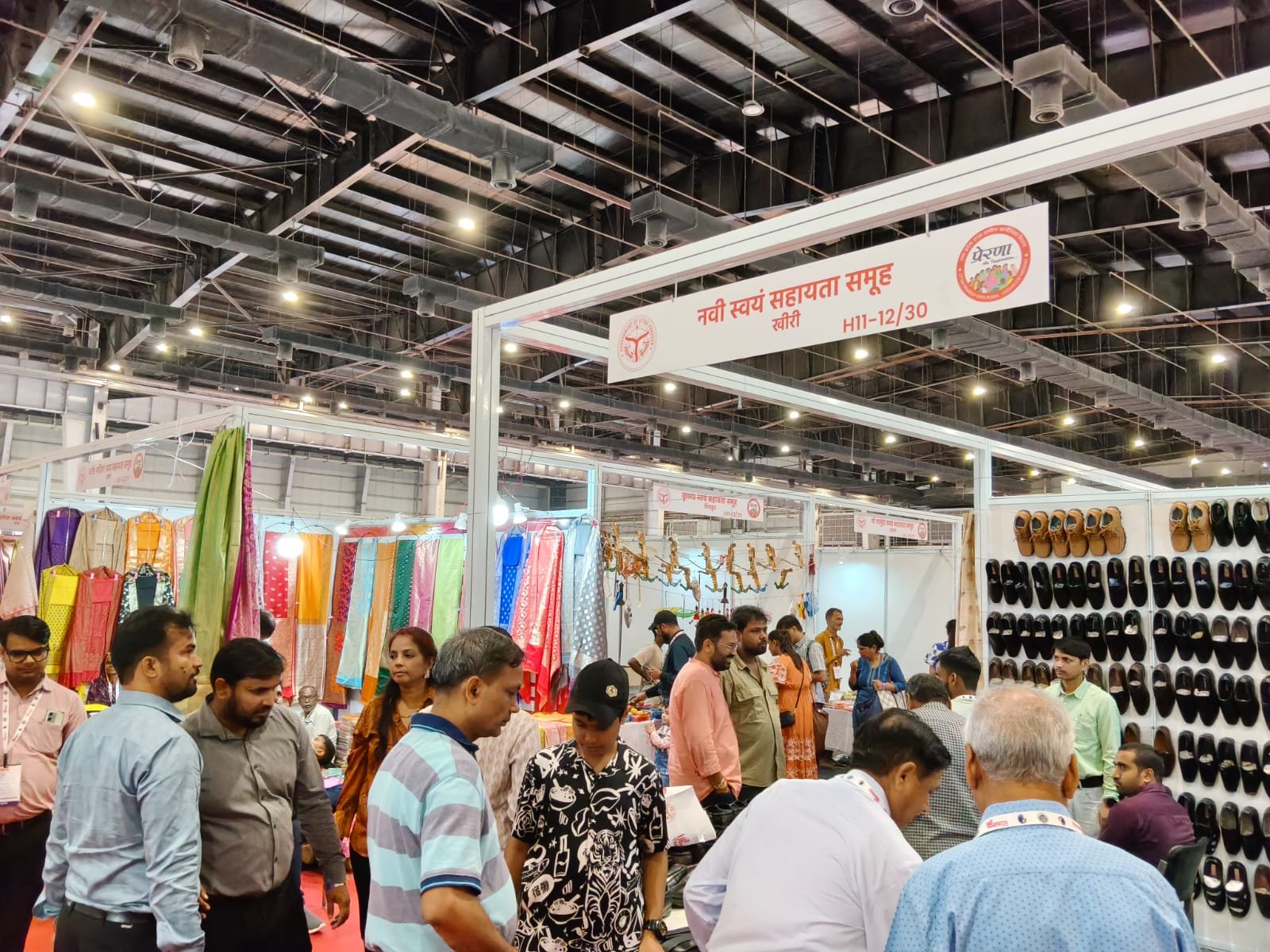
Lucknow, September 2026 : Agra’s zardozi-zari, Amroha’s spices, Ayodhya’s herbal tea, Azamgarh’s black pottery, Kannauj’s perfumes, Gorakhpur’s terracotta jewelry and Banaras carpets. Products being prepared by women in the villages and towns of Uttar Pradesh are now moving beyond the boundaries of local haats and markets towards larger markets. At the UP International Trade Show in Greater Noida, women entrepreneurs from self-help groups across all 75 districts of the state have presented a similar picture of Uttar Pradesh through their skills.
Here, not only are products being sold, but every stall is also connected to the story of a village, a traditional art, and a woman who has transformed it into employment. Rehnuma from Agra has brought zardozi-zari, while Kaushalya Gautam from Amroha is spreading the aroma of ground spices. Renu Singh from Ayodhya has brought herbal tea and lemongrass products, while Rita Prajapati from Azamgarh has brought black pottery to the larger market.
Tarawati from Kannauj has perfumes, while Sita Devi from Varanasi is representing the skills of Banaras through carpets, foot mats and runners.
For women in self-help groups formed under the Uttar Pradesh State Rural Livelihood Mission, this participation in the UP International Trade Show is not merely an exhibition. Along with selling their products, they are getting an opportunity to understand customer preferences, observe packaging and presentation, and explore the potential of their products in larger markets.
As one moves from one end of the state to the other, the products also change. In some places, traditional crafts are making a place in the market, while in others, women from villages have made products for everyday needs the foundation of their enterprises.
Saroj Pal from Gorakhpur has brought terracotta jewelry, while Sudha Saini from Saharanpur has arrived at the trade show with wooden handicrafts and toys. Tabbasum Maqsood from Prayagraj is preparing baskets, daliya and decorative items from moonj.
Pragya Jaiswal from Pratapgarh has brought amla murabba and mango pickle. Rani’s stall from Mahoba features brass idols and other handicraft products.
Saroj Devi from Siddharthnagar has turned banana fiber into an enterprise and prepared banana fiber products. Madhubala from Sonbhadra has arrived with herbal soaps, honey, phenyl and jute bags, while Shafika from Kheri has brought products such as shoes, slippers and belts.
The wooden toys of Priya Singh from Chitrakoot, Shahjahan's Khurja pottery from Bulandshahr, Tarawati's perfumes from Kannauj, Rekha's terracotta and clay products from Mathura, and Leela Devi's gomay products from Lalitpur further expand this diversity.
State Rural Livelihood Mission Director Arun Kumar said that the scope of entrepreneurship among women’s groups at the trade show is not limited to traditional handicrafts. From jute bags and zardozi sarees to chikankari, handloom, carpets, wooden toys, artificial jewelry, honey, spices, pickles and murabba, herbal products and household utility items, a wide range of products is available here.
Anju from Chandauli has brought zardozi-zari silk, Banarasi sarees, suits and dupattas. Shashi Mala from Barabanki is showcasing chikankari and artificial jewelry; Ruby Bano from Rae Bareli is displaying hand block print suits, sarees and dupattas, while Madhuri Devi from Mau is showcasing silk sarees.
On the other hand, Ranjana Devi from Ballia has brought phenyl, toilet cleaner, dishwash and handwash. Sushma Singh from Jaunpur is also present with cleaning products. Deepika from Muzaffarnagar brought soaps, Surf, and herbal oils, while Shimla Devi Kushwaha from Kaushambi arrived with pickle, desi ghee, cleaner, and handwash.
This diversity reflects both village tradition and rural entrepreneurship keeping pace with a changing market.
For self-help groups, preparing a product is the first step towards doing business. After that, the biggest challenge is reaching customers and markets. The International Trade Show is becoming a medium to bridge this gap.
According to State Rural Livelihood Mission Director Arun Kumar, preparing products is not the entire process for women associated with self-help groups; taking them to the market is equally important. By bringing products from different districts onto a single platform at the International Trade Show, women entrepreneurs are gaining greater access to buyers and customers.
By reaching customers directly at a major event, women entrepreneurs also get the opportunity to see and understand what products the market prefers, what changes can be made to packaging and presentation, and how local products can be taken forward in line with larger markets.
This link can take products prepared in villages from local markets to the state, the country, and larger markets beyond.
The presence of women entrepreneurs from all 75 districts of the state takes this event beyond merely being a row of 75 stalls. Through them, the skills, local crafts, food products and entrepreneurship of women emerging from villages have been brought before the larger market on a single platform.
The skills of the four corners of Uttar Pradesh
Western UP: Baghpat’s dari and handloom sheets, Bulandshahr’s Khurja pottery, Saharanpur’s wooden handicrafts, Meerut’s natural food products.
Awadh: Ayodhya’s herbal tea and lemongrass products, Lucknow’s handloom, Barabanki’s chikankari and artificial jewelry.
Purvanchal: Azamgarh’s black pottery, Gorakhpur’s terracotta jewelry, Varanasi’s carpets and Mau’s silk sarees.
Bundelkhand: Chitrakoot’s wooden toys, Mahoba’s brass idols and Jhansi’s handmade decorative items.