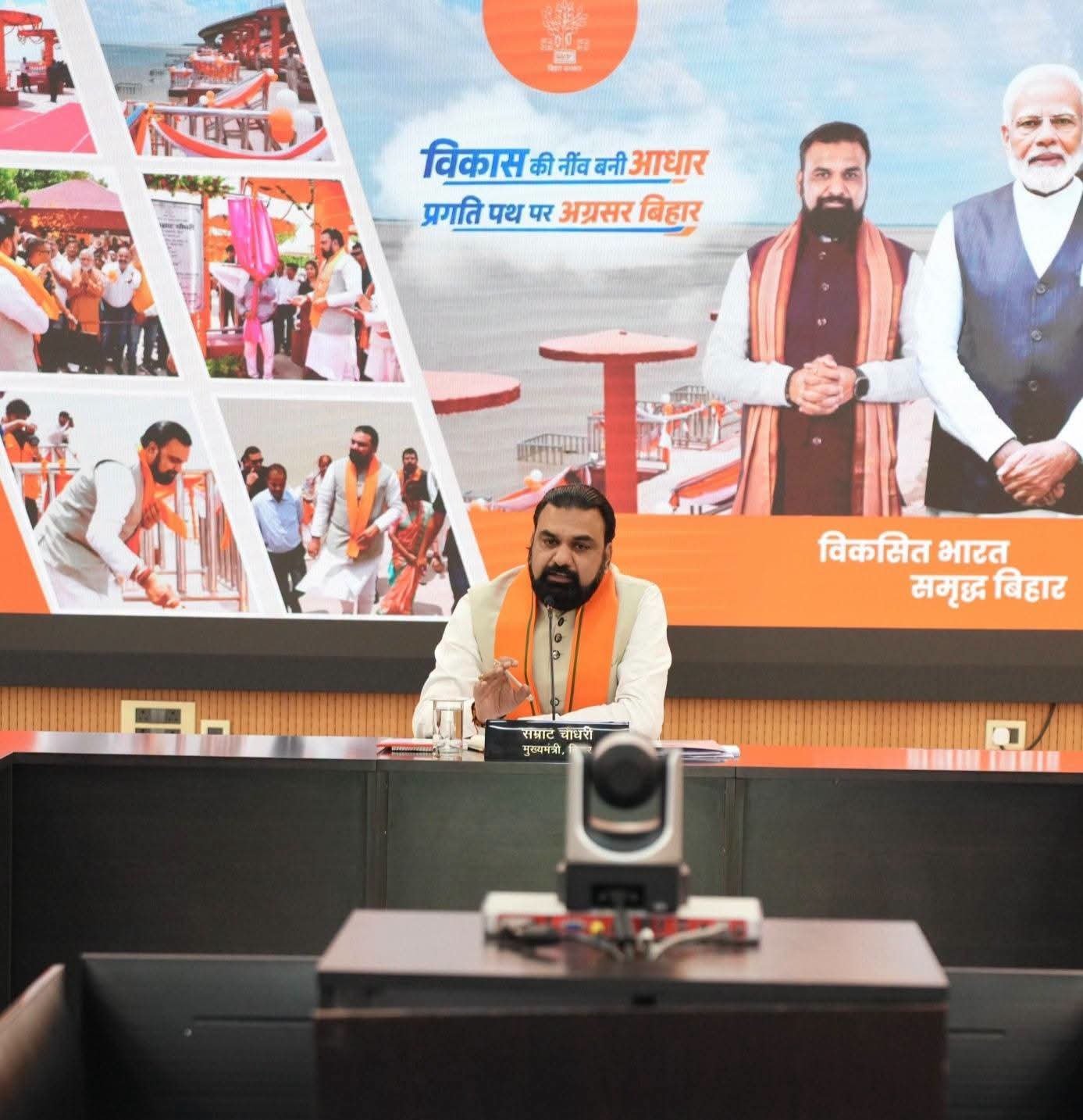
Patna, October 2026: Bihar Chief Minister Samrat Choudhary on Friday chaired a review meeting of the Health Department at Sankalp, located at the Chief Minister’s official residence. The meeting reviewed proposals for establishing and operating brownfield medical colleges under the Public-Private Partnership (PPP) model to expand medical education and make healthcare services more accessible, affordable, effective and high-quality across the state.
The initiative aims to make better use of existing infrastructure, enhance the capacity of medical colleges and hospitals, and combine the expertise of the public and private sectors while safeguarding government ownership and public interest.
The Chief Minister made it clear that government ownership and provisions protecting public interest would remain central to the proposed arrangement. Ownership of government hospitals and medical colleges will remain with the state government, and there will be no provision for their privatisation or transfer of ownership.
He directed that the responsibilities of the government and private partners be clearly defined in the agreements to ensure accountability and transparency in the operation of the institutions.
Health Department Secretary Kumar Ravi gave a detailed presentation on the proposed PPP model for brownfield medical colleges. He said important information concerning prescribed hospital charges, patient eligibility, categories of beds and patients’ rights would be displayed in both Hindi and English on hospital premises and through online platforms. This would help patients and their families obtain clear information about available services, charges and facilities.
Chief Minister Choudhary said the Bihar government’s objective was to expand medical education while protecting government ownership, students’ interests, patients’ rights and access to quality healthcare.
He stressed that proposals under the PPP model must be designed to strengthen the state’s healthcare system and ensure that the benefits reach the people of Bihar. Investors from Bihar should be given preference in the proposed brownfield medical college projects, he said, adding that doctors from the state who wished to participate should also receive priority. All stakeholders must work in the public interest.
The Chief Minister noted that the PPP model could help improve the utilisation of government resources and increase the efficiency of investment in the healthcare sector. He called for a systematic assessment of the opportunities for developing and operating medical colleges through this approach.
While considering the proposals, he said, priority must be given to existing infrastructure, operational arrangements, academic standards and the provision of better healthcare facilities for the general public.
Choudhary also emphasised the need to upgrade and strengthen district headquarters hospitals so that patients could access modern and affordable treatment closer to home.
He directed officials to work towards modernising the Government Ayurvedic College and Hospital in Patna and linking it with leading Ayurvedic institutions across the country.
The Chief Minister reiterated that the state government was committed to strengthening medical education and healthcare services. He said all available options should be assessed carefully, with public interest remaining the foremost consideration.
Those present at the meeting included Health Minister Nishant, Chief Secretary Pratyaya Amrit, Development Commissioner Mihir Kumar Singh, Finance Department Principal Secretary Vinay Kumar, Chief Minister’s Secretary Lokesh Kumar Singh, Health Department Secretary Kumar Ravi, Chief Minister’s Secretary Sanjay Kumar Singh, Health Department Special Secretary Arvind Kumar Verma, Bihar Medical Services and Infrastructure Corporation Limited Managing Director Subrat Kumar Sen, Bihar State Health Society Executive Director Naval Kishore Choudhary and other senior officials.