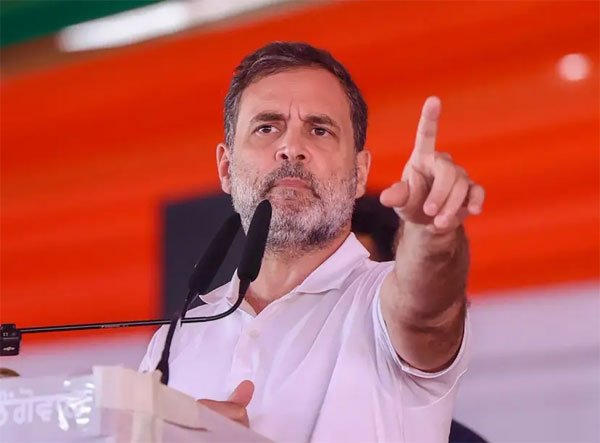
New Delhi, November 2026 : Congress leader and Leader of Opposition in the Lok Sabha Rahul Gandhi on Sunday accused the BJP and the Rashtriya Swayamsevak Sangh (RSS) of being “uncouth, greedy, casteist male chauvinists” who have no understanding of India's spiritual and religious traditions.
Gandhi made the remarks in a post on X, sharing an image of a sculpture from the Elephanta Caves depicting Ardhanareshwar, a composite Hindu deity representing Lord Shiva and Goddess Parvati in a single half-male, half-female form.
“The deeper I go into Indian spiritual and religious traditions, the clearer it becomes,” Gandhi wrote. He then alleged that the BJP and RSS had “absolutely no understanding” of these traditions.
Ardhanareshwar is a significant representation in Hindu religious and artistic traditions. The form combines Shiva and Parvati into one figure, symbolising the union of masculine and feminine principles.
Gandhi's latest remarks come amid a political controversy over his comments about the relationship between his parents, Sonia and Rajiv Gandhi. The remarks were made during the launch of his mother Sonia Gandhi's memoir, Belonging: A Journey Of Love, and drew criticism from political opponents and sections of social media.
Gandhi Defends Expression of Love and Affection
Last Tuesday, Gandhi had said that fear, anger and hatred had created a web around the hearts of BJP and RSS supporters, preventing them from expressing love and affection.
He also shared a photograph of a 12th-century temple sculpture depicting Goddess Parvati sitting on Lord Shiva's lap.
“As a true Hindu, it is my duty to free them from this web, so that they too can start to experience the breathtaking beauty and joy of love and belonging in their lives. Satyam Shivam Sundaram,” he had said in his post.
The Congress party backed Gandhi's remarks, describing them as an attempt to initiate a conversation about affection, equality and relationships.
“Love need not be hidden, affection is not a weakness, and equality begins with treating your partner as an equal,” the party said in a post on X, tagging Gandhi's message.
Controversy Over Remarks at Sonia Gandhi's Memoir Launch
The controversy originated during the official launch of Sonia Gandhi's memoir, Belonging: A Journey Of Love, last Monday. Speaking about the close relationship between his parents, Rahul Gandhi recalled that his mother would sit on his father's lap during family meals.
“At every meal, there would be Papa, and on Papa's lap, there would be Mama,” he said.
Gandhi added that he had initially considered this a normal family practice. Recalling visits to his friends' homes, he said he was surprised to find that their parents did not display the same kind of affection.
He recounted asking his friends why their mothers did not sit on their fathers' laps during meals.
Gandhi also spoke about the traumatic events that affected his family, referring to the assassinations of his grandmother Indira Gandhi and his father Rajiv Gandhi.
“And then we saw it all get smashed. Not just over time – suddenly,” he said, recalling how the family lost what he described as its anchors. He referred to Indira Gandhi being shot and Rajiv Gandhi being killed in a bomb attack.
BJP Leaders Target Rahul Gandhi
Gandhi's remarks attracted criticism from political opponents, including Assam Chief Minister Himanta Biswa Sarma.
Sharing a video clip of Gandhi's comments, Sarma took a swipe at the Congress leader and said he had embarrassed his mother even on the special occasion of the memoir launch.
“Sorry, Ma'am, he couldn't spare you the embarrassment even on such a special day of your life. The nation figured it out long ago. Hopefully you'll see it now too; this product is beyond launching and relaunching,” Sarma said.
The comments also triggered mixed reactions on social media. While some users criticised Gandhi's remarks about his parents, others defended him, arguing that he was speaking candidly about family affection and personal memories.
The latest exchange has brought the debate back to the intersection of politics, religion and personal expression, with Gandhi using examples from India's spiritual and artistic heritage to make his point about love, equality and relationships.
Disclaimer: This review is based on the reviewer’s individual perspective. Audience opinions may vary.