Star Cast: Ranbir Kapoor, Yash, Sai Pallavi, Ravie Dubey, Arun Govil, Lara Dutta, Shobhana, Rakul Preet Singh and others
Director: Nitesh Tiwari
Rating: 4 stars – Team Maverick
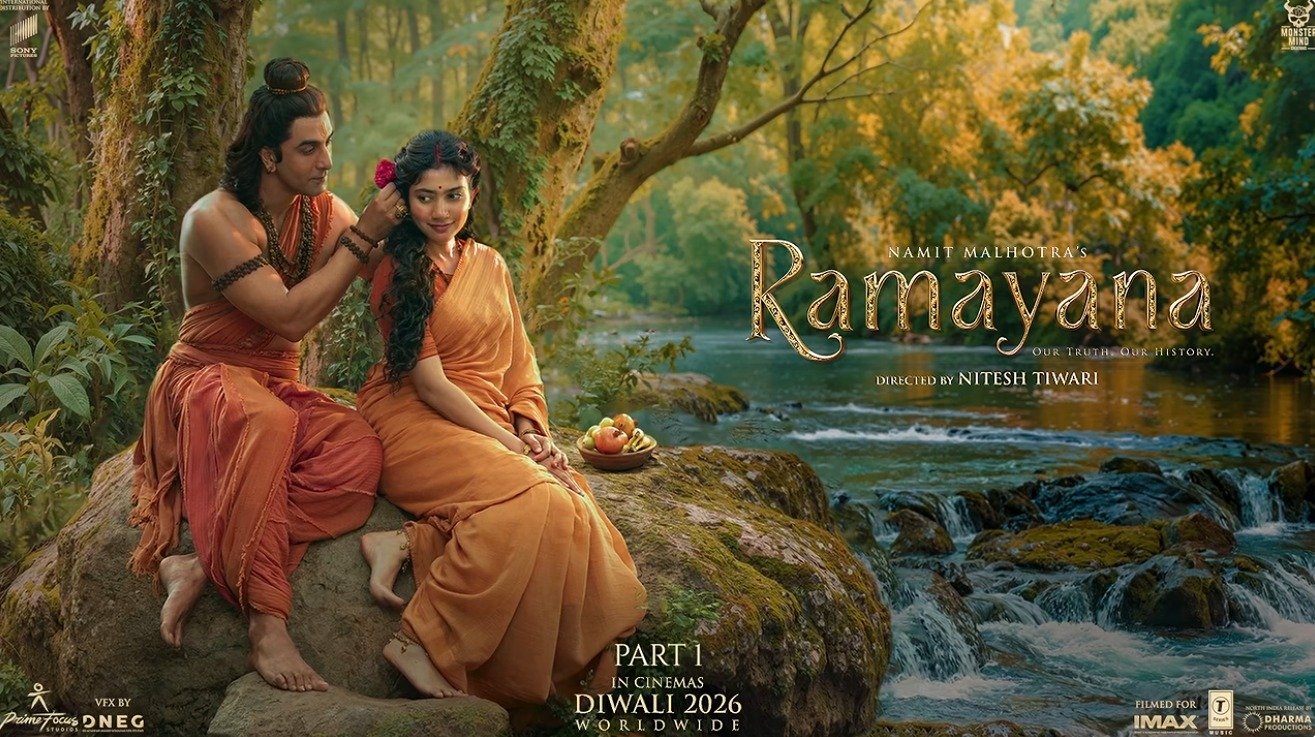
Hyderabad, Nov 2026 : Some stories are more than cinema; they are deeply embedded in our cultural identity. The Ramayana is one such epic. We have grown up listening to our grandparents narrate its stories, watching Ramlila performances and following Doordarshan's iconic Sunday telecasts. Bringing this timeless tale to the big screen is therefore an enormous responsibility. With Ramayana: Part 1, director Nitesh Tiwari takes on that challenge with ambition, sincerity and a refreshing decision: to humanise its legendary characters without taking away their divinity.
Two moments capture the film's emotional strength. In one, Lord Ram tells Lakshman that his exile is not merely a period of vanvaas and that its deeper meaning must be understood. He accepts his father's command because he recognises his responsibility as a son. In another, when Sita is taken away, Ram questions his fate, asking why destiny has chosen him to endure such pain.
These contrasting moments reveal the film's central idea. Ram is both the divine incarnation of Lord Vishnu and a human being who experiences love, separation, duty and grief. Nitesh Tiwari's achievement lies in presenting these two dimensions with remarkable sensitivity.
The film does not depend on constant declarations of divinity or loud devotional theatrics. Instead, it allows the characters, their choices and their emotional journeys to establish the spiritual depth of the story. That restraint gives Ramayana much of its soul.
Ramayana Movie Review: Story and Screenplay
Ramayana: Part 1 begins with the story of Dashanan, tracing Ravana's journey towards becoming the powerful ruler of Lanka. Driven by his mother Kaikasi's ambitions, Ravana pursues extraordinary power, challenges the established order and eventually establishes himself as a formidable force. His devotion to Lord Shiva, scholarship and growing arrogance form the foundation of his character.
Only after establishing Ravana's background does the narrative move towards Ayodhya and the story of Ram. This is an interesting storytelling choice because audiences encounter the antagonist's journey before meeting the central hero.
The screenplay then follows two parallel journeys. Ravana rises through devotion, ambition and conquest, while Ram grows into a righteous warrior under the guidance of Sage Vishvamitra. Their contrasting personalities gradually shape the larger conflict.
What makes this approach effective is that Ravana is never reduced to a conventional villain. He is portrayed as a scholar, a devotee and an accomplished ruler whose immense pride eventually becomes his greatest weakness. His moral complexity adds depth to the narrative and makes the eventual confrontation between Ram and Ravana feel like a clash shaped by destiny rather than a straightforward battle between good and evil.
The film also recreates familiar episodes from the epic with considerable visual ambition. At several points, the presentation makes viewers feel as though they are witnessing events from another age rather than watching a familiar story retold.
However, the screenplay is not without shortcomings. Ram's early life, Sita's swayamvara and the developments leading to his exile move rather quickly. These are important episodes that deserved greater emotional elaboration. The confrontation involving Parshuram, particularly, feels shorter than expected. Some dialogues also lack the poetic richness and philosophical depth traditionally associated with the Ramayana.
Ramayana Movie Review: Performances
Yash as Ravana is undoubtedly one of the biggest highlights of the film. He brings menace, arrogance, intelligence and vulnerability to the character, making his presence difficult to ignore. His portrayal traces Ravana's transformation from a devoted scholar to a powerful emperor consumed by pride.
The Tandav sequence is among his most striking moments. However, the scene featuring Ravana's ten heads and the visual representation of his complex thought process is even more impressive. Yash carries the character with commanding screen presence, making this Ravana both intimidating and fascinating.
Ranbir Kapoor's casting as Lord Ram is a deliberate and effective choice. Rather than relying on exaggerated expressions or a constantly heroic demeanour, he builds the character through calmness, compassion, patience and dignity. His portrayal captures the essence of Maryada Purushottam while allowing Ram's human vulnerabilities to emerge naturally.
This is a very different performance from Ranbir's roles in films such as Animal and Rockstar. His restraint is precisely what makes the portrayal memorable. Some viewers may expect a more commanding heroic interpretation, but the quiet strength he brings to the character works beautifully.
Sai Pallavi as Sita is the emotional heart of the film. She portrays Sita as a woman of dignity, conviction and inner strength rather than merely presenting her as an idealised figure. Her expressions and emotional depth make the sequence involving Sita's abduction particularly moving. She brings an understated purity to the role that stays with the audience.
Ravie Dubey lends Lakshman the required combination of loyalty, courage and impulsiveness. Arun Govil brings emotional weight to King Dasharatha, while Lara Dutta effectively portrays Kaikeyi's transformation. Shobhana as Kaikasi and Sheeba Chaddha as Manthara contribute meaningfully to the narrative.
Rakul Preet Singh makes an impression as Shoorpanakha. Adinath Kothare's Bharat, however, feels comparatively less convincing. Saurabh Sachdeva as Marich catches the eye, while Faisal Malik's Kumbhkarna leaves room for more impact. Vivek Oberoi's Vidyutjeeva is interesting, although the dubbing occasionally distracts from his performance.
A special mention must go to Sharad Kelkar's voice as Ravana in the Hindi version. His powerful voice adds another layer to Yash's screen presence and significantly enhances the character's impact.
Ramayana Movie Review: Direction, Music and Visual Effects
Nitesh Tiwari takes on one of the most ambitious projects of his career and approaches the material with evident respect. Along with writer Shridhar Raghavan, he makes an interesting decision to introduce Ravana before Ram. The opening, with Sharad Kelkar's voice echoing across the universe before Yash appears on screen, establishes the film's grand and mythical atmosphere.
The use of Jatayu as a storyteller adds an intimate dimension to the narrative. The story does not feel like a distant account from the pages of history; it feels like a legend being recalled by someone who witnessed its unfolding.
The production design and visual scale are impressive. The recreation of Ayodhya and Lanka gives the film an expansive cinematic world, while the visual effects and CGI help bring its mythical settings to life. The elaborate sets and attention to visual detail make several sequences genuinely spectacular.
The background score by Hans Zimmer and A.R. Rahman is another major strength. Their musical collaboration adds emotional depth and grandeur to the film, complementing its spiritual and dramatic moments. The background music works particularly well in elevating the larger-than-life sequences. However, the songs do not always blend seamlessly into the narrative and could have been used more effectively.
Ramayana Movie Review: The Last Word
Ramayana: Part 1 is an ambitious cinematic adaptation that succeeds because it balances spectacle with sincerity. Yash's Ravana is a powerful revelation, Ranbir Kapoor brings soulful restraint to Lord Ram, and Sai Pallavi gives Sita the emotional strength the character deserves.
The film's greatest strength is its willingness to explore the human emotions behind legendary characters. Its occasional pacing issues, rushed episodes and uneven dialogue prevent it from being flawless. Nevertheless, the scale, performances, visual storytelling and music make it a memorable cinematic experience.
The closing glimpse of what lies ahead builds anticipation for the next chapter. With Part 2 scheduled for Diwali 2028, the wait promises to be long.
For now, Nitesh Tiwari's Ramayana: Part 1 delivers a grand, heartfelt and visually magnificent retelling of an epic that continues to be part of India's collective consciousness.
Disclaimer: This review is based on the reviewer’s individual perspective. Audience opinions may vary.