Complete ban on non-food colours including Rhodamine-B; special vigilance directed for cotton candy and ice gola
Quantity of food colours not to be estimated; must be measured with a digital weighing scale
Food business operators must also keep purchase bills and batch numbers safe
Action may be taken under the Food Safety and Standards Act for violating colour rules
Lucknow, October 2026 : To curb the arbitrary use of chemical colours for giving an attractive look to sweets, snacks, momos, chutney, bakery products and other food items, the Food Safety and Drug Administration (FSDA), Uttar Pradesh, has issued detailed guidelines for food business operators. The instructions, issued on behalf of Commissioner, Food Safety and Drug Administration, Dr. Roshan Jacob, clarify that only those artificial or natural colours that are permitted for the relevant food category may be used in food items. The quantity of colours must also be kept within the prescribed maximum limit.
The instructions have asked food manufacturers, halwais (sweet makers), hotel and restaurant operators, bakery establishments, dhaba operators and street food vendors to ensure compliance with the rules. Directions have also been given to widely publicise these guidelines through trade associations (vyapar mandals), hotel and restaurant associations, food vendor associations, Food Safety on Wheels (FSW) and regional meetings.
Special emphasis on chutney, cotton candy and tandoori dishes
The guidelines stress special vigilance regarding colours used in street food and at dhabas. Operators have been cautioned not to use prohibited chemical colours in the green or red chutney served with samosas, chaat, momos and rolls. Instead, they have been advised to obtain natural colour and flavour from food ingredients such as tomato, beetroot, coriander and mint. The use of non-food colours, especially Rhodamine-B, in cotton candy, i.e. "budhiya ke baal", and ice golas has been described as completely prohibited. Similarly, industrial dyes or any non-food colour cannot be used to give a red colour to tandoori and non-vegetarian dishes such as chicken tikka, kebabs, chaap and fried fish. The use of Kashmiri red chilli, deggi mirch and other suitable food ingredients has been advised for the required colour and flavour. Paprika extract may also be used only as per the conditions prescribed in the relevant food category.
Ban on estimating the quantity of colours
The guidelines ask food business operators to avoid adding colour directly into a kadhai (wok) or pot from an open packet, spoon or pinch. A suitable digital weighing scale must be used to measure the quantity of colour. If facilities to accurately measure the prescribed quantity are not available, the instruction is not to use food colour at all. The aim is to reduce the possibility of colours being used beyond the prescribed limit.
Limits are fixed for sweets, bakery products and beverages
The Food Safety and Standards (Food Products Standards and Food Additives) Regulations, 2011 specify the permitted colours and their maximum quantities for various food categories. The guidelines clarify that a colour can be used in a food item only if it is permitted in the relevant category.
Provisions for major food categories
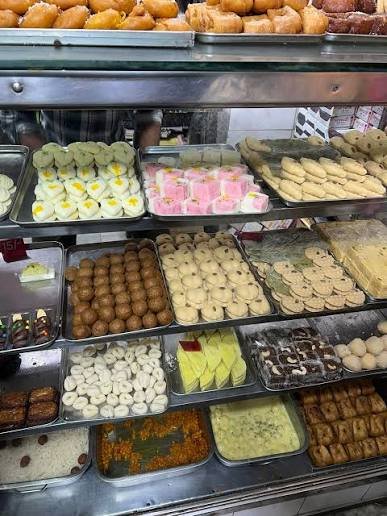
Sweets and confectionery: For products such as boondi laddu, jalebi, barfi decoration and hard candy, the general maximum limit for permitted artificial colours is stated as 100 milligrams per kilogram. The category of the product concerned and the applicable conditions must be followed.
Bakery products: The prescribed limits for permitted colours in cakes, pastries, biscuits, cookies and icing must be followed. The use of artificial colours in the main body of bread and buns is prohibited.
Dairy products: The prescribed limits for permitted colours will apply in relevant food categories such as flavoured milk, curd and ice cream.
Processed fruits and vegetables: Colour limits vary according to the nature of the product. The document gives limits of 200 milligrams per kilogram for canned or glazed cherries and 100 milligrams per kilogram for other processed fruits.
Non-alcoholic beverages: A maximum limit of 100 milligrams per kilogram in the ready-to-drink beverage is mentioned for the relevant artificial colours.
*Namkeen and snacks:*In sev, bhujia and other ready-to-eat namkeen products, the permitted colours and prescribed limit for the relevant category must be followed.
Different conditions and limits have also been prescribed for natural colours according to the food category. In some cases, under Good Manufacturing Practice (GMP), there is a provision to use colour in the minimum quantity necessary for a technical requirement. Therefore, a colour cannot be used in all food items on the basis of it being permitted in one food item.
Adding colour is prohibited in these food items
* Milk and milk products: Raw and pasteurised milk, cream (malai), plain curd, unflavoured butter, chhena and paneer.
* Fruits and vegetables: Fresh fruits and raw vegetables.
* Infant food: Infant food and infant milk substitutes.
* Beverages: Natural fruit juice, packaged drinking water and mineral water.
* Spices and beverage ingredients: Ground spices, tea leaves and coffee.
* Cereals and food grains: Cereals, pulses (dal), flour (atta) and semolina (suji).
* Bakery products: Plain bread.
* Oils and fats: Edible oils and edible fats.
* Natural sweeteners: Jaggery (gud) and honey.
* Dry food items: Dry fruits.
* Cooked food: Dal, vegetables, biryani, chutney and French fries.
Health risks from the use of prohibited colours
As per FSDA, the use of non-permitted colours and industrial dyes such as Rhodamine-B, Metanil Yellow, Butter Yellow, Malachite Green, Auramine, Orange-II and Sudan dyes in food items is prohibited. Rhodamine-B is used for dyeing textiles and paper. Its illegal use is suspected in cotton candy, chutney, tandoori chicken and bright red sweets. Metanil Yellow is suspected of being used to give a yellow colour to laddu, imarti, boondi, turmeric and arhar dal. Butter Yellow has been linked to adulteration in edible oil and turmeric, while the illegal use of Sudan dyes is suspected in chilli powder, curry powder, garam masala, seasoning, palm oil and packaged sauces. Consumption of such non-permitted industrial colours can be harmful to health. It may pose risks of adverse effects on the liver and kidneys, allergies and other health problems.
Keeping records from purchase to use of food colours is mandatory
Food business operators have been directed to purchase and use food colours only from valid and authorised sources. At the time of purchase, they must check the product's packaging, label, details of the manufacturer or supplier, and information related to the applicable licence. They have been told not to purchase or use unlabelled chemicals or food colours from the open market or a pansari (grocer's) shop. Bills, invoices and batch numbers related to the purchase of food colours must be preserved so that they can be presented to Food Safety Officers during inspection.
Provision for legal action on violation of rules
The guidelines clarify that using non-permitted colours, adding colour to a food item where it is not permitted, adding colour beyond the prescribed maximum limit, or not printing the mandatory information related to food colour on a packaged product may constitute a violation of the rules. In such cases, action may be taken under the provisions of the Food Safety and Standards Act, 2006.