Deputy CM says nutritious meals are an investment in Telangana’s future human resources and economic growth
Hyderabad, Oct 2026 : Telangana Deputy Chief Minister Mallu Bhatti Vikramarka on Tuesday described the state government’s breakfast scheme for 27 lakh students in government schools as the world’s largest such initiative, saying the programme represents an investment in the state’s future human resources.
Vikramarka said providing breakfast every day to such a large number of students was an innovative initiative that, according to him, had no parallel elsewhere in the world. He stressed that the nutritious food provided to children should not be considered a free benefit, but an investment aimed at ensuring their health, education and future productivity.
“When children remain healthy and study well, they can contribute significantly to the state’s future production and support the growth of GSDP,” he said.
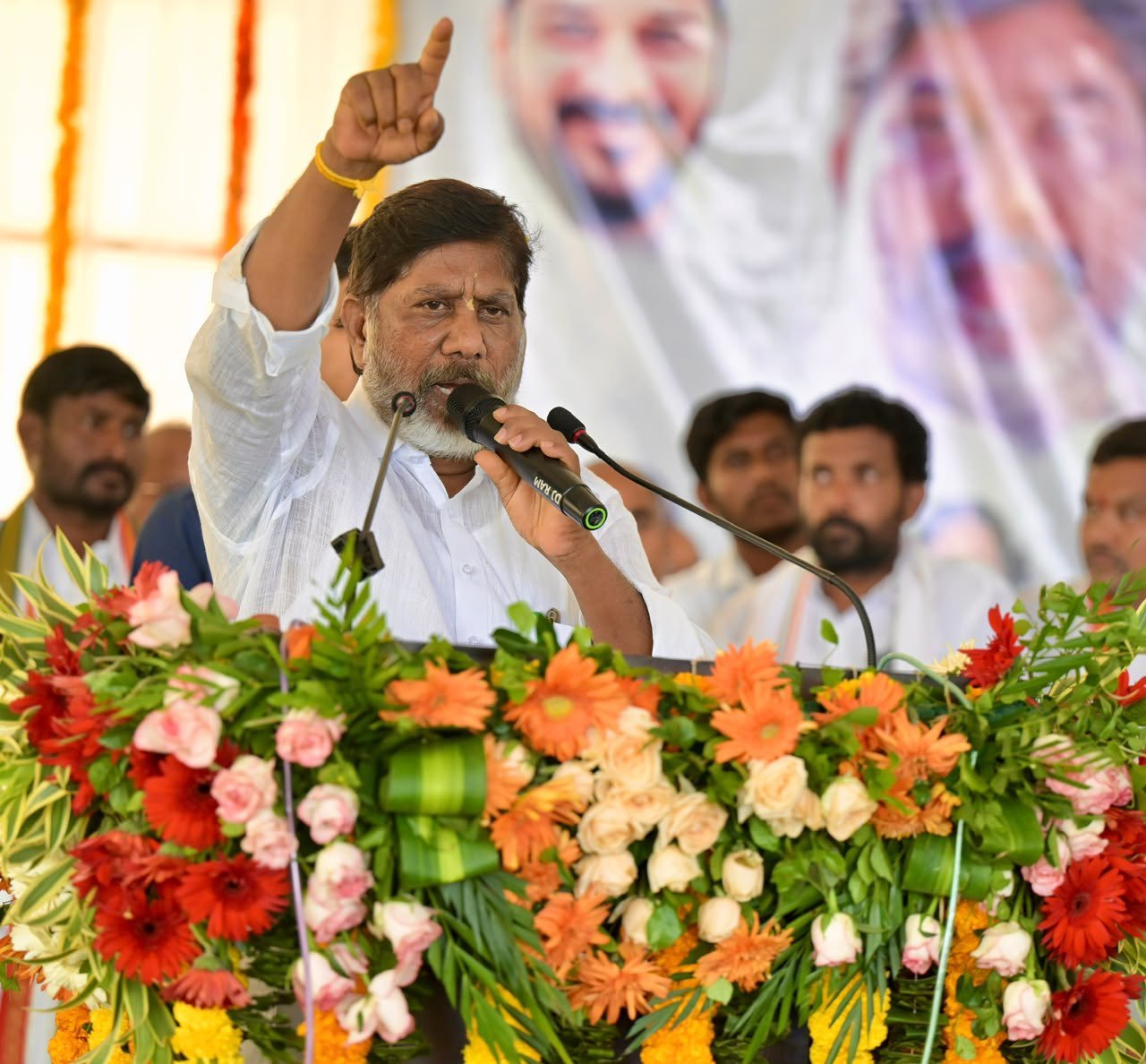
The Deputy Chief Minister, who also holds the Finance portfolio, made the remarks after laying the foundation stone along with Irrigation Minister Uttam Kumar Reddy for a centralised community kitchen at Munagala village in Kodad Assembly constituency of Suryapet district. The kitchen is being constructed at an estimated cost of Rs 9.6 crore.
Addressing a public meeting organised on the occasion, Vikramarka said the greenfield kitchen would be equipped with modern technology and hygienic facilities. It is expected to prepare hot breakfast from a central facility for nearly 60,000 students studying in 1,020 schools in the region.
He said the government was providing breakfast six days a week to students enrolled in government schools across Telangana. Under the programme, milk is served on three days of the week, while ragi porridge is provided on the remaining three days.
Vikramarka highlighted the scale of the programme by pointing out the challenges involved in preparing food for even a relatively small number of people. He said that providing breakfast simultaneously to millions of students required considerable organisation and reflected the government’s emphasis on child welfare.
He said adequate nutrition during the formative years was essential for children to develop into healthy and productive citizens. The government, he added, had therefore taken responsibility for providing quality food to children from poor and middle-class families from an early age and supporting their educational and personal development.
The Finance Minister also argued that government welfare programmes should not be viewed merely as freebies. According to him, expenditure on poor families, farmers, women and students should instead be seen as investment in strengthening the state’s economy and improving productivity.
Vikramarka said economic growth was closely linked to the health and purchasing power of citizens. When people remain healthy, children receive proper education, women gain greater economic independence and farmers receive financial and investment support, he said, overall productivity rises.
He cited several welfare programmes implemented by the Telangana government as examples of this approach. These include Rythu Bharosa, free electricity, the supply of fine rice, Rajiv Aarogyasri, free RTC bus travel for women, interest-free loans, fee reimbursement and Indiramma Houses.
According to Vikramarka, such measures are intended to support vulnerable sections of society and enable poor families to improve their economic position. Increased household purchasing power, he said, generates greater demand for goods and services and contributes to wider economic activity.
The Deputy Chief Minister maintained that investments in children’s nutrition and education were particularly important because their benefits would extend beyond the immediate welfare of individual families. Healthy and educated children, he said, would eventually become part of the state’s productive workforce and contribute to Telangana’s economic development.
The Munagala centralised kitchen is expected to strengthen the logistical infrastructure required for the breakfast programme in the area. By preparing hot food at a dedicated facility with modern equipment and hygienic arrangements, the government aims to serve a large number of students through a coordinated system.
Vikramarka reiterated that the state’s welfare initiatives were designed to create long-term social and economic benefits rather than provide short-term assistance alone. He said investment in nutrition, education, women’s empowerment and agricultural support would help improve living standards while strengthening the state’s economic base.
He emphasised that higher purchasing power among families would lead to increased economic activity and ultimately contribute to the growth of Telangana’s Gross State Domestic Product (GSDP).
The Deputy Chief Minister said the breakfast programme therefore formed part of a broader approach in which social welfare and economic development were linked through investments in people, particularly children and economically vulnerable families.