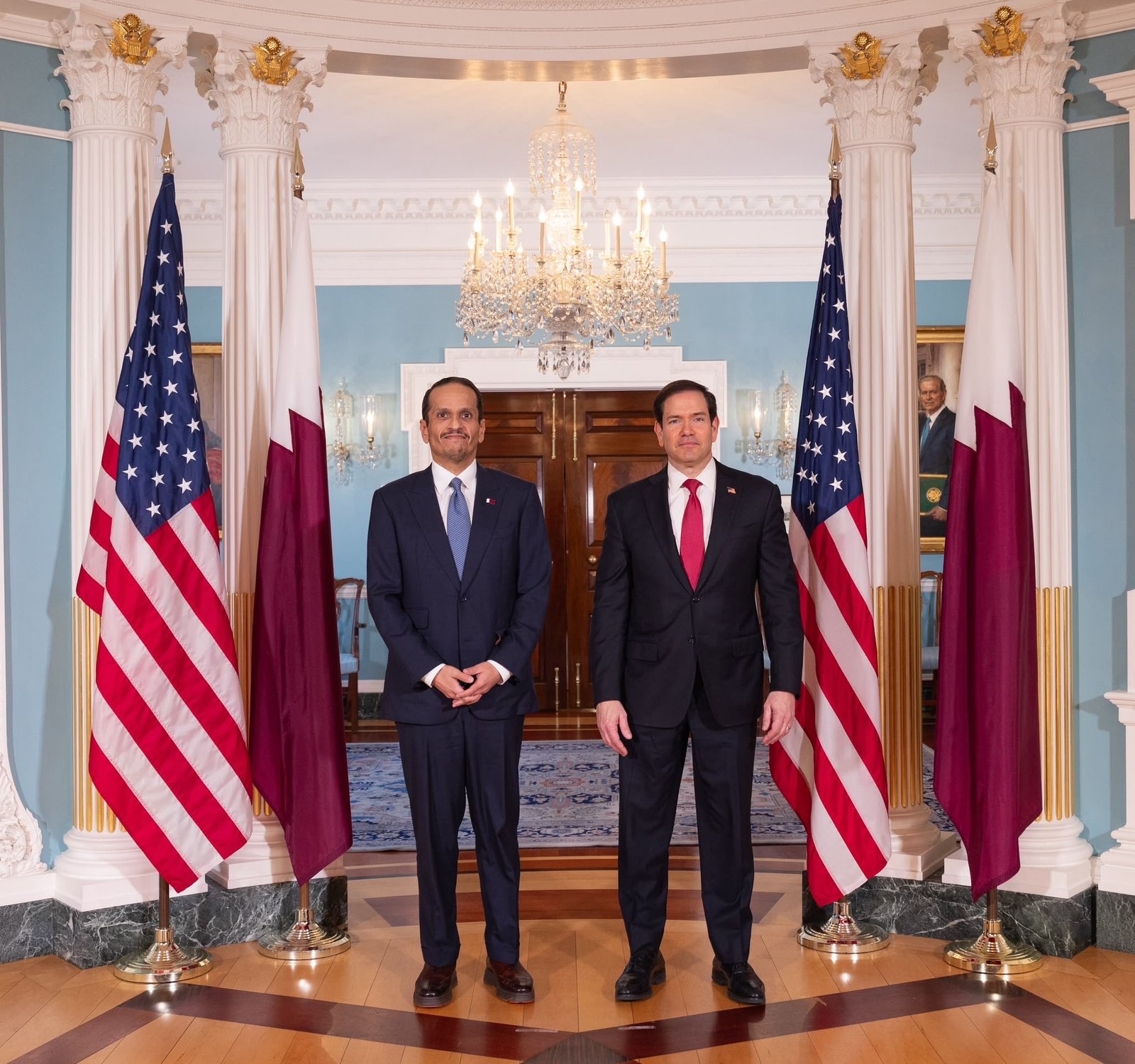
Baghdad/Washington DC; November 2026: United States special envoy for Iraq and Syria – Tom Barrack has spent recent weeks working the Baghdad and Erbil file in Iraq, pressing the disarmament of the Iran-aligned militias and the oil and salary disputes between the capital and the Kurdish north.
What happened on 20th November 2026 - is the quietest and most under-reported win the United States has taken against Iran all month, and it happened on Iraqi soil. The escalation came on schedule. This time it ended at a negotiating table in Baghdad, with no shots fired. A Kataib Hezbollah commander blamed Barrack directly for the escalation around Jurf.
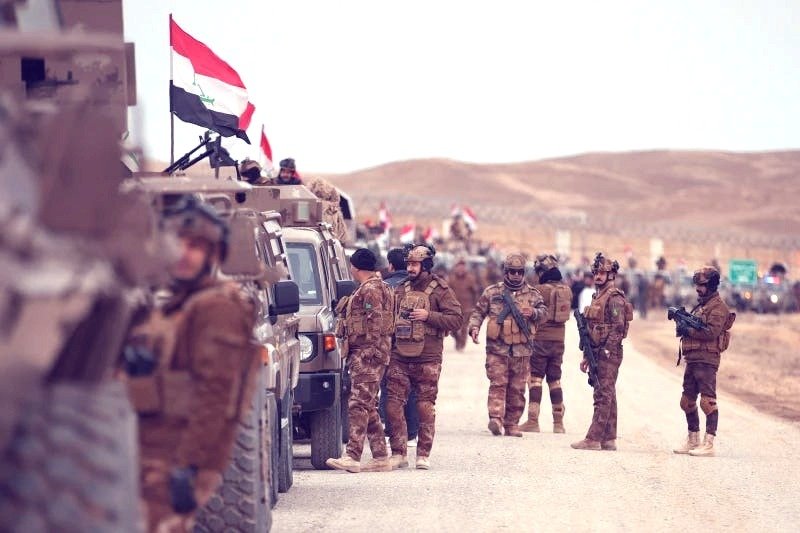
Iraqi federal forces moved into Jurf al-Nasr, the town south of Baghdad that Kataib Hezbollah, an Iran-aligned Shia militia, had held for more than twelve years. The stated reason was oil smuggling, reportedly tens of millions of dollars of crude siphoned off the pipelines that run through the area. The group stood down. Its brigades agreed to relocate under a last-minute arrangement brokered in Baghdad with Esmail Qaani, the commander of Iran’s Quds Force, at the table. A joint force of the army, the Federal Police and the Popular Mobilisation Forces took over the ground.
Kataib Hezbollah survives as an organisation, Iran had a seat in the room, and the force that now holds Jurf still includes the PMF. The federal state walked into a town it had been barred from for twelve years, and the militia agreed to pull its brigades out, with reports that a limited number of its personnel stay at designated sites.
For the first time in 20+ years, since Saddam Hussein fell, the Iraqi Army is moving against an Iranian-aligned militia on its own soil, and this is the start of something far bigger. On Monday (16th November 2026) Iraqi Prime Minister Ali Al-Zaidi ordered the army into Jurf al-Sakhr, the stronghold of Kataib Hezbollah, and gave the group (Kataib Hezbollah) until Friday (20th November 2026) to get out.
Baghdad calls it a crackdown on oil smuggling. Underneath, this is a fight between the Iranian Institutions and the American Institutions over who controls Iraq. Kataib Hezbollah is an Iraqi militia, made of Iraqis, that answers to Iran and the IRGC. It is one arm of Iran's "Forward Line of Defence", the same "Unity of Arenas" that runs through Hezbollah in Lebanon and Ansarallah Houthis in Yemen.
For the Iraqi state to send its own army against it breaks twenty years of the militia standing above the state.
The United States pulled its last troops out of Iraq in September this year (2026), and it still wants this militia gone, because it left the soldiers behind but kept the leverage, and in Iraq the leverage is the Oil Money. Iraq lives on oil, around 90% of its budget, and every barrel it sells is paid in US dollars into Iraq's account at the Federal Reserve Bank of New York, USA, and NOT deposited by customers into Iraqi Banks. In these way the US dollars stay in New York, and Washington decides WHEN and IF they reach Baghdad at all.
Whoever controls the purse controls the state, and the purse is held in New York. So Iraq is not a sovereign country in ANY real sense, it is still under technically under occupation. Two outside powers each hold one half of what a state is made of.
The United States holds the money, through the dollar and the New York account; Iran holds the gun, through the militias. Iraq is caught between them, able to move only where both allow it and will it; And the American hand is showing now.
Kataib Hezbollah had three options and two of them were bad.
·Fighting the Iraqi army would make it an open enemy of the Iraqi state, burn whatever public standing it still holds, and hand Washington the justification it has wanted to move harder against the militias.
·Holding the ground would keep a smuggling node alive and invite the shooting war that breaks everything else.
·Leaving under a deal preserves the organisation, keeps a PMF foot in the area, and costs it the real estate. For a group that intends to still exist next year, giving up the town was the cheap option.
Iran has ran the same calculation one level up. A war between its Iraqi ally and the Iraqi government, while a blockade squeezes Iranian oil exports, would cost Iran the one thing its network in Iraq still buys it, legitimacy and cover inside a sovereign state. Sending Qaani to broker the withdrawal shows the order of Iran’s priorities, the network first and the territory second.
The United States and Iraq took the win on offer. Iraq shows it can enforce its writ. The US gets a visible rollback of an Iran-aligned militia and the closure of an oil-theft channel, with no American soldier involved in the move, bought entirely with pressure.
The pressure works through an arrangement as analysed by Maverick News 30:
·ONE: Since May 2003 the oil money of Iraq has run through the Federal Reserve Bank of New York, under an arrangement set up by the US-led Coalition Provisional Authority under Paul Bremer. The arrangement is still there. Almost every barrel Iraq sells, to Germany, to India, to anyone, is paid in US dollars into an oil proceeds account held in New York in the name of the Central Bank of Iraq. Sovereignty was handed back in 2004, the UN mandate that once justified the account ended in 2011, and Executive Order 13668 in May 2014 removed the old legal shield. The arrangement survived every one of those changes, and today it rests on the dollar and on what it would cost Baghdad to walk away from it.
·TWO: Oil buyers pay Iraq’s state marketing company, SOMO, in dollars into that New York account. Every payment is “screened for sanctions and money laundering”, and SOMO also gives buyers 30 to 60 days to pay, so months pass between a tanker loading and the money being usable in Iraq. The proceeds then move into the Central Bank of Iraq’s reserve account, also at the New York Fed, and the physical dollars that feed the Iraqi market are drawn from that reserve account and flown to Baghdad. Every step runs through US screening, and that screening gives Washington its hold. Oil provides around 90% of Iraqi government revenue, so that one pipe carries the salaries and pensions of the whole country and pays for most of what it imports. Any government formed in Baghdad is built on top of it, and it takes the ministries only by accepting that its own oil revenue is managed from the United States.
The United States have turned the above elaborated matrix into a win-win weapon:
·Cash suspended in 2015.
·14 banks cut off from US dollar transactions in July 2023.
·More bank sanctions in 2025.
·A January 2026 report tied transfers to the make-up of the cabinet, meaning the current prime minister had to be acceptable to the Americans before the money moved.
·US dollar cash shipments halted from late February to early July 2026, with at least two withheld, one of them $500 million.
·A shipment in October 2026 reported as tied to understandings with the United States.
America has reiterated that the purpose is to keep dollars away from Iran-linked networks. The same screening gives the United States a live view of who in Iraq is paid, by whom and for what, and of what every faction depends on to function, which amounts to a veto over the choices any Iraqi government can survive.
Jurf and the New York account work on the same target from two ends. The account decides what the Iraqi state can afford to do. The town decided what Iran’s allies could fund on their own through stolen oil. Washington leaned on the first to force movement on the second.
The militia that was told to leave answers to Iran, and the government that told it to leave answers to the US through its money, which is why a reluctant Iraq finally carried out a demand it had dodged for twelve years.
The US runs the same campaign at sea, choking the money that reaches Iran. Here it ran through an Iraqi town south of Baghdad, far from the Strait of Hormuz and the Bab al-Mandeb.
The order of effects:
·First order. The Iraqi state reasserted control over a piece of its own territory for the first time in over a decade, and closed, or at least contested, a funding node that let an Iranian ally raise its own dollars off the books.
·Second order. Iran loses tempo. It kept the network by trading the ground, and every other faction in Iraq has now seen the army move and a militia back down. Iranian influence in the country shrank here and remains large, but the direction is set.
·Third order. The United States has shown it can reshape the internal balance of another country without deploying to it, using the money pipe and an envoy. The last American troops left Iraq in September and the leverage stayed behind. For every other government in the region, America can keep a hold on a country’s solvency long after it hands back the sovereignty.
Team Maverick.