Lucknow probe leads to Ujjain; LEVERA-500 illegally made under ayurvedic licence
Network operating for the past 8–10 years exposed; around 4.80 lakh tablets were reportedly manufactured and sent to Haridwar, with supplies transported through private buses
Medicines, packing material and die-punches were destroyed after the FIR came to light; high-tech packing machine also recovered
Digital and physical evidence being examined from drug manufacturing to payments; every individual involved in the network under scrutiny
5,250 suspicious glass vials sealed; samples sent to the Government Laboratory for testing
Layers of the syndicate continued to unfold from a single FIR; major action conducted in Ujjain on the basis of information provided by an arrested accused
Action against fake drugs extends beyond state borders, with UP FSDA reaching the root source
Lucknow/Ujjain, Sept 2026 : The Uttar Pradesh Food Safety and Drug Administration (FSDA) has intensified its crackdown on fake and illegal medicines, extending its probe beyond state borders to uncover an interstate drug syndicate operating from Ujjain, Madhya Pradesh.
While tracing the links of a fake medicines case registered in Lucknow, a joint team of UP FSDA and the police reached Ujjain in Madhya Pradesh, where an interstate fake drug syndicate was busted in a joint operation with the regional drug administration, Ayush department and police teams. The investigation revealed that allopathic medicine LEVERA-500 was being illegally manufactured under the guise of a licence to manufacture ayurvedic medicines. Preliminary investigation and questioning have also revealed that around 4.80 lakh tablets, or approximately 32,000 strips, were manufactured and sent to Haridwar.
The layers of this interstate network began to unfold during the investigation of an FIR registered at Aminabad Police Station in Lucknow. On August 12, 2026, a case was registered under serious sections against Ankur Awasthi, Manish Bajpai, Govind Shukla and Ejaz Ahmad, a resident of Saharanpur, in connection with counterfeit medicines, illegal diversion and forged billing.
Manish Bajpai, Govind Shukla and Ejaz Ahmad have already been arrested in the case. When the investigation moved forward on the basis of the questioning of Ejaz Ahmad and the leads obtained from him, the trail of the network was found to be linked to Ujjain in Madhya Pradesh. Following this, a team of drug inspectors and police from Uttar Pradesh reached Ujjain and conducted a joint operation with the regional drug administration department and Ayush officials of Madhya Pradesh.
The joint team raided M/s Rudraya Pharma, located at New Industrial Area, Agar Road, Ujjain. The firm's operator, Prem Malik, and his son Rahul Malik alias Ritik were found present at the premises. The investigation revealed that the firm possessed only a licence for the manufacture of ayurvedic medicines, but allopathic medicine LEVERA-500 was being illegally manufactured under its guise. During questioning, Prem Malik stated that he had been associated with Ejaz Ahmad for the past 8 to 10 years. At the behest of Ejaz, the active ingredient used in LEVERA-500, Levetiracetam IP, was procured from firms in Mumbai, and tablets were manufactured at the factory located in Ujjain.
Questioning also revealed that Ejaz Ahmad provided the printed packing material required for manufacturing the medicine. So far, around 4,80,000 tablets and approximately 32,000 strips, had been manufactured and sent to Ejaz Ahmad in Haridwar through private buses. It has also come to light that payments were made in cash as well as through online modes. This has provided investigating agencies with important links to connect the entire chain from the manufacture and supply of the medicines to the payments.
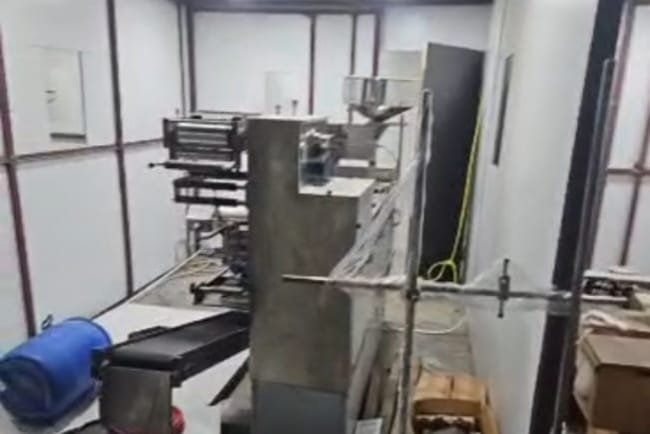
An attempt to destroy evidence related to the network also came to light after information about the registration of the FIR in Lucknow was received. During the questioning, Prem Malik destroyed the remaining manufactured medicines related to LEVERA-500, along with printed packing material, change parts and die-punches. Not only this, the high-tech Alu-Alu packing machine used for packing the medicine was also concealed at a location in Dewas. The FSDA and drug deaprtment officials are now taking the investigation forward into the remaining links of the network on the basis of the available digital and physical evidence.
During the raid, a large number of unlabelled suspicious glass vials were also recovered from the roof of the factory premise. The drug inspector recorded 5,250 glass vials. Ayush officials collected samples of eight ayurvedic medicines from the spot, while samples of the suspicious vials collected by the drug inspector have been sent to the government laboratory for testing and analysis.
The team also secured the relevant purchase and sale bills, invoices, mobile screenshots and other evidence. A statutory undertaking has been obtained from the firm's operator, Prem Malik, and instructions have been issued to name him as an accused in the FIR registered at Aminabad Police Station in Lucknow.
Through the Ujjain operation, UP FSDA has clearly indicated that its investigation is no longer limited to the recovery of suspicious medicines or action against a single trader. The department's focus is on connecting every link of the entire network associated with the manufacturing site of the medicine, procurement of the active ingredient, packing material, transportation, payments and supply.
Tracking down a manufacturing unit in another state based on information extracted from the accused arrested in connection with a single FIR filed in Lucknow is part of this same strategy. Investigators are also collecting digital payment records, mobile call data, bills, and invoices to build a documentary trail and ensuring that the role of every individual linked to the network is fully exposed
The action in Ujjain has also conveyed the message that if the supply chain of fake medicines is being operated from outside Uttar Pradesh, the investigation will not stop at the state border.
In coordination with the drug administration and police of other states, action will be taken to reach the actual source connected with manufacturing and supply. UP FSDA's focus in cases involving fake, suspicious and illegal medicines is not merely on immediate action, but on dismantling the entire network. With the same sensitivity, the department will continue its enforcement campaign to ensure the availability of safe and quality medicines to patients.
Patient safety lies at the very heart of the FSDA's campaign. Any consumer, if in doubt about a food item's quality, always has the choice to simply avoid it. But for someone battling an illness, the medicine prescribed by a doctor isn't a choice it's a necessity. Patients take their tablets, capsules, or injections trusting that what has reached them is genuine, safe, and of the prescribed standard. This trust is exactly why the trade in fake medicines is far graver than an ordinary economic offence: a spurious or suspect drug can deny a patient the treatment they need and put their health, even their life, at risk. It is this understanding that has led the UP FSDA to treat drug enforcement not merely as regulatory duty, but as a responsibility tied directly to safeguarding public health."