New requirement asks applicants to keep social media profiles public as Washington broadens online vetting across additional non-immigrant visa categories
Washington, Oct 2026 : The United States has expanded its social media screening requirements to additional categories of visa applicants, including foreign journalists and certain Canadian and Mexican professionals, as part of a broader system of enhanced online vetting.
The new requirement, which took effect on October 1, applies to applicants seeking I visas issued to representatives of foreign media organisations, as well as TN visas available to eligible professionals from Canada and Mexico. It also covers TD visas issued to dependents of TN visa holders.
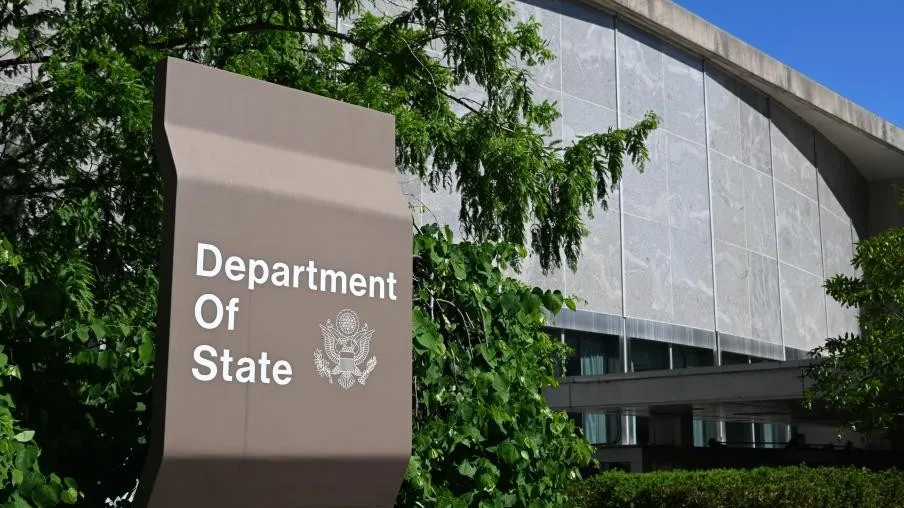
The US State Department announced the expansion last month, saying applicants in the newly covered categories would be required to make their social media profiles accessible for review during the visa screening process.
“To support this vetting process, all applicants for I, TD, and TN nonimmigrant visas are instructed to set the privacy settings on all of their social media profiles to ‘public’ or ‘open,’” the department said.
The move is particularly relevant for foreign journalists, correspondents and other media representatives travelling to the US for professional assignments. Applicants for I visas are now explicitly included in the expanded online presence review, allowing consular officials to examine publicly available information associated with their social media accounts.
The measure forms part of a wider online screening framework that already applies to several visa categories commonly used by foreign nationals, including Indians travelling to the US for employment, education and other purposes.
According to the State Department, social media vetting is already applicable to H-1B temporary workers and their H-4 dependents, as well as H-3 trainees. The screening also covers F-1 and M-1 international students and their F-2 and M-2 dependents, along with J-1 and J-2 exchange visitors.
Several other non-immigrant visa categories are also subject to enhanced screening. These include certain diplomatic and official visa applicants, religious workers, participants in international cultural exchange programmes and applicants for fiancé visas.
The State Department said it uses information from every available source while evaluating visa applications to determine whether an individual meets US immigration requirements and is admissible to the country.
“The Department relies on every available source of information during visa screening and vetting to identify applicants who may be inadmissible to the United States, including those who pose a threat to national security or public safety,” it said.
“We apply this rigorous vetting standard consistently across all visa applicants,” the department added.
However, the department did not provide detailed information on how individual social media posts, comments, photographs or other online activity would be assessed or what specific types of content could affect a visa decision.
By requiring applicants to make their profiles public, the latest measure gives consular officials greater access to applicants’ online presence while their visa applications are being reviewed.
The State Department described visa adjudication as fundamentally linked to national security and said applicants must establish that they meet the requirements of the visa category for which they are applying.
“Every visa adjudication is fundamentally a national security decision,” the department said.
It added that the US would remain vigilant throughout the visa issuance process to ensure applicants did not intend to harm Americans or threaten US interests. Applicants must also demonstrate a genuine intention to comply with the conditions attached to their admission.
The department further stressed that obtaining a US visa is “a privilege granted at the government's discretion, not an entitlement.”
The expansion comes as US authorities continue to incorporate applicants’ online presence into immigration and visa screening procedures. With I visa applicants now included, the policy extends enhanced social media review to another group whose professional responsibilities frequently require international travel.
For foreign journalists, the change means that maintaining public-facing social media profiles will now form part of the requirements associated with the visa application process. The broader screening framework also reflects Washington’s continued emphasis on national security and public-safety considerations during visa adjudication.