Hareli Tihar: A Festival Deeply Rooted in Chhattisgarh’s Agricultural Culture, Tradition and Faith
Raipur, August 2026 : The state government is making every possible effort to strengthen the economic condition of farmers. Villages, the poor and farmers remain among the government’s top priorities. Agriculture makes a significant contribution to India’s GDP, while it is also the backbone of Chhattisgarh’s economy. The state is popularly known as the “Rice Bowl of India.”
Under the leadership of Chief Minister Vishnu Deo Sai, several policy decisions taken by the state government over the past two-and-a-half years in the interest of farmers have provided fresh support to agriculture and farming communities. During the last Kharif marketing season, the government procured 141.05 lakh metric tonnes of paddy from farmers at the Minimum Support Price (MSP).
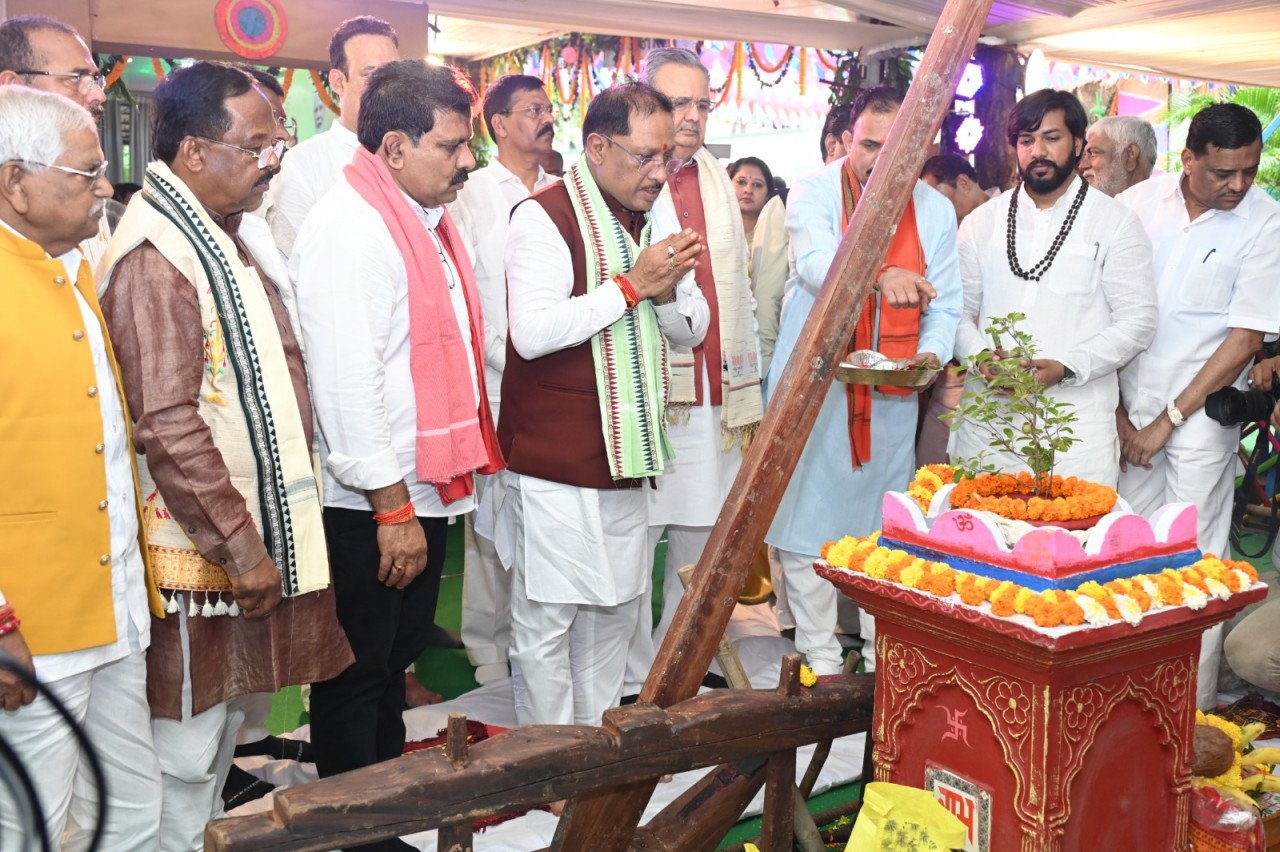
Hareli holds special significance in Chhattisgarh. It is considered the first major festival of the state and is traditionally celebrated with great enthusiasm, particularly in rural areas. On the occasion, farmers worship agricultural implements used in farming, while traditional rituals associated with the worship of the soil and nature are performed at homes. Children and youngsters enjoy riding gedi (traditional bamboo stilts). The festival has become an important symbol of Chhattisgarh’s rich cultural traditions and folk heritage. In rural Chhattisgarh, Hareli Tihar is considered incomplete without gedi.
A Festival Connecting Agriculture, Tradition and Faith
Under Chief Minister Vishnu Deo Sai’s leadership, the state government has not only enhanced the dignity of farmers but has also taken significant steps towards improving their prosperity. Registered farmers have been able to sell paddy at the support price of ₹3,100 per quintal, with procurement of up to 21 quintals per acre. The government has also strengthened the financial position of farmers by transferring ₹3,716.38 crore into their accounts as pending paddy bonuses for the previous two years of the Raman Singh government.
The Chief Minister believes that India lives in its villages and that when farmers prosper, trade and industry in the state will also grow.
For generations, the arrival of Hareli has traditionally meant that carpenters in Chhattisgarh’s villages would receive orders to make gedi. Parents would often make every effort to fulfil their children’s demand for the traditional bamboo stilts.
On the morning of Hareli, farmer families, elders and children gather at village ponds to bathe their cows, bulls and calves. Agricultural implements such as ploughs (nangar), hoes, spades and pickaxes are cleaned and arranged in the courtyard, which is often decorated with fresh soil, for the traditional worship. Women prepare gur cheela, a traditional preparation made with jaggery. After the agricultural implements are worshipped with incense and lamps, offerings of coconut and gur cheela are made. Families also worship their household deities. In village shrines, Thakur Dev is worshipped as part of the traditional rituals.
On Hareli, special attention is also given to the health of livestock. Animals are fed medicinal flour balls prepared with traditional herbs to help protect them from diseases. Members of the Yadav community traditionally travel into forested areas to collect roots, tubers and medicinal herbs and make these available to farmers for treating their livestock.
Near village shrines dedicated to Sahadadev or Thakur Dev, members of the Yadav community traditionally boil medicinal herbs collected from the forests and distribute them to farmers. In return, farmers offer rice, pulses and other food items as gifts. This longstanding practice reflects the spirit of cooperation and interdependence within rural communities.
Celebrating the Greenery of the Monsoon
Hareli is celebrated on the Amavasya (new moon day) of the Krishna Paksha in the month of Shravan. The word Hareli itself is associated with greenery. During the monsoon, the earth is covered in a lush green carpet and the entire landscape becomes vibrant with vegetation. By the time Hareli arrives, most of the major agricultural activities associated with the Kharif season have been completed.
Women prepare traditional Chhattisgarhi delicacies at home. Agricultural tools are washed and worshipped with incense and lamps, followed by offerings of coconut and gur cheela. Villagers also worship Thakur Dev and offer coconuts as part of the traditional rituals.
Gedi: An Integral Part of Hareli Celebrations
The tradition of riding gedi is inseparably linked with Hareli Tihar. In rural areas, almost every family traditionally makes a gedi, allowing children and young people to enjoy the festival.
Gedi is made from bamboo. Nails or pegs are fixed at equal intervals on two long bamboo poles. Pieces of bamboo are split into two sections and tied together with coconut rope to form footrests, locally known as pauwa. These footrests are fixed onto the nails attached to the long bamboo poles.
As people walk on the gedi, it produces a distinctive rhythmic sound, adding to the festive atmosphere.
Hareli is also an occasion for farmers to bathe and worship their livestock. Wheat flour is kneaded into small round balls, wrapped in leaves of castor or khamhar trees and fed to cattle as traditional herbal medicine to protect them from diseases.
Traditional village service communities, including Raut, Lohar and Baiga, also participate in age-old customs. Neem branches are placed at the entrances of homes as a traditional protective practice. Village blacksmiths traditionally fix nails into doorframes as a ritual believed to ward off misfortune. These traditions continue to survive in many rural areas.
A Celebration of Community and Rural Life
In earlier decades, village lanes would often become muddy during the monsoon, and riding a gedi through the streets offered children a unique source of excitement. With the widespread concreting of village roads, the problem of mud has now been considerably reduced.
On Hareli, women prepare a variety of traditional Chhattisgarhi dishes. Farmers worship agricultural implements such as the nangar, koper, datari, tangiya, basula, kudari, sabal and gaiti, among others. Traditional delicacies such as gulgula bhajiya and gurha cheela are offered as part of the celebrations. The gedi is also worshipped.
In the evening, children and youngsters gather in village streets and playgrounds for various traditional games. They play games such as coconut throwing and kabaddi. Women and girls dress in new clothes and enjoy traditional monsoon activities, including swings, billas, kho-kho and fugdi.
Hareli Tihar is ultimately a symbol of social harmony and community solidarity. It is not merely a religious or agricultural festival; it serves as a means of bringing together people from all sections of society. Villagers come together to organise worship and community programmes.
The festival is an expression of gratitude towards nature, agriculture and livestock, while families pray for happiness, prosperity and well-being. Through its rituals, traditions and community celebrations, Hareli continues to preserve and showcase the distinctive cultural identity of Chhattisgarh while reaffirming the central role of farmers in the state’s social and economic life.