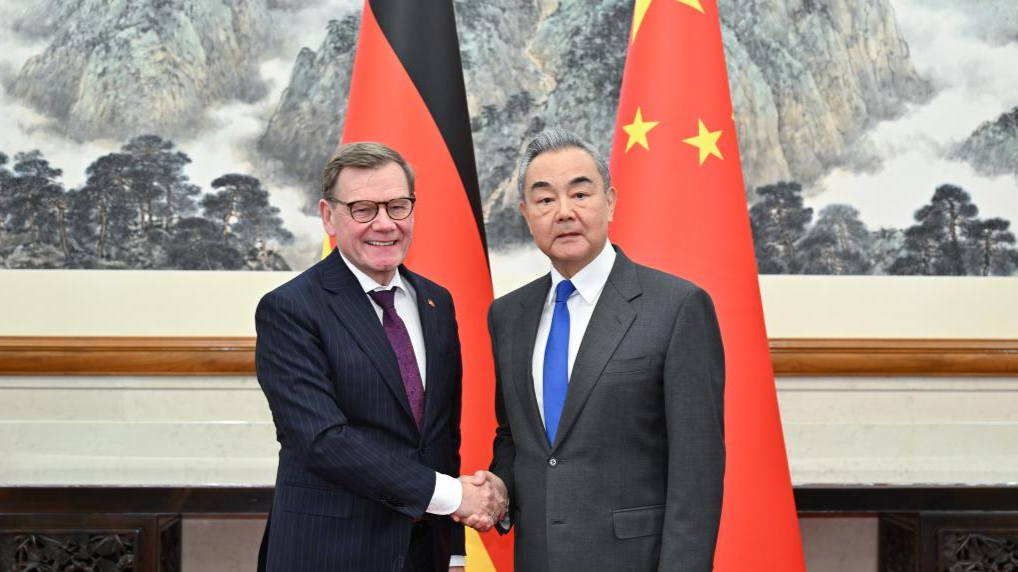
Beijing, September 2026 : Chinese Foreign Minister Wang Yi and German Foreign Minister Johann Wadephul held a telephone conversation on Monday, discussing China-Germany relations, economic and trade cooperation, multilateralism, China-European Union ties and the Taiwan issue.
According to China’s Foreign Ministry, the two sides expressed their willingness to maintain high-level engagement and advance practical cooperation across various areas. The conversation came amid efforts by Beijing and Berlin to maintain dialogue while navigating differences over trade, industrial policy, market access and broader international issues.
Wang Yi said China and Germany are major economies and comprehensive strategic partners, stressing the importance of strengthening strategic communication and mutual trust. He said the two countries should deepen cooperation in different fields in response to the changing international environment.
The Chinese foreign minister also called for greater support for multilateralism and free trade. He said closer cooperation between China and Germany would serve the interests of both countries and also contribute to stable China-EU relations.
Wang urged both sides to build on the progress already achieved and expand practical cooperation in economic and trade areas. He said maintaining regular communication and strengthening mutually beneficial cooperation would help provide greater stability to bilateral relations at a time of wider global economic and geopolitical uncertainty.
Taiwan Issue Discussed
The Taiwan issue also figured in the conversation, with Wang reiterating Beijing’s established position that the one-China principle forms the political foundation of China’s relations with Germany.
Wang called on Germany to continue adhering to its one-China policy and work towards strengthening mutual political trust. Beijing regards Taiwan as part of China and opposes any moves it considers to support the island’s independence. Taiwan’s political status remains one of the most sensitive issues in China’s relations with Western countries.
Germany, meanwhile, has maintained its one-China policy while continuing economic and diplomatic engagement with Taiwan. The issue has become increasingly prominent in international diplomacy as tensions between Beijing and Taipei have increased.
Germany Seeks Greater Engagement
German Foreign Minister Johann Wadephul said Berlin was interested in expanding high-level contacts with China and moving forward with a new round of intergovernmental consultations.
Wadephul also expressed support for strengthening practical cooperation in economic and trade-related areas. He reiterated Germany’s one-China policy, saying there had been no change in Berlin’s position.
The German foreign minister referred to the growing risks and challenges facing the international community and said Germany wanted to maintain dialogue with China on regional and international issues.
His comments underscored Berlin’s approach of continuing engagement with Beijing despite differences on several strategic and economic matters.
EU-China Differences
The two ministers also discussed relations between China and the European Union. Wadephul supported resolving existing differences between Beijing and Brussels through dialogue and said Germany wanted to play a constructive role in that process.
China and the EU have significant economic ties, but their relationship has faced disagreements over market access, trade practices, industrial subsidies, technology and industrial policy. European concerns over China’s manufacturing capacity and trade practices have also resulted in debates over measures designed to protect European industries.
At the same time, Germany has significant economic interests in China, particularly in manufacturing, automobiles, chemicals and other industrial sectors. Maintaining stable economic relations with Beijing therefore remains an important consideration for Berlin.
For China, Germany is one of its most important economic partners in Europe, making continued high-level communication particularly significant for broader China-EU relations.
Focus on Practical Cooperation
The discussion reflected a shared interest in keeping bilateral channels open despite differences on trade, geopolitics and security issues.
Wang’s emphasis on multilateralism and free trade came as global economic relations continue to face uncertainty from geopolitical tensions, trade restrictions and changes in industrial policies. Beijing has repeatedly called for stronger international economic cooperation and opposition to what it describes as protectionist measures.
Germany, for its part, has sought to balance its economic engagement with China with concerns relating to strategic dependencies, supply-chain resilience and broader European economic interests.
The telephone conversation also highlighted the importance both sides attach to regular diplomatic engagement. While differences remain over issues including Taiwan and aspects of China-EU economic relations, Beijing and Berlin have indicated that continued dialogue remains necessary.
The latest exchange between Wang and Wadephul is expected to provide further momentum to high-level consultations between the two countries, with economic cooperation, international affairs and China-EU relations likely to remain key areas of discussion.
The two sides’ stated focus on dialogue and practical cooperation suggests that both Beijing and Berlin intend to continue managing their differences while seeking areas where their economic and diplomatic interests overlap.
(Disclaimer :The content of this article is sourced from a news agency and has not been edited by the Mavericknews30 team.)