Gates of major barrages replaced in the last nine-and-a-half years; spare gates also prepared to deal with disasters
- Chief Minister Yogi Adityanath’s effort to ensure better utilisation of every single drop of irrigation water
- UP creates technical record by replacing gates in 60 to 70 feet deep water
- Modernisation of gates of barrages, dams and regulators gives new strength to irrigation and flood control
Lucknow, October 2026 : The Yogi government is continuously working to strengthen the irrigation system of the state, along with flood control and better management of water resources. On the directions of Chief Minister Yogi Adityanath, the Irrigation and Water Resources Department has, over the last nine-and-a-half years, placed emphasis on the construction and replacement of gates of major water structures in the state, including barrages, dams, head regulators and other hydraulic structures. Its objective is to provide uninterrupted irrigation facilities to farmers while ensuring the safety of water structures during floods and disaster situations.
All 10 Gates of Gomti Barrage Replaced
Principal Secretary, Irrigation and Water Resources, Anil Garg, said that through the initiative of the Yogi government, old and dilapidated water structures are being given a new life with modern technology. He said that due to being in use for a long time, the gates of several important barrages and dams had become damaged over time. These are being replaced in a phased manner on a priority basis so that there is no obstruction in the operation of water structures and the irrigation and flood-control system remains smooth.
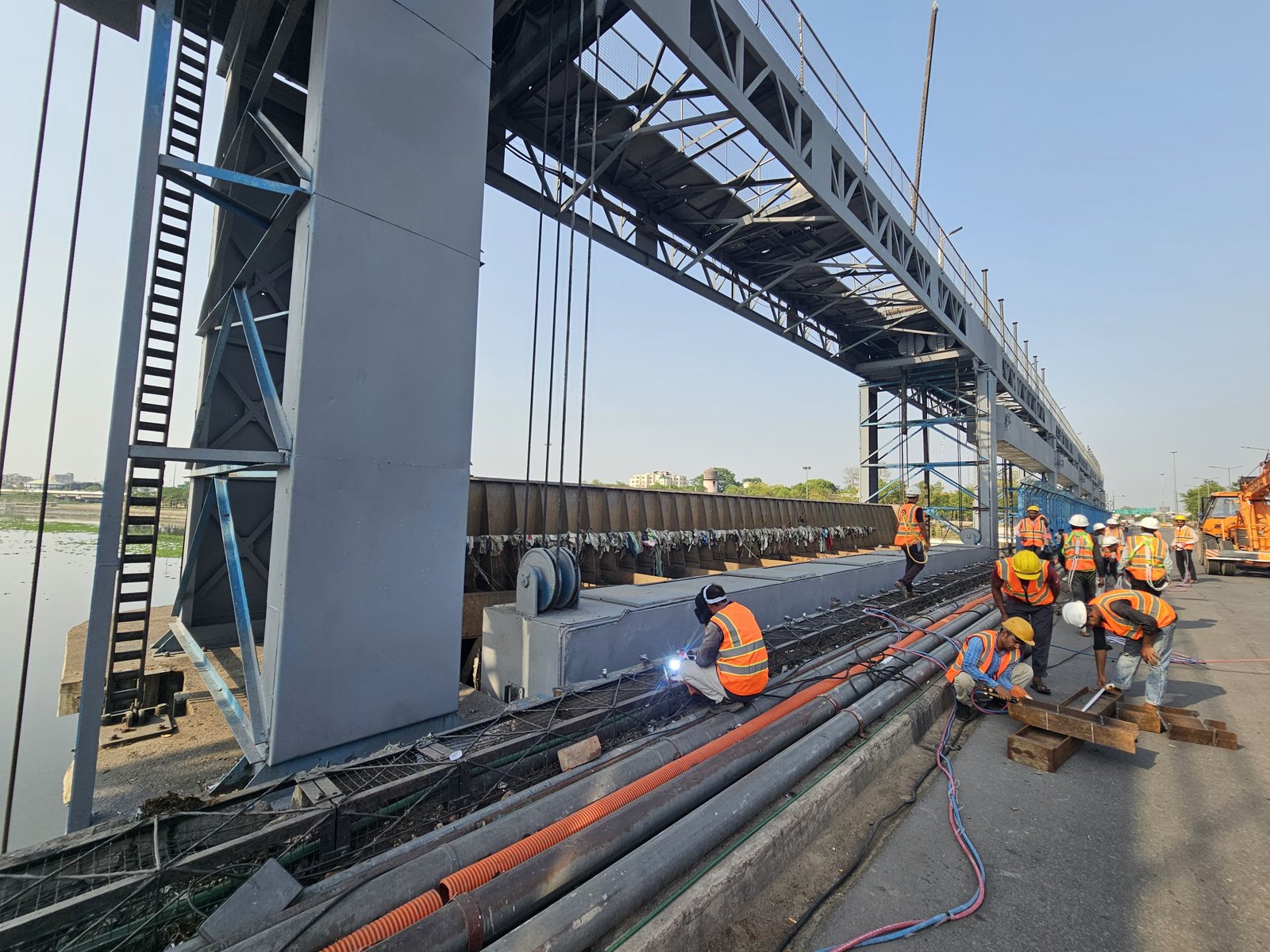
During the last nine-and-a-half years, gate replacement work has been carried out on a large scale in the state. All four gates of the Chukka Head Regulator located in Pilibhit have been replaced. Of the total 61 gates of the Narora Barrage located in Bulandshahr, replacement of 13 gates has been completed, while the construction and replacement work of the remaining 48 gates is continuing. All 10 gates of the Gomti Barrage located in Lucknow have been replaced. Meanwhile, replacement of a total of 20 gates of the Tatapur LGC and PLGC Connecting Regulator and Head Regulator located in Etah has been completed.
Replacing Gates Underwater a Major Technical Achievement
Principal Secretary Anil Garg said that 18 of the 27 gates of the Okhla Barrage located in Delhi have been replaced, and three spare gates have also been kept ready for emergency situations. Eight of the 22 damaged gates of Bhimgoda Barrage, Haridwar, have been replaced. These gates were manufactured at the department’s ISO-certified workshops in Bareilly and Jhansi.
Nine of the 15 gates of Canary Barrage located in Rampur, all eight gates of Hindon Barrage located in Ghaziabad, and old gates at other major water structures have also been replaced. Additional spare gates have also been kept safely at several dams and barrages so that immediate action can be taken in emergency situations.
For the first time in the state, gates located underwater have been successfully replaced under extremely challenging conditions with the help of modern engineering technology and expert divers. Underwater replacement of under-sluice gates located at a depth of approximately 60 to 70 feet was carried out at Matatila Dam in Lalitpur, Meja-Jargo Link Regulator and Kachanoda Dam.
Similarly, at Kachanoda Dam, replacement of two under-sluice gates at a depth of around 60 feet has been completed and one spare gate has been kept safely. Along with this, spare gates have also been prepared and kept safely for important water structures such as Maudaha in Hamirpur, Lahchura in Mahoba, Kho Barrage in Bijnor, Ghaghra Barrage in Bahraich and Sharda Barrage in Lakhimpur Kheri, so that the supply of irrigation water to farmers is not affected in an emergency situation.
Advance Preparation for Disaster Situations
Chief Engineer (Mechanical) Upendra Singh said that the focus of the Yogi government is not limited only to the construction of water structures, but also includes advance preparation to deal with possible disasters. Spare gates have been kept safely for major barrages so that if any gate suddenly develops a fault, it can be replaced without losing time. This will help prevent possible loss of life and property and maintain the water management system continuously.
After the problem of leakage from under-sluice gates located at a depth of around 80 feet at Chandraprabha Dam in Chandauli came to light, the department took the matter seriously. Due to the leakage, irrigation water suitable for farming was continuously being wasted, causing concern among farmers in the surrounding areas.
Following an inspection, officials were directed to immediately stop the leakage and permanently seal the leakage located underwater with the help of expert divers and modern technology. Emphasis was also placed on making no compromise with the quality of the work and completely stopping the leakage within the stipulated time, so that sufficient water could reach the canals for the Kharif and upcoming crops.