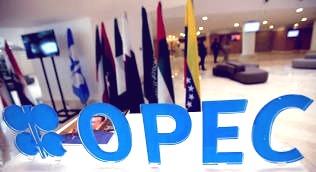
UAE Quits OPEC And OPEC+.

Dubai; April 2026: The UAE says it has quit OPEC and OPEC+, effective from 01st May 2026 dealing a heavy blow to the oil exporting groups and their de facto leader, Saudi Arabia, at a time when the Iran war has caused a historic energy shock and unsettled the global economy.
OPEC Gulf producers have already been struggling to ship exports through the Strait of Hormuz, a narrow chokepoint between Iran and Oman through which a fifth of the world’s crude oil and liquefied natural gas normally passes, because of Iranian threats and attacks against vessels.
The move came after the UAE, a regional business hub and one of Washington’s most important allies, criticised fellow Arab states for not doing enough to protect it from numerous Iranian attacks during the war. OPEC, founded in 1960, is one of the most powerful players in the global supply of oil, as the organisation produces more than a third of global oil supply.
“This decision aligns with the UAE’s long-term strategic and economic vision and the development of its energy sector, including accelerating investment in domestic energy production. It also reinforces the UAE’s commitment to its role as a responsible and reliable producer that anticipates the future of global energy markets”, UAE’s state news agency WAM reported.
It added that the decision is “also driven by national interests and the country’s commitment to actively contributing to meeting the urgent needs of the market, particularly given the ongoing geopolitical volatility in the near term, stemming from disruptions in the Arabian Gulf and the Strait of Hormuz, which impact supply dynamics”.
With UAE announcing to leave from May 01, 2026 – 11 member countries would remain in a grouping of countries that coordinate and unify petroleum policies. The grouping, which was created in 1960, includes Algeria, the Republic of the Congo, Equatorial Guinea, Gabon, Libya, Nigeria, Iran, Iraq, Kuwait, Saudi Arabia and Venezuela.
Members meet regularly to set oil production targets and coordinate output to manage global oil prices. They collectively produce about 35 percent of the world’s crude oil and account for about 50 percent of all the oil traded globally.
According to OPEC’s mission statement, member countries ensure the “stabilisation of oil markets in order to secure an efficient, economic and regular supply of petroleum to consumers, a steady income to producers and a fair return on capital for those investing in the petroleum industry”.
In 2016, due to falling oil prices, OPEC signed an agreement with 10 other oil-producing countries, including Russia, Azerbaijan, Bahrain, Brunei, Kazakhstan, Malaysia, Mexico, Oman, South Sudan, and Sudan, to create what is now known as OPEC+. The coalition aims to balance the market by setting production quotas, often reducing output to boost prices when demand falls, or increasing it when supply is tight. OPEC+ members produce roughly 41% of the world’s crude oil, giving them significant leverage over global oil prices.

Team Maverick.

Young Changemaker Jia Chandra Inspires Community with Message of Neurodiversity and Inclusion
Secunderabad, June 2026 : An evening of inspiration, empathy and awareness unfolded at Oms…

Young Changemaker Jia Chandra Inspires Community with Message of Neurodiversity and Inclusion
Secunderabad, June 2026 : An evening of inspiration, empathy and awareness unfolded at Omsree …