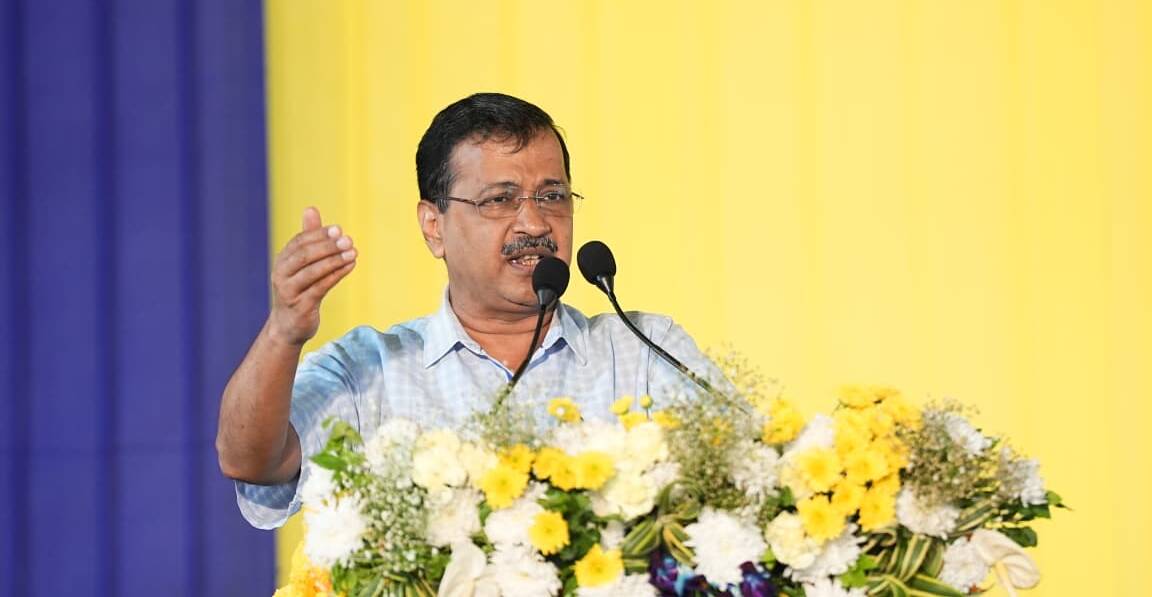
Kejriwal Alleges Threat to Democracy, Sees ‘Pro-Incumbency’ Wave in Punjab

New Delhi, May 2026 : Aam Aadmi Party (AAP) national convenor Arvind Kejriwal on Tuesday launched a strong attack on the Bharatiya Janata Party (BJP), accusing it of weakening democratic institutions across the country, while asserting that Punjab is witnessing a rare wave of “pro-incumbency” under the AAP government.
Addressing party MLAs from Punjab at Kapurthala House in the presence of Chief Minister Bhagwant Singh Mann, Kejriwal claimed that public sentiment in the state remains strongly in favour of the ruling party even after four years in office — a scenario he described as unusual in Indian politics.
“It has been four years since our government came to power, and elections are less than a year away. Typically, this is when anti-incumbency peaks. But in Punjab, the situation is entirely different. People are not expressing dissatisfaction — instead, they are openly appreciating the work done by our government,” Kejriwal said.
He urged party legislators to continue engaging with people at the grassroots level and to communicate the achievements of the government effectively. According to him, sustained public outreach will be critical in maintaining the current political momentum.
However, much of Kejriwal’s address focused on what he termed a growing “crisis of democracy” in India. He alleged that the BJP has systematically undermined democratic processes through the misuse of institutions, manipulation of electoral systems, and political coercion.
“The BJP has hijacked and destroyed democracy. Even if a party wins elections, it does not matter to them. They use central agencies, money power, and inducements to topple governments and break opposition parties,” he said.
Kejriwal specifically pointed to the alleged misuse of agencies such as the Enforcement Directorate (ED) and the Central Bureau of Investigation (CBI), claiming that opposition leaders are being targeted to weaken political rivals. He also accused the ruling party of engaging in voter list manipulation, including large-scale deletion and addition of names.
Referring to his own electoral defeat in Delhi, Kejriwal claimed that discrepancies in voter rolls significantly impacted the outcome. “Before I went to jail, my constituency had around 1.48 lakh voters. When I returned, only 1.06 lakh remained. Nearly 42,000 votes were deleted in six months. I had earlier won by 30,000 votes, but after this, I lost by 3,000 votes. How can democracy function like this?” he questioned.
He extended these allegations to other states, including West Bengal, Bihar, and Maharashtra, suggesting that similar patterns have been observed elsewhere.
Drawing a metaphor from Indian mythology, Kejriwal compared the BJP’s electoral expansion to the Ashwamedha horse described in the Ramayana — a symbol of unchecked conquest. He recalled how the AAP halted the BJP’s momentum in the 2015 Delhi Assembly elections and expressed confidence that Punjab would play a similar role in the near future.
“Since 2014, the BJP has been winning elections across the country. But in 2015, the people of Delhi stopped that momentum. Today, a similar situation is emerging again. In the upcoming Punjab elections, this ‘Ashwamedha horse’ will be stopped once more,” he said.
Kejriwal went further to suggest that the outcome of the Punjab elections could have wider national implications. He argued that a strong mandate for AAP in the state could signal a turning point in national politics and challenge the dominance of the BJP.
At the same time, he accused the central government of neglecting Punjab’s interests despite holding power at the national level. He claimed that the state has been denied its rightful financial support and has faced discrimination in key policy decisions.
Kejriwal highlighted issues such as the Rural Development Fund (RDF), water-sharing disputes, and administrative control over institutions, warning that these could become major political flashpoints. He alleged that the BJP, if it gains power in Punjab, may take decisions that could adversely affect the state’s autonomy and resources.
“They have done nothing for Punjab despite having full power at the Centre. Instead of supporting the state, they are trying to weaken it. We must explain this clearly to the people,” he told party MLAs.
He also warned that critical issues such as water distribution, control over infrastructure like the Bhakra Dam, and the status of Chandigarh could be affected if political power shifts in the state.
Calling for unity and discipline within the party, Kejriwal emphasised that the upcoming elections would require sustained effort, strategic communication, and strong grassroots mobilisation. He urged MLAs to go door-to-door, connect with voters, and highlight both the achievements of the AAP government and the challenges posed by the opposition.
“We will win Punjab, but it will require hard work. The people are with us, but we must continue to earn their trust every day,” he said.
Kejriwal’s remarks come at a time when political activity is intensifying ahead of the Punjab Assembly elections, with parties gearing up for a high-stakes contest. His speech signals AAP’s intent to position Punjab as a key battleground not just for state politics, but for shaping the broader national narrative in the months ahead.



Adani group visits Hon’ble Deputy Chief Minister and Energy Department, Govt. of Odisha
Bhubaneswar, July, 2026 : Kharavel Bhawan, representatives from the Adani Group delivered …
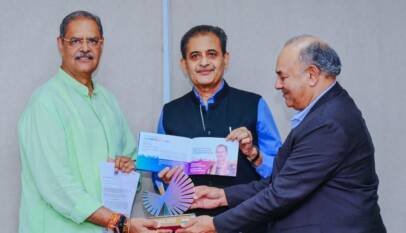
Adani group visits Hon’ble Deputy Chief Minister and Energy Department, Govt. of Odisha
Bhubaneswar, July, 2026 : Kharavel Bhawan, representatives from the Adani Group delivered a comprehensive …