NEET Paper Leak Accused’s Assets Are Been Scrutinised By CBI.

New Delhi; May 2026: The Central Bureau of Investigation (CBI) has widened its probe into the NEET paper leak case, scrutinising the assets and financial transactions of key accused amid suspicions that proceeds from the alleged examination racket were used to acquire multiple properties. Officials said the agency believes the accused individuals arrested in the current case may also be linked to the alleged NEET-UG 2024 paper leak controversy, prompting investigators to examine whether the same syndicate has been operating the network over several years.
According to sources, the CBI is now tracing financial trails, property acquisitions and possible links between accused persons across multiple states. The agency suspects that money generated through the paper leak racket may have been invested in real estate and other assets.
Several professors and educators from Pune have also come under the scanner as investigators attempt to identify the wider network allegedly involved in leaking examination papers. CBI officials have stated that some teachers may soon be questioned as the agency examines their possible role in the case.
Yesterday (Monday – 25th May) the CBI carried out fresh raids at premises linked to Manisha Gurunath Mandhare, a Botany teacher from Pune, and Manisha Havaldar, a Pune-based physics lecturer. The CBI Investigators believe documents and digital evidence seized during the searches could provide crucial leads into the operation of the alleged racket. The latest developments came even as the Supreme Court expressed concern over recurring controversies surrounding the NEET examination despite earlier reform measures.
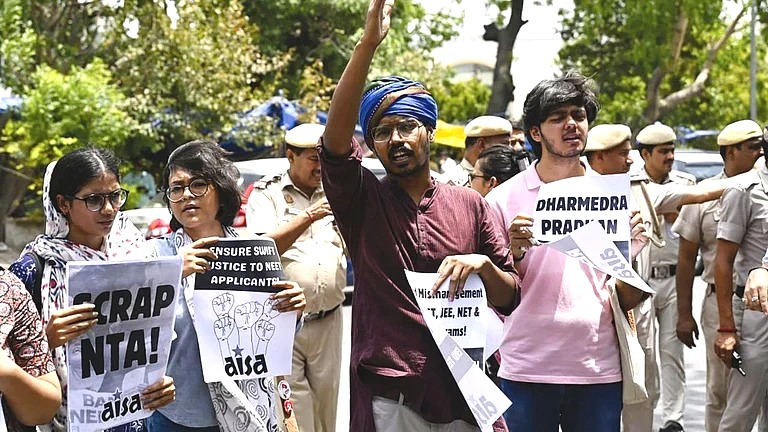
Hearing petitions seeking structural reforms in the NEET-UG examination process, a Bench of Justices P.S. Narasimha and Alok Aradhe issued notices to the Centre, the National Testing Agency (NTA) and other authorities. The petitions seek major changes in the examination process, including an immediate shift to computer-based testing (CBT) following the alleged 2026 paper leak controversy.
During the hearing, the apex court remarked that authorities appeared to have failed to learn from the 2024 NEET controversy. “It’s sad that they have not learnt their lesson”, the Justice Narasimha-led Bench orally observed.
The Supreme Court noted that after the 2024 controversy, a high-powered committee headed by former ISRO chairman K. Radhakrishnan had already submitted recommendations, many of which were accepted and backed by a monitoring mechanism. The court directed the NTA to file an affidavit detailing the implementation status of those recommendations and the functioning of the monitoring committee constituted in November 2024.
It also asked Professor Radhakrishnan to submit a separate affidavit outlining steps taken to ensure compliance with the panel’s recommendations and previous directions issued by the apex court. The petitions before the court, including those filed by the Federation of All India Medical Association (FAIMA) and the United Doctors Front, seek accountability and systemic reforms to safeguard the integrity of the country’s largest medical entrance examination.
Earlier, several arrests made in Sikar (Rajasthan), Nashik (Maharashtra) and Dehradun (Uttarakhand) indicate that question papers were on sale weeks before the national entrance test for admission in undergraduate courses in medical colleges. A set of 400 to 600 questions were being offered for Rs 10 lakhs to Rs 15 lakhs to aspirants across the country.
According to the police, as many as 120 questions from the set figured in the 180 questions framed. The fact that the sets were being sold at such high prices establish that the buyers were aware that the questions would be asked at the test. The reason why 400 to 600 questions formed each set, it is speculated, is to provide the sellers and the buyers the alibi that they were buying ‘guess papers’ and it was a coincidence that 120 questions from the set were asked at the test.
What was revealed is that 140 of the 180 questions in NEET were part of a guess paper of 410 questions. What is alarming is that the order of the questions and the options were exactly the same. The modus operandi was simple. In Sikar, the students are called in for a mock test, a day before the actual exam and made to prepare for each of the questions in the guess paper. The students had 140 of the 180 questions prepared, which guaranteed them 600 of the 720 marks even before they entered the exam hall.
The examination was conducted across the country at over 5,432 centres, in 551 cities in India and 14 cities abroad. Approximately 22.79 lakh registered students are believed to have appeared at the examination. Physically transporting question papers to all these centres would have taken several weeks and involved hundreds of agencies and handlers—making it difficult to track down leaks.
All that the National Testing Agency (NTA) has stated so far is that they were tipped off about the leak on 07th May, four days after the examination; that the NTA referred the case to the police the next day. Once confirmation was received about the leak, the NTA decided to cancel the examination and hold the examination again. It is of immense importance that NEET is a pen & paper examination. The physical paper is transported to over 5000 centres and involve at least 100,000 persons, and with question papers being transported for weeks before the examination, their vulnerability is high.
What also makes leakage of question papers inevitable is the huge difference between the cost of medical admission in government medical colleges, where the fee hovers around five lakh Rupees, and private medical colleges where a seat may cost up to Rs 1.5 crore. It makes sense for parents to shell out Rs 15 lakhs for question papers in advance of the test, if that helps secure a seat in a government medical college.
Former Rajasthan Chief Minister Ashok Gehlot has alleged that Rajasthan government tried to cover up the case for two weeks. “The BJP government in Rajasthan deliberately tried to cover it up for two weeks and played with the future of the youth. The BJP government in Rajasthan had previously concealed the OMR sheet scam in the Employee Selection Board (recruitment exam) to avoid tarnishing the government’s image. Due to weak prosecution, the accused in that case were even granted bail. Similarly, an attempt was made to hide information about the NEET (UG) exam leak”, he alleged.
Rajya Sabha MP Kapil Sibal also weighed in and wondered why leaks of question papers are being reported from primarily BJP-ruled states, pointing out the national level entrance exams cancelled since 2014.
Team Maverick.

Qatar Condemns Drone Attacks on Saudi Oil Facilities, Reaffirms Full Support for Kingdom
Doha, July 2026 : Qatar on Monday strongly condemned the attempted drone attacks targeting…

Qatar Condemns Drone Attacks on Saudi Oil Facilities, Reaffirms Full Support for Kingdom
Doha, July 2026 : Qatar on Monday strongly condemned the attempted drone attacks targeting …