Raja Ram Mohan Roy: The Torchbearer of Social Reform

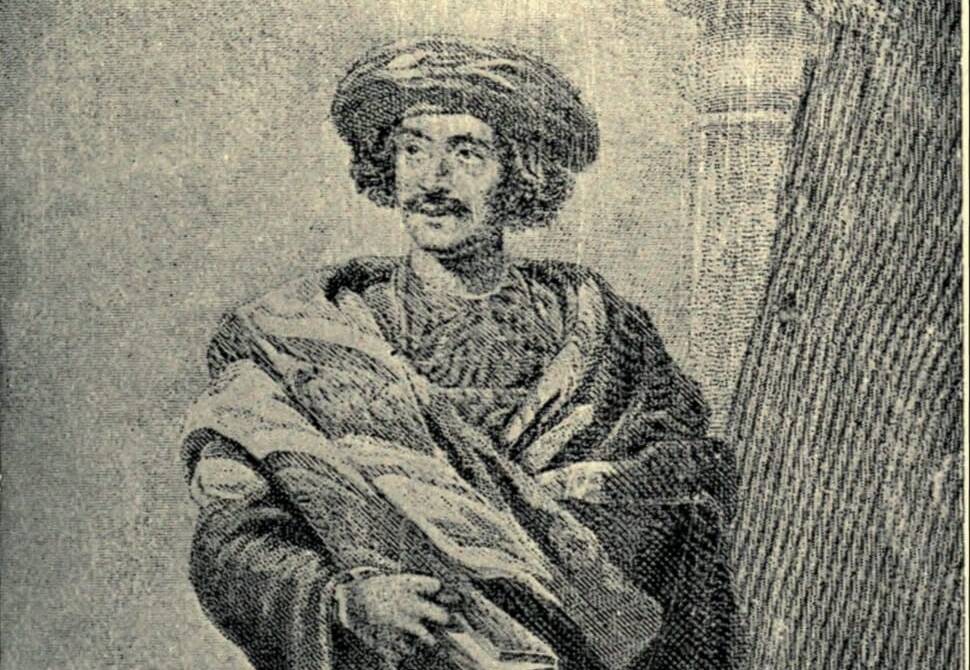
Raja Ram Mohan Roy is regarded as the pioneer of the Indian Renaissance. His birth anniversary serves as an inspiring reminder of the extraordinary work he carried out in laying the foundation for modern India’s social, religious, and educational reforms. The determined struggle he waged for social transformation during the 19th century, despite extremely adverse circumstances, and the reforms he pursued through legal and constitutional means continue to inspire society even today.
He provided Indian society with a new direction of thought during the transitional period between the 18th and 19th centuries. His ideas ushered in the dawn of modernity in India. Raja Ram Mohan Roy was born on May 22, 1772, in Radhanagar in Bengal. His father Ramakant Roy and mother Tarini Devi were deeply religious. From an early age, he acquired knowledge of Sanskrit, Persian, Arabic, Bengali, and English. He studied various religious texts extensively, including the Vedas, Upanishads, Quran, and Bible, and adopted a broad humanitarian outlook through comparative study of religions. His intellectual growth took place during a period of major social and ideological transition in India.
At that time, India was under the rule of the East India Company. While British political dominance was increasing, Indian society remained trapped in several evil customs, superstitions, and outdated traditions. Women faced extremely miserable conditions. Social evils such as Sati, child marriage, polygamy, restrictions on women’s education, harassment of widows, caste discrimination, and untouchability had deeply damaged society. Ritualism had gained greater importance in the name of religion, and superstition had overshadowed rational thinking.
In such challenging circumstances, Raja Ram Mohan Roy dedicated himself to social reform. He strongly advocated for women’s rights. His struggle against the Sati system is considered historic. He firmly argued that the inhuman practice of burning widows alive after the death of their husbands was a crime against humanity. Through numerous articles, books, and petitions, he created awareness and mobilised public opinion. He continuously appealed to British authorities to abolish Sati and communicated extensively with Governor-General Lord William Bentinck. His efforts ultimately succeeded when a law banning the Sati system was enacted in 1829, marking a landmark moment in the history of Indian social reform.
In 1828, Raja Ram Mohan Roy founded the “Brahmo Samaj”. Through this organisation, he promoted monotheism, social equality, gender equality, and rational thinking. He opposed idol worship, superstition, and meaningless rituals. He conveyed the message that religion should be based on humanity and morality.
His contribution to education was equally significant. He advocated modern education and encouraged the study of English, science, and mathematics. He strongly believed that Indian youth should acquire modern knowledge. He also played a key role in the establishment of Hindu College. Through several publications in Bengali, he worked toward social awakening and enlightenment.
Through newspapers such as “Sambad Kaumudi” and “Mirat-ul-Akhbar”, he raised awareness about social issues. He is also honoured as the father of Indian journalism.
Raja Ram Mohan Roy faced severe opposition in his reformist mission. Orthodox groups criticised him and branded him anti-religion and anti-tradition. Some even attempted to socially boycott him. However, he continued his work tirelessly on the principles of reason, logic, and humanity. His determination to fight for social welfare remains deeply inspirational.
He also corresponded with British rulers and intellectuals in England, explaining the conditions of Indian society, the importance of education, and the need for reforms. He strongly advocated the introduction of modern education in India and supported freedom of the press, raising his voice against restrictions on journalism.
In 1830, he travelled to England, where he continued to represent Indian concerns. Many scholars in England appreciated his ideas and reformist vision. Raja Ram Mohan Roy passed away on September 27, 1833, at Stapleton near Bristol. His death was a great loss to India, but the flame of social enlightenment he ignited continues to burn brightly even today.
The influence of Raja Ram Mohan Roy’s ideas inspired many social reformers across India. In Maharashtra, reformers such as Mahatma Jyotiba Phule, Savitribai Phule, Maharshi Dhondo Keshav Karve, and Bharat Ratna Dr B.R. Ambedkar further expanded the movement for social transformation.
Maharashtra has always supported social reform movements. The state has consistently admired Raja Ram Mohan Roy’s reformist campaigns and initiatives, and his work has inspired social movements across Maharashtra. Today, the Maharashtra government continues to implement several schemes for women’s empowerment, education, and social justice.
Through the Women and Child Development Department, multiple initiatives are being implemented for women’s safety, self-reliance, and health. The government has adopted welfare programmes promoting girls’ education, strengthening women’s self-help groups, preventing child marriage, preventing atrocities against women, and supporting economically weaker sections. Initiatives such as “Beti Bachao, Beti Padhao”, women’s self-help groups, skill development programmes, and digital education are aimed at bringing positive social change. Through the Ladki Bahin Yojana, the state government has opened new avenues for women’s economic empowerment and financial independence.
Social reform is not solely the responsibility of the government; it is a collective responsibility of every citizen. The message of rationality, equality, and humanity given by Raja Ram Mohan Roy remains equally relevant today. His life continues to inspire people to fight against superstition, discrimination, and injustice.
On his birth anniversary, society must reaffirm its commitment to social equality, women’s dignity, and enlightenment. That alone would be the true tribute to Raja Ram Mohan Roy.
Team Maverick.


BJP MLA Booked Over Remarks Against Rahul Gandhi’s Family
Bengaluru, July 2026 : Karnataka Police on Wednesday registered a First Information Report…
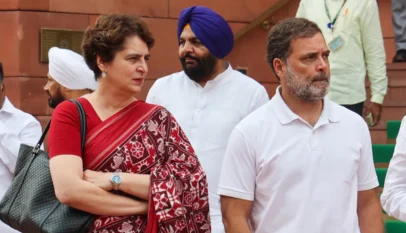
BJP MLA Booked Over Remarks Against Rahul Gandhi’s Family
Bengaluru, July 2026 : Karnataka Police on Wednesday registered a First Information Report (FIR) …