Maverick Insight: A Paradigm Shift Towards Swedish SAAB Gripen F.

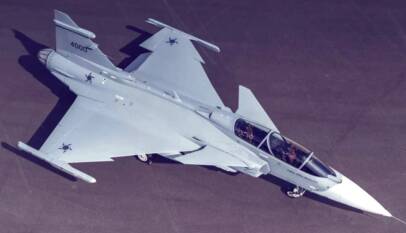
Secunderabad; June 2026: The SAAB JAS 39 Gripen F is a next-generation twin-seat multirole fighter aircraft developed by SAAB AB of Sweden as part of the Gripen E/F family. Designed to combine advanced pilot training, mission command, and frontline combat capability within a single platform, the Gripen F represents SAAB’s vision of a fighter aircraft optimised for future air warfare. Sharing the same advanced sensors, avionics, weapons, and mission systems as the Gripen E, the aircraft introduces a fully independent second cockpit that enables enhanced mission management, manned-unmanned teaming, and battlespace orchestration while maintaining full combat effectiveness.
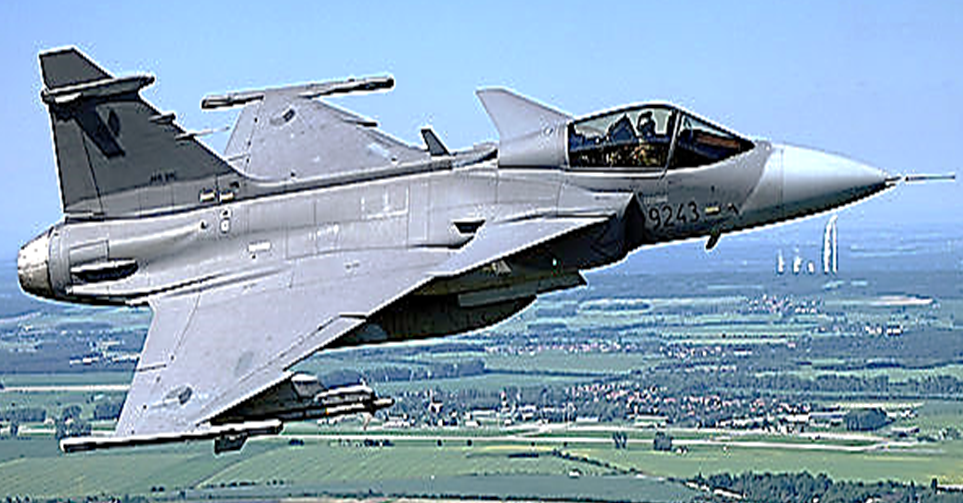
The Gripen F was specifically developed to meet the operational and training requirements of modern air forces. By combining advanced conversion training and full combat capability on a common platform, the aircraft allows pilots to train directly in the same operational environment in which they will eventually fight. This approach reduces training timelines, simplifies fleet management, and eliminates the need for separate intermediate fighter trainer aircraft.
The Gripen F retains the aerodynamic configuration of the Gripen E, incorporating a close-coupled canard-delta wing layout controlled by a fully digital fly-by-wire flight control system. The aircraft measures 15.9 metres in length, has a wingspan of 8.6 metres, stands approximately 4.5 metres high, and has a maximum take-off weight of 16,500 kg. The airframe incorporates extensive use of advanced composite materials and structural enhancements that contribute to increased durability, reduced maintenance requirements, and greater mission flexibility.
The aircraft features a tandem two-seat cockpit arrangement with both crew stations fully mission capable. SAAB’s advanced human-machine interface architecture incorporates a Wide Area Display, digital mission management systems, hands-on-throttle-and-stick controls, and highly integrated mission software. Unlike conventional training aircraft, the Gripen F’s second cockpit is intended to function as an operational mission-management station capable of supporting complex combat operations.
A defining characteristic of the Gripen F is its role as a force multiplier. SAAB describes the aircraft as a platform capable of maximising the OODA cycle: Observe, Orient, Decide, and Act; through effective workload distribution between the front and rear crew members.
During combat operations, the front-seat pilot can concentrate on aircraft control and tactical engagement while the rear-seat operator manages battlespace coordination, sensor integration, communications, command and control functions, and mission orchestration. This approach improves situational awareness, decision-making speed, and command resilience in highly contested environments where tactical information and communications may be degraded.
The Gripen F is equipped with a fixed aerial refuelling probe and retains the Gripen family’s ability to operate from dispersed bases and austere operating locations. Rapid turnaround procedures allow the aircraft to be refuelled and rearmed within approximately 15 to 25 minutes, supporting high sortie-generation rates and sustained combat operations.
Armament –
The Gripen F is designed to employ the complete range of weapons integrated within the Gripen E/F combat system. The aircraft features 10 external hardpoints located on the wingtips, under the wings, and beneath the fuselage. These stations enable the carriage of air-to-air missiles, precision-guided munitions, anti-ship weapons, reconnaissance systems, electronic warfare equipment, and external fuel tanks according to mission requirements. SAAB highlights that the aircraft’s architecture simplifies the integration of weapons already in service with customer air forces, providing significant flexibility for future operators.
An internally mounted 27 mm Mauser BK-27 revolver cannon provides close-range engagement capability against both airborne and surface targets. For air superiority missions, the aircraft can employ the MBDA Meteor beyond-visual-range air-to-air missile and the IRIS-T short-range infrared-guided missile. The Gripen E/F family is also compatible with a wide variety of precision-guided bombs, stand-off weapons, anti-ship missiles, reconnaissance pods, and electronic warfare systems.
The aircraft is capable of performing air-to-air; air-to-ground, surveillance, intelligence gathering, maritime strike, and electronic warfare missions while retaining full multirole capability. SAAB emphasises that the Gripen F employs the same advanced sensors, avionics, weapons, and mission systems as the single-seat Gripen E, ensuring no compromise in combat effectiveness despite the addition of a second cockpit. This commonality allows operators to conduct training and combat operations within a unified fleet structure while reducing logistical and maintenance burdens.
The aircraft’s open-architecture design also facilitates the rapid integration of existing national weapon inventories, enabling operators to maximize the value of previously acquired weapons and accelerate future capability upgrades.
Propulsion and Flight Performance –
The Gripen F is powered by a single General Electric F414G-GE-39E afterburning turbofan engine generating approximately 98 kN of thrust with afterburner. The engine provides significantly greater power than previous Gripen generations and contributes to improved acceleration, climb performance, payload capacity, and mission endurance.
The aircraft is capable of reaching a maximum speed of approximately Mach 2 while benefiting from increased internal fuel capacity compared with earlier Gripen variants. The additional fuel carried by the Gripen E/F generation improves endurance and operational reach while reducing dependence on external fuel tanks during many mission profiles.
SAAB has also highlighted the Gripen E/F family’s ability to conduct sustained supersonic flight without afterburner under certain operational conditions. This super cruise capability contributes to reduced fuel consumption during high-speed operations and enhances mission effectiveness.
A key characteristic of the Gripen F is its complete operational commonality with the Gripen E. Both variants share the same sensors, avionics, mission systems, weapons integration, and performance characteristics, enabling seamless transition between aircraft versions while simplifying training, maintenance, logistics, and fleet management.
Avionics –
The Gripen F incorporates one of the most advanced avionics suites currently available in a lightweight multirole fighter aircraft. The primary sensor is the Leonardo Raven ES-05 Active Electronically Scanned Array (AESA) radar, capable of simultaneous air-to-air and air-to-surface operations, long-range target detection, multi-target tracking, and engagement support.
Complementing the radar is the Leonardo Skyward-G Infrared Search and Track (IRST) system, which passively detects and tracks airborne targets through their infrared signatures without emitting radar energy. Together with the aircraft’s electronic warfare suite and advanced data-fusion architecture, these sensors provide exceptional situational awareness in contested operational environments.
One of the defining technological characteristics of the Gripen F is its open-architecture avionics framework. SAAB states that the aircraft has been designed for rapid integration of new software applications, artificial intelligence algorithms, sensors, mission systems, weapons, and hardware components. This “next-day integration” philosophy enables operators to adapt the aircraft rapidly to emerging threats and operational requirements without lengthy modernisation programs. The aircraft is therefore designed to evolve continuously throughout its operational life.
The aircraft supports Link 16, secure tactical datalinks, satellite communications, advanced sensor fusion, and network-enabled warfare operations. Information from onboard and offboard sources is automatically fused into a single tactical picture, significantly reducing crew workload while improving situational awareness, mission effectiveness, and decision-making speed.
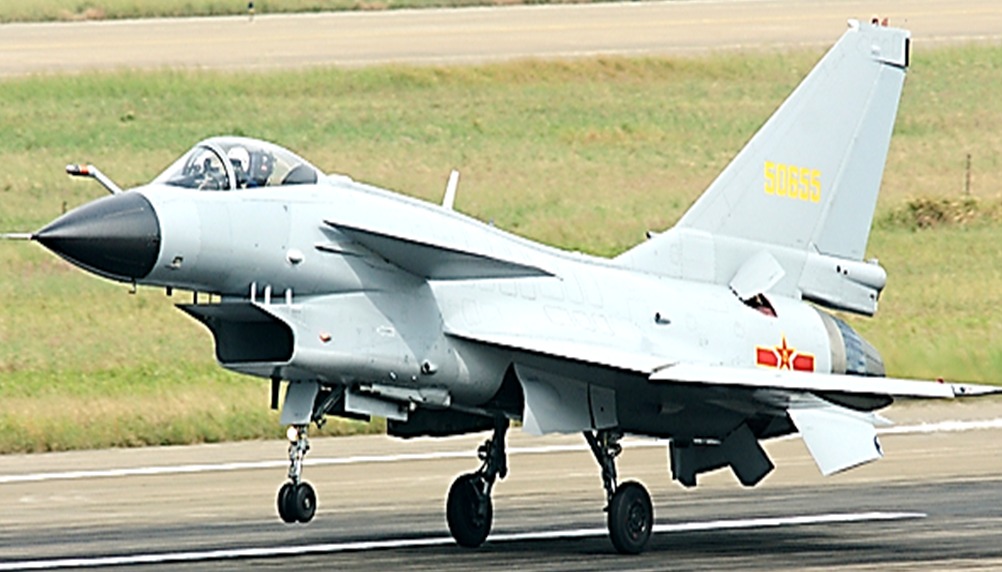
In todays (21st century’s) nuke warfare – Chinese J10 was considered to be the monster machine capable of devastating the enemies air defence system. But Swedish SAAB Gripen F has outclassed the Chengdu J10 by its niche characteristics.
KEY PERFORMANCE METRICS –
| Feature | SAAB Gripen F | Chengdu J 10 |
| Origin | Sweden. | China. |
| Max Speed | Mach 2.0. | Mach 1.8 – 2.0. |
| Radar | AESA (Raven ES-05). | AESA (KLJ-7A). |
| Key Weapons | Meteor Beyond-Visual-Range (BVR) missiles, IRIS T. | PL-15 BVR missiles, PL-10. |
| Unit Cost | $85+ million (varies by fleet size). | $45 – $50 million (export version). |
| Design Focus | Electronic warfare, sensor fusion, quick turnaround. | High-thrust engine, speed, heavy payload. |
| Range | 1850 Kilometres | 3200 Kilometres |
| Service Ceiling | 18000 M | 15240 M |
| Length: | 15.49 metres | 14.1 metres |
| Width: | 9.75 metres | 8.4 metres |
| Height: | 5.43 metres | 4.5 metres |
Team Maverick.



Iran Football Team Cleared for US Entry Ahead of 2026 FIFA World Cup
Washington, June 2026: Members of Iran’s national football team have received visas to ent…

Iran Football Team Cleared for US Entry Ahead of 2026 FIFA World Cup
Washington, June 2026: Members of Iran’s national football team have received visas to enter …