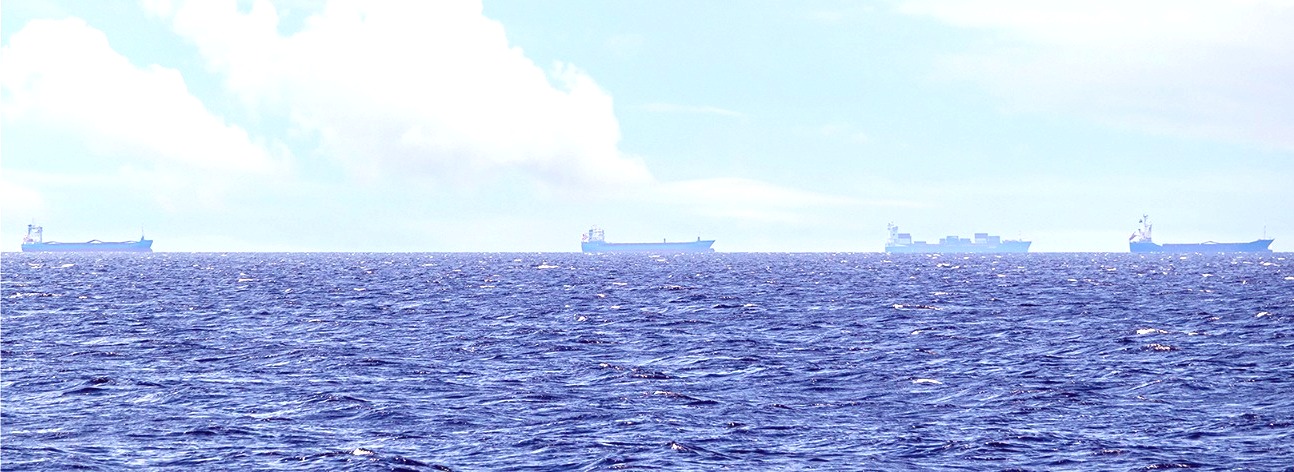
International Maritime Organisation Releases Plan For Strait Of Hormuz Evacuations.

London; June 2026: Following the signing of the Memorandum of Understanding between the Islamic Republic of Iran and the United States, IMO Secretary-General Arsenio Dominguez issued this statement:
“After months of hardship and distress for thousands of innocent seafarers, and negative impact for the whole world, I welcome with deep satisfaction the peace agreement concluded between the United States and Iran, marking a decisive step towards restoring maritime security and bringing to an end the unacceptable attacks against civilian shipping.
I want to pay tribute to the 14 (fourteen) innocent seafarers who tragically lost their lives during this conflict. Their dedication in service of global trade will not be forgotten.
We will begin the implementation of the evacuation plan for over 11,000 seafarers still stranded in the region. This large-scale operation will be carried out in close cooperation with Iran, Oman, all other coastal States in the region, the United States and the maritime industry.
We have secured the necessary safety guarantees and have thoroughly verified the conditions for safe navigation to support these operations. We remain fully committed to ensuring the safety of seafarers and the continuity of global trade”.
Accordingly, the IMO is implementing the evacuation of over 11,000 seafarers on vessels stranded in the Gulf region, in line with the decision of the IMO Council and in close coordination with Member States and industry.
Immediate instructions for vessels –
1. What should vessels do at this stage?
Vessels should remain in their current position and await further instructions.
2. Should vessels start navigating toward the Strait or the waiting area now?
No. Vessels should not initiate any movement at this stage.
3. Why must vessels wait?
To allow safe sequencing, avoid congestion, and mitigate risks related to mines and degraded navigation conditions.
4. Who will trigger vessel movements?
Movements will only begin once vessels are contacted through the coordinated mechanism involving IMO, UKMTO, and MICA Center, followed by coastal State coordination.
5. What is the key message to shipmasters right now?
Do not move. Wait to be contacted. Strictly follow instructions issued by relevant coastal States.
Initial Contact & Coordination –
6. Do vessels need to proactively contact any authority?
No. Vessels do not need to initiate contact.
7. Who will contact vessels?
UKMTO and the MICA Center will contact vessels directly. In certain circumstances, where necessary, with the assistance of coastal States, vessels may be contacted via VHF channel 16 International Hailing and Distress Channel.
8. What happens once a vessel is contacted?
A vessel will receive instructions to proceed to a designated waiting area and prepare for routing. A vessel can begin coordinating its desired route with the relevant coastal State (Islamic Republic of Iran or Sultanate of Oman) at any time after notification.
9. What if a vessel is not contacted?
Vessels will be contacted in due course. IMO is actively working to ensure accurate awareness of all vessels in the Gulf who desire to be evacuated. IMO is also working closely with industry representative groups with consultative status at IMO.
Waiting Area –
10. Where is the waiting area located?
The coordinates are specified in the Notice to Mariners issued by Oman: 3 NM RADIUS OF POSITION 26-16.17N/055-46.52E
11. Can vessels proceed to the waiting area without instruction?
No. Vessels should wait for instructions before proceeding. Crowding the waiting area will only result in the need to pause further notifications for the safety of navigation.
12. How long will vessels stay there?
Depending on sequencing and traffic management, efforts are being made to minimize delays. Vessels may proceed on their desired route as soon as confirmation is received from the relevant coastal State.
Routing Options –
13. Who decides the route for each vessel?
After being contacted by UKMTO or the MICA Centre, vessels are free to choose either the southern or northern route to leave the Strait. Vessels should do so after conducting their own independent risk assessment.
14. What routing options are available?
Northern route (via Islamic Republic of Iran waters). See details
15. What must vessels do after choosing a route?
Vessels should coordinate with the relevant coastal State authorities to ensure safe navigation.
16. Can vessels change routes?
Only if operationally feasible and coordinated with the authorities concerned.
Role of IMO vs Coastal States –
17. Does IMO coordinate routing and maritime safety?
No. IMO provides the overall framework and coordination to ensure a phased approach to departure in the interest of safety of navigation, but routing and maritime safety are the responsibility of the coastal States.
18. Who is responsible for operational routing?
Islamic Republic of Iran for the northern route. Sultanate of Oman/United States for the southern route. Vessels wishing to coordinate their transits with the United States may continue to do so in accordance to JMIC Advisory Notice 009-26 and JMIC Advisory Notice 010-26.
19. Who manages traffic and deconfliction?
The coastal States (Islamic Republic of Iran and Sultanate Oman) manage traffic flow and collision avoidance.
Navigation & Constraints –
20. Can vessels use the existing Traffic Separation Scheme (TSS)?
No. The TSS should not be used due to the reported presence of mines.
21. How will navigation be organized instead?
Through specific routing instructions and corridors coordinated by the coastal States.
Safety & Risk –
22. Are safety guarantees in place?
Yes. Necessary safety assurances have been secured prior to activation of the plan.
23. What are the main risks?
Mines, navigational constraints, and high traffic density.
24. Why is strict coordination essential?
To avoid collisions and ensure safe passage in a degraded maritime environment.
Traffic Management –
25. Who manages vessel traffic?
Coastal States (Islamic Republic of Iran and Sultanate of Oman).
26. Will convoys be used?
Not systematically, but grouping may be implemented if required by coastal state authorities acting in the interest of safety of navigation
Communication Protocols –
27. What communication rules apply?
Each coastal state has published instructions for how to transit, including contact information. Strict adherence to assigned channels and avoidance of unnecessary transmissions is recommended.
28. Who should vessels contact for routing coordination?
The relevant coastal State authority depending on the chosen route.
Responsibilities of Vessels –
29. What are shipowners and masters expected to do?
- Facilitate communications with UKMTO and MICA Centre.
- Wait for instructions before moving.
- Coordinate route choice with coastal authorities.
- Strictly follow all instructions.
Contingencies –
30. What if the situation deteriorates?
Movements may be delayed, suspended, or rerouted based on risk assessments.
31. What if a vessel does not follow instructions?
It will operate outside the coordinated framework and assume full responsibility.
Team Maverick.






Shivakumar Says Congress United, Assures Women Will Get Cabinet Berth
Bengaluru, Aug 2026 : Karnataka Chief Minister D.K. Shivakumar on Monday sought to dismiss…
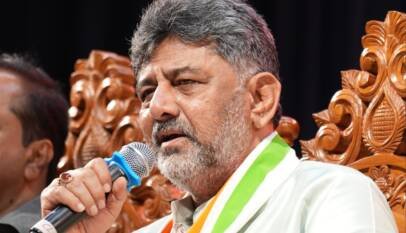
Shivakumar Says Congress United, Assures Women Will Get Cabinet Berth
Bengaluru, Aug 2026 : Karnataka Chief Minister D.K. Shivakumar on Monday sought to dismiss …