Trump Declares Strait of Hormuz Reopened Under US Protection, Imposes Full Blockade on Iranian Shipping

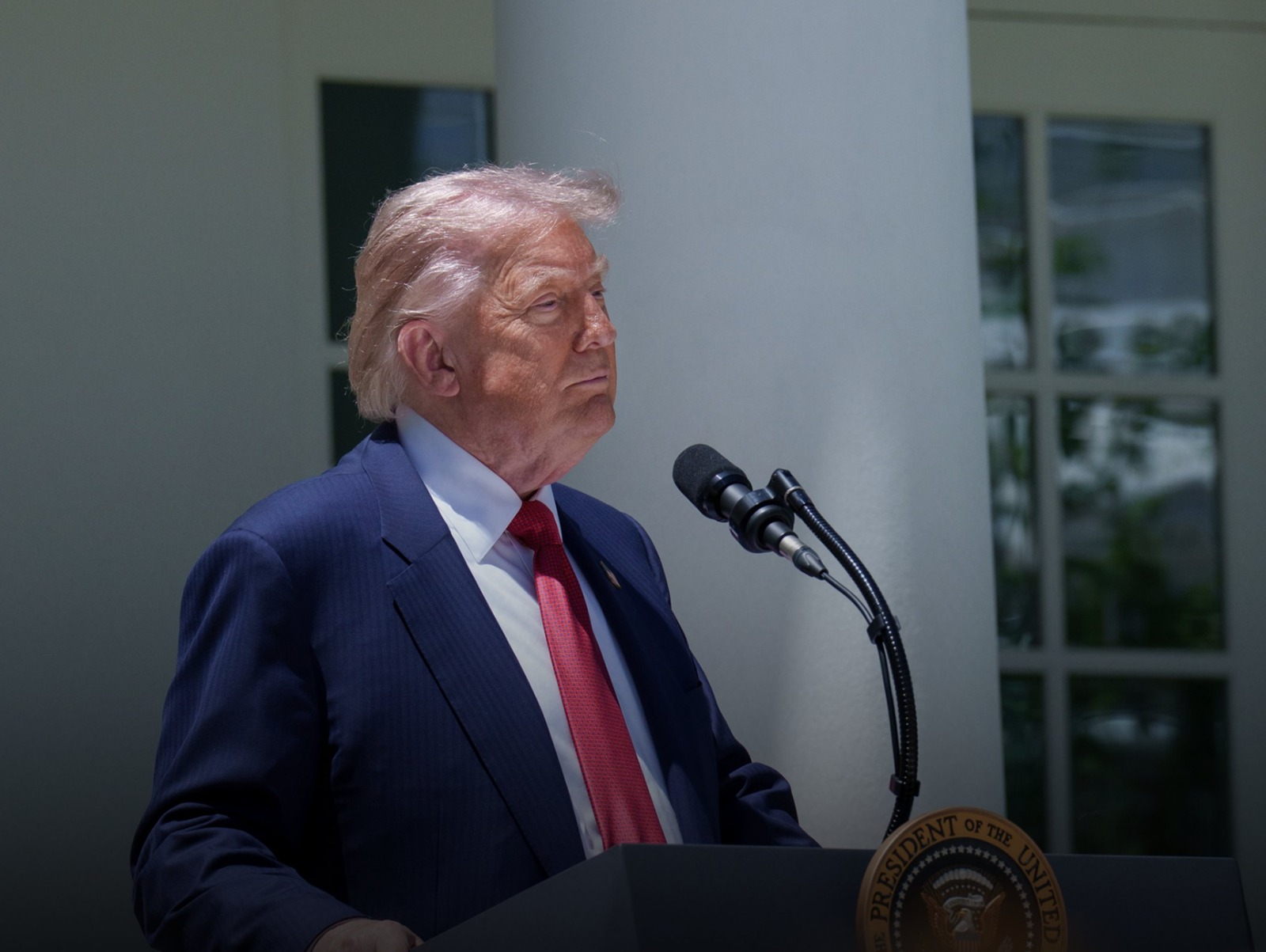
Washington, July 2026 : US President Donald Trump on Tuesday announced that the Strait of Hormuz has been fully reopened for international shipping under the protection of the US military, while simultaneously imposing what he described as a “FULL Blockade” on vessels travelling to Iranian ports or carrying Iranian cargo. Trump also revealed that he had dropped his earlier proposal to impose a 20 per cent reimbursement fee on commercial shipping, saying Gulf nations had instead agreed to significantly expand their investments in the United States.
Making the announcement on his social media platform, Truth Social, Trump credited the US armed forces for restoring safe passage through one of the world’s most strategically important maritime routes.
“Oil is flowing like never before, thanks to the awesome power of the United States Military,” Trump wrote, praising Defence Secretary Pete Hegseth, Chairman of the Joint Chiefs of Staff General Dan Caine, and Commander of the US Central Command Admiral Brad Cooper for overseeing the operation.
According to Trump, the Strait of Hormuz is now open to all commercial shipping except vessels linked to Iran.
“Because of them, and all members of the most powerful military anywhere in the world, by far, the Strait of Hormuz is open to all ship traffic except for Iran,” he said.
The President accused Iran’s leadership of pursuing policies that threatened regional stability and announced strict maritime restrictions targeting Tehran.
“We will therefore have a FULL Blockade, but only on ships coming to and from Iranian ports, or carrying anything to do with Iranian cargo,” Trump declared.
The Strait of Hormuz is one of the world’s busiest energy corridors, handling nearly one-fifth of global oil shipments. Any disruption to navigation through the narrow waterway has significant implications for international energy markets and global trade.
Trump also confirmed that he had abandoned his earlier proposal requiring countries using the Strait of Hormuz to pay the United States a 20 per cent fee for providing maritime security.
Instead, he said discussions with Gulf leaders had resulted in a different arrangement under which key regional allies would increase investments in the United States.
“Based on highly productive conversations with Middle East leadership, I have decided to replace the 20 per cent United States reimbursement fee with trade and investment deals that the various Gulf States will be making into the United States,” Trump wrote.
He predicted that the proposed investments would inject billions of dollars into the American economy and create millions of new jobs.
“These new investments will make that number even larger, and we will see factories, plants and equipment pour into the United States at historic levels, creating additional millions of high-paying American jobs,” he said.
Later, while meeting Iraqi Prime Minister Ali al-Zaidi at the White House, Trump elaborated on his decision to withdraw the proposed shipping fee.
He said the United States had protected the Strait of Hormuz for decades without receiving compensation, despite no longer relying heavily on Middle Eastern oil imports.
“It was never fair to me that we would be guarding the strait when we basically don’t take anything. We don’t need the oil at all,” Trump told reporters.
He stressed that American military protection primarily benefited allied countries rather than the United States itself.
“It wasn’t important for us, but it was important for allies. It was important for people that we get along with very well, including the major Gulf state countries,” he added.
According to Trump, his proposal immediately prompted discussions with leaders from Saudi Arabia, the United Arab Emirates, Qatar, Bahrain and Kuwait, who suggested an alternative approach.
“I was called by different people, different countries, kings and emirs… and they said, ‘We’d love to do it a different way. We’d love to invest in the United States with billions and billions of dollars,'” Trump said.
The President said he found the proposal more attractive than charging international shipping.
“I like that, actually, because I don’t think anybody should be able to charge a fee for the strait or for any other strait relationship in terms of other sections of the world,” he said.
“But we were doing it as a reimbursement. The Gulf states are going to invest a tremendous amount of money into the United States, and that was very satisfactory to me. I think it’s actually much better.”
When asked whether the reimbursement proposal had been completely abandoned, Trump confirmed that it had.
“You have Saudi Arabia, UAE, Qatar, Bahrain and Kuwait. They would love to invest more money in the United States at record amounts, and that would be very acceptable.”
“This way there’s no fee. I don’t like the concept of a fee, but at the same time, it’s not fair that we’re protecting this strait for the entire world, for China and everyone.”
“I don’t mind protecting it for China. I don’t mind protecting it for anybody, but it’s unfair that we’re not somehow compensated.”
Trump argued that expanded foreign investment would deliver greater long-term benefits than imposing charges on global shipping.
“They’re investing, and they’re getting a return on their money. They’re going to be making massive investments into the United States, and I like that much better,” he said.
The President concluded by reiterating his administration’s uncompromising position on Iran’s nuclear ambitions, declaring that Tehran would never be allowed to acquire a nuclear weapon.
“The days of Iran killing hundreds of thousands of people, including 52,000 protestors, are over and, most importantly, Iran will never have a nuclear weapon,” Trump asserted.
The announcements mark a significant escalation in Washington’s pressure campaign against Tehran while also signalling a renewed economic partnership with Gulf allies through expanded trade and investment instead of direct security payments.
(The content of this article is sourced from a news agency and has not been edited by the Mavericknews30 team.)


Shivakumar Says Congress United, Assures Women Will Get Cabinet Berth
Bengaluru, Aug 2026 : Karnataka Chief Minister D.K. Shivakumar on Monday sought to dismiss…
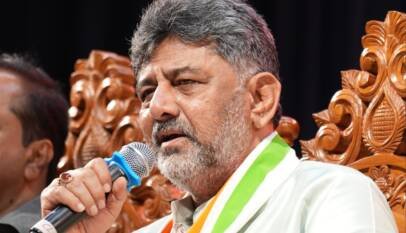
Shivakumar Says Congress United, Assures Women Will Get Cabinet Berth
Bengaluru, Aug 2026 : Karnataka Chief Minister D.K. Shivakumar on Monday sought to dismiss …