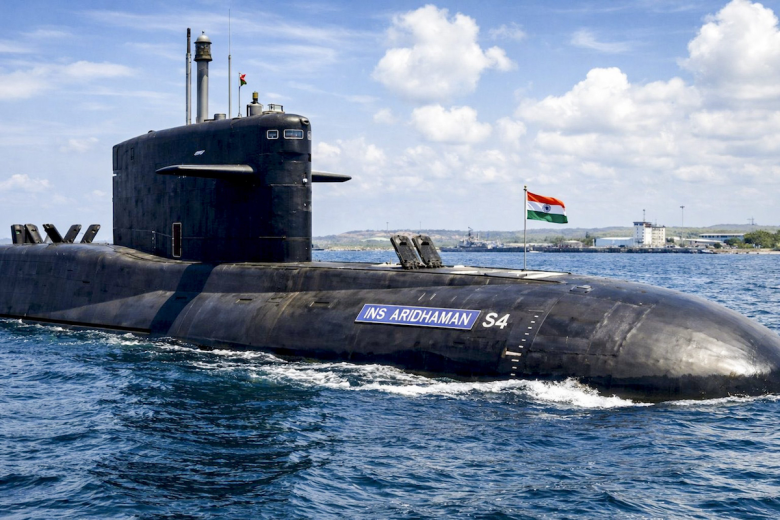
India Strengthens Sea-Based Nuclear Deterrence, Expands Strategic Edge Over Pakistan

New Delhi, July 2026 : India has significantly strengthened its strategic nuclear deterrence by advancing its sea-based nuclear capabilities, creating what defence analysts describe as a widening gap with Pakistan in one of the most critical aspects of modern military strategy. According to a recent report published by Modern Diplomacy, New Delhi has quietly crossed a major milestone by deploying nuclear warheads aboard submarines, giving it a robust second-strike capability that Islamabad currently lacks.
The report argues that Pakistan has no effective response to India’s rapidly evolving nuclear posture. While both countries have maintained nuclear arsenals since conducting tests in 1998, the latest developments indicate that India’s long-term investments in nuclear-powered ballistic missile submarines (SSBNs) have fundamentally altered the strategic balance in South Asia. Analysts believe this represents the most consequential shift in the region’s deterrence architecture in more than two decades.
At the heart of India’s advantage is the survivability of its nuclear arsenal. Unlike land-based missile systems or aircraft, submarines carrying nuclear missiles remain hidden beneath the ocean for extended periods, making them extremely difficult to detect or destroy. India’s policy of maintaining operational secrecy surrounding its submarine deployments further enhances this deterrence. The exact locations of these submarines, the number of missiles they carry, and their operational status remain closely guarded, ensuring that any adversary would find it nearly impossible to neutralise them in a surprise attack.
India’s sea-based nuclear programme has evolved steadily over the past decade. The commissioning of INS Arihant marked the country’s entry into the exclusive group of nations possessing nuclear-powered ballistic missile submarines. This capability has since expanded with the induction of INS Arighaat, which is equipped with the indigenous K-4 submarine-launched ballistic missile capable of striking targets up to 3,500 kilometres away. Earlier this year, INS Aridhaman joined the fleet, while another SSBN, INS Arisudan, is expected to be commissioned in 2027.
Once all four submarines are operational, India will possess a fleet capable of maintaining continuous at-sea deterrence. Defence experts explain that such a force structure enables one submarine to remain on patrol at all times while others rotate through maintenance, transit, and training cycles. This ensures an uninterrupted nuclear presence beneath the sea, significantly strengthening India’s second-strike capability.
Supporting this growing fleet is an expanding network of strategic infrastructure. India has developed INS Varsha, a hardened submarine base on its eastern coast designed to protect and support its nuclear-powered fleet. In addition, the operational jetty established on Agalega Island in the western Indian Ocean provides logistical support for submarines operating far from the Indian mainland. This forward operating facility extends patrol durations and enhances India’s ability to maintain a persistent presence across vast stretches of the Indian Ocean.
The report also points to observations contained in the Stockholm International Peace Research Institute (SIPRI) Yearbook 2026, which suggest that India has shifted from storing nuclear warheads exclusively on land to deploying them aboard submarines during operational patrols. Although New Delhi has not officially confirmed such deployments, analysts view this as a significant step toward a fully operational and survivable nuclear triad consisting of land-based missiles, aircraft, and sea-based nuclear forces.
Military strategists note that a nuclear-powered ballistic missile submarine on patrol represents one of the most secure elements of any country’s nuclear arsenal. Operating silently across millions of square kilometres of ocean, such submarines remain virtually impossible to locate. Their missiles are already armed and ready for launch, ensuring that even after a large-scale first strike, the country retains the ability to respond with devastating force. This guaranteed retaliatory capability forms the foundation of credible nuclear deterrence.
Pakistan, by comparison, continues to face significant limitations in developing a comparable sea-based deterrent. Its principal effort centres on the Babur-3 submarine-launched cruise missile, which is believed to have the capability to carry nuclear warheads. However, the missile is expected to be deployed aboard Agosta-class diesel-electric submarines, with operational capability projected only around 2027.
Experts argue that this approach falls far short of matching India’s SSBN fleet. Diesel-electric submarines require frequent surfacing or snorkelling to recharge batteries, making them susceptible to detection by satellites, maritime patrol aircraft, surface warships, and underwater sensor networks. Their operational endurance is measured in weeks rather than months, limiting their ability to conduct continuous deterrent patrols over extended distances.
Nuclear-powered submarines, in contrast, can remain submerged for months without surfacing, providing unmatched stealth and endurance. This makes them significantly more survivable during conflict and far better suited to maintaining an assured second-strike capability. The technological divide between conventional and nuclear-powered submarines therefore has profound strategic implications.
Pakistan’s continued reliance on land-based ballistic missiles and aircraft leaves much of its nuclear arsenal vulnerable to pre-emptive attacks. Without a credible sea-based second-strike capability, its deterrence posture remains comparatively less secure. Although Islamabad continues efforts to modernise its strategic forces, analysts believe it remains years away from matching India’s underwater nuclear capability.
The Modern Diplomacy report concludes that India’s steady investment in indigenous submarine technology, long-range ballistic missiles, and supporting naval infrastructure has fundamentally reshaped South Asia’s strategic environment. By consolidating a credible and survivable nuclear triad, New Delhi has strengthened its ability to deter aggression while ensuring assured retaliation under any circumstances.
As the strategic competition in the Indo-Pacific intensifies, India’s expanding sea-based nuclear capability is increasingly viewed as a cornerstone of its national security strategy, reinforcing its position as a major regional power with a resilient and modern nuclear deterrent.
(The content of this article is sourced from a news agency and has not been edited by the Mavericknews30 team.)




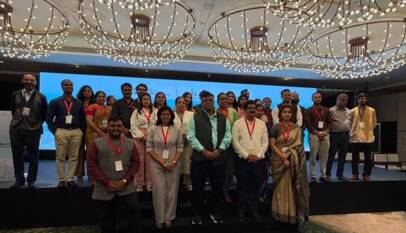


MoU Signed for International Cricket Stadium in Kolhapur in the Presence of Chief Minister Devendra Fadnavis and Deputy Chief Minister Sunetra Ajit Pawar
World-Class Sports Infrastructure to Boost Opportunities for Athletes Mumbai, July 2026 : …

MoU Signed for International Cricket Stadium in Kolhapur in the Presence of Chief Minister Devendra Fadnavis and Deputy Chief Minister Sunetra Ajit Pawar
World-Class Sports Infrastructure to Boost Opportunities for Athletes Mumbai, July 2026 : A Memorandum …