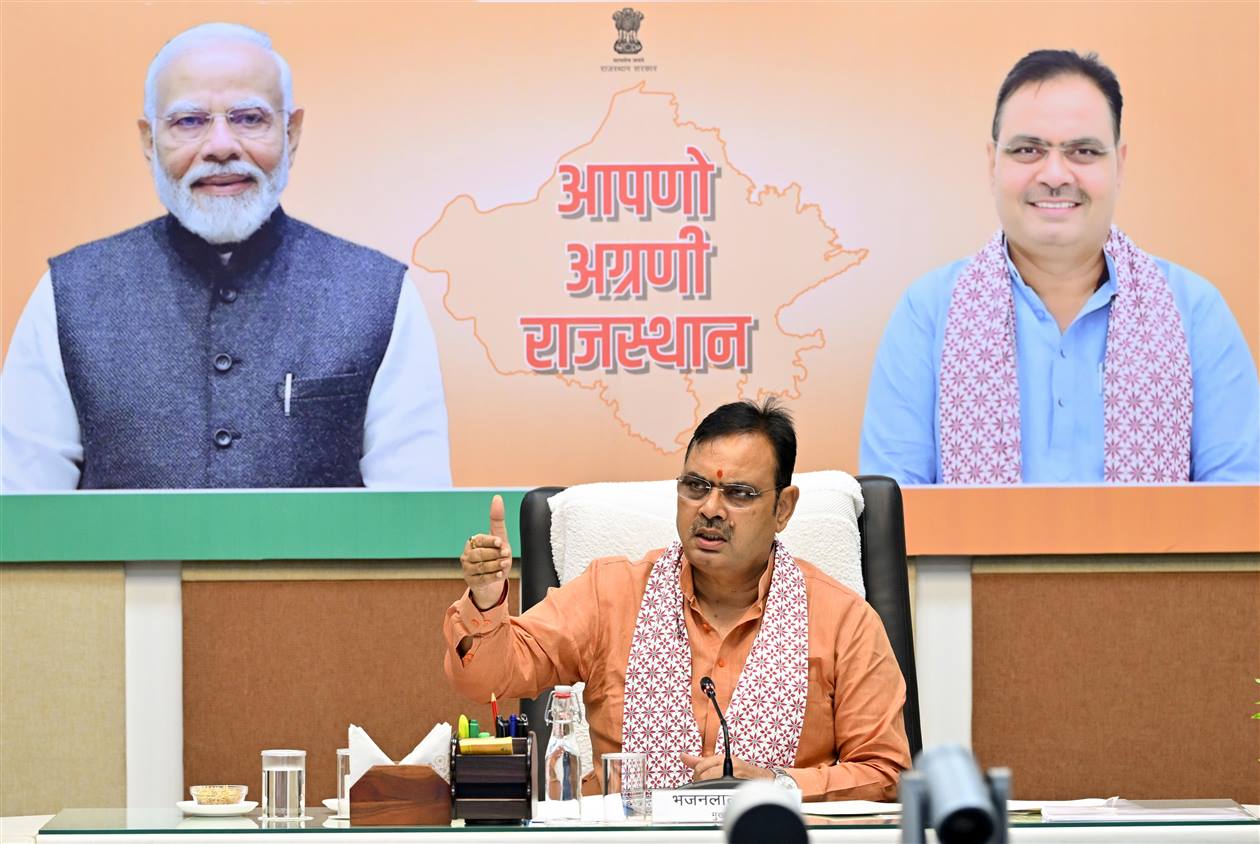
Rajasthan Government Prioritises Safety and Dignity of SC/ST Communities: Chief Minister Bhajan Lal Sharma

State-Level Vigilance and Monitoring Committee Reviews Progress in Atrocities Prevention
Jaipur, July 2026: Rajasthan Chief Minister Bhajan Lal Sharma on Tuesday said that ensuring the safety, dignity, and justice of members of the Scheduled Castes (SC) and Scheduled Tribes (ST) remains one of the state government’s highest priorities. He stated that sustained efforts by the government over the past two-and-a-half years have led to a significant decline in crimes against SC and ST communities.
Chairing the meeting of the State-Level Vigilance and Monitoring Committee at the Chief Minister’s residence, Sharma directed officials to take strict action against those committing crimes against SC/ST communities while encouraging initiatives that promote social harmony and communal unity.
Significant Decline in Atrocity Cases
The Chief Minister highlighted that cases of atrocities against SC/ST communities fell by nearly 28 per cent in 2025 compared to 2023. He further noted that the number of registered cases declined by 15.88 per cent in 2025 compared to 2024, while the first six months of 2026 recorded a further 15.49 per cent reduction compared to the corresponding period in 2025.
The pace of case disposal has also improved substantially. In 2023, only 35.16 per cent of cases registered under the SC/ST (Prevention of Atrocities) Act were disposed of within the mandated 60-day period. This increased to nearly 47 per cent in 2025 and further rose to 67.88 per cent by July 2026. The average time taken to dispose of cases has been reduced from 128 days to 53 days.
To improve accountability, the government has doubled the random verification of cases closed through Final Reports (FRs), increasing the verification rate from 10 per cent to 20 per cent.
Strengthening Investigation and Prosecution
Sharma said that while crimes against SC/ST communities have declined, faster disposal of cases under the Scheduled Castes and Scheduled Tribes (Prevention of Atrocities) Act has also been achieved, with nearly 68 per cent of cases now being resolved within 60 days.
He informed the committee that SC/ST Cells have already been established in 45 police districts, while the remaining six police districts will have dedicated cells set up shortly.
The Chief Minister directed the Police and Prosecution Departments to work in close coordination to further improve conviction rates in crimes committed against SC/ST communities.
Regular Monitoring and Social Harmony
The Chief Minister instructed officials to convene district and sub-divisional vigilance and monitoring committee meetings regularly to strengthen social harmony and communal cooperation. He also directed that such meetings should be held twice annually at the panchayat level to enhance grassroots monitoring.
Timely Financial Assistance for Victims
Sharma stressed the need for continuous monitoring of registered cases and called for a special drive to dispose of cases pending for more than one year. He instructed officials to ensure that sensitive cases are investigated promptly and thoroughly.
He also directed that victims receive the financial assistance provided under the SC/ST (Prevention of Atrocities) Act without delay—from the registration of the FIR through to the final disposal of the case in court.
Review of Implementation
The meeting reviewed the effective implementation of the SC/ST (Prevention of Atrocities) Act, assistance provided to victims, disposal of pending cases, and timely enforcement of the law. Officials presented updates on FIR registrations, investigation timelines, filing of charge sheets, financial assistance extended to victims’ families, progress of the assistance portal, and financial aid distributed over the past three years.
The Chief Minister instructed officials to conduct regular reviews of pending compensation cases at both the police station and district levels to ensure timely relief for victims.
He also reviewed the functioning of institutional grievance redressal mechanisms, including helplines, helpdesks, and online portals, and directed officials to ensure the prompt disposal of complaints received through the National Helpline.
Emphasising coordinated governance, Sharma said officials from the Police, Social Justice and Empowerment, and Prosecution Departments must work with sensitivity and close cooperation to effectively safeguard the rights, security, and access to justice of Scheduled Castes and Scheduled Tribes across Rajasthan.
The meeting was attended by Deputy Chief Minister Dr Prem Chand Bairwa, Minister of State for Home Jawahar Singh Bedham, Social Justice and Empowerment Minister Avinash Gehlot, committee members, Chief Secretary V. Srinivas, Director General of Police Rajeev Sharma, representatives of the National Commission for Scheduled Castes, the National Commission for Scheduled Tribes, and senior government officials.



Parliament Paralysed for Second Day as Opposition Protests Over NEET Leak, Student Crackdown
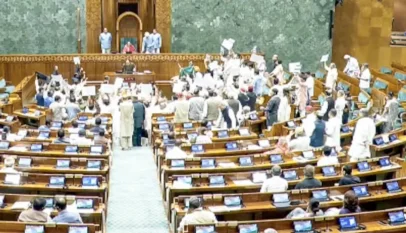
New Delhi, July 2026 : Parliament remained deadlocked for the second consecutive day of th…
Parliament Paralysed for Second Day as Opposition Protests Over NEET Leak, Student Crackdown
New Delhi, July 2026 : Parliament remained deadlocked for the second consecutive day of …