United Nation’s Deputy Special Coordinator Urges To Consolidate Gaza Ceasefire, Halt Escalating Violence, Settlement Activity in West Bank.

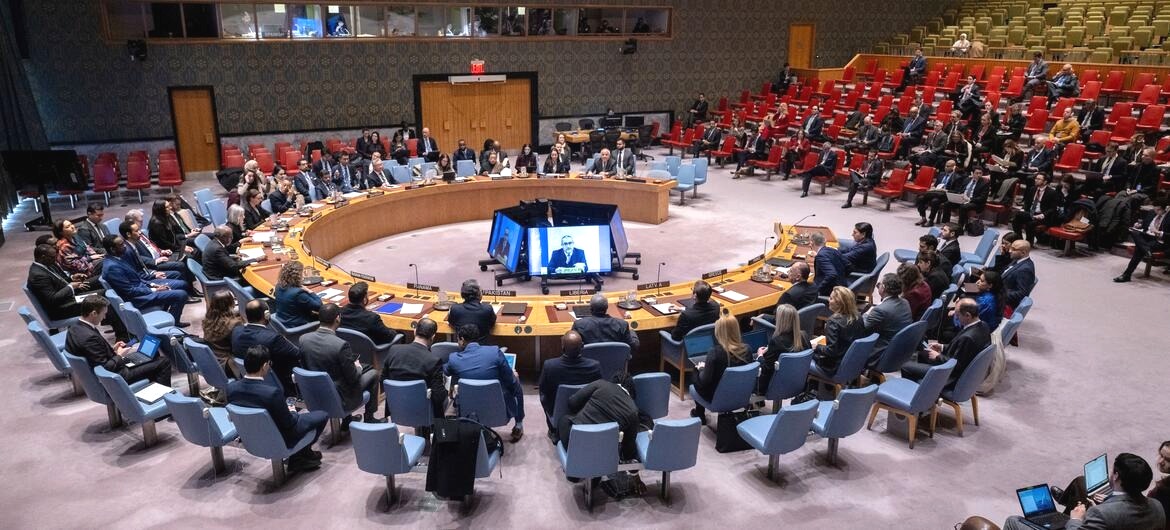
January 2026: As the Security Council gathered the day after the body of the last Israeli hostage in Gaza was retrieved, a United Nations Middle East peace expert stressed the need to consolidate the tenuous ceasefire, while also raising alarm about the escalation of violence and settlements in the occupied West Bank.
Ramiz Alakbarov, Deputy Special Coordinator for the Middle East Peace Process, hoped that the return of Ran Gvili’s body to Israel for burial will lead to healing. “The announced start of the second phase of United States President Donald J. Trump’s 20-point Comprehensive Plan is a critical step in consolidating the ceasefire in Gaza”, alongside the establishment of the subsidiary bodies of the Board of Peace, including the National Committee for the Administration of Gaza and the Office of the High Representative for Gaza, he said.
However, “despite the ceasefire, the Israeli military continues to conduct military operations with air strikes, shelling and gunfire occurring across the Strip”, he pointed out. Hundreds of Palestinians have been killed since the ceasefire began, including many women and children.
Recalling the misery and hope he witnessed recently in the Strip, he described farmers, unable to import seeds, repairing greenhouses with makeshift materials and families who sat vigil through rainy nights “just to hold down the four corners of their tents”. Humanitarian work continues to be hindered by insecurity, customs clearance challenges, delays and denials of cargo at crossings, and limited routes.
The West Bank has seen extensive Israeli military operations, settler violence and arrest campaigns of Palestinians, including children by the Israeli security forces. “The combination of settlement advancement, State land declarations and persistent establishment of outposts is carving up and making vast swaths of land inaccessible for Palestinian use in the occupied West Bank”, he said.
He also detailed “the pressure campaign” against United Nations Relief and Works Agency for Palestine Refugees in the Near East (UNRWA), including forcible entry with bulldozers and demolitions at its Headquarters in occupied East Jerusalem and “abhorrent calls for the annihilation of UNRWA staff” by Israeli officials. Further, Israel continues to withhold nearly $2.5 billion of Palestinian clearance revenue.
Ultimately, these actions taken together are undermining any prospects of a two-State solution. “Unless urgently addressed, they may also jeopardise progress on implementing the second phase of the ceasefire agreement”, he warned.
“The results of Phase 01 speak for themselves”, he said, pointing to the establishment of a ceasefire, the delivery of aid and the return of all hostages.
Phase 02 will “advance the full demilitarisation and reconstruction of Gaza”, he said, thanking those who have committed to joining the Board, including Council members Bahrain and Pakistan. The Board “is acting, and not just talking”, he said, and will help realise a “new Gaza” and break the decades-old cycle of violence. He warned, however, that “assistance cannot devolve into dependence”, and that Hamas and other militant groups “must live up to their side of the bargain” by disarming.
“Now with the hostages have been returned, Hamas must be disarmed, and Gaza demilitarised. From the first day of the war in Gaza, Israel has been clear before this Council about its goals”, said Ramiz Alakbarov. These are “every hostage home” and “Hamas disarmed”; and now the first goal has been achieved. “Today, for the first time in 843 days, I sit in this Chamber without the yellow hostage pin on my lapel”, he noted, holding up the small ribbon.
Now, Israel works towards its 02nd goal, which is the disarmament of Hamas, he said, adding: “It does not mean weapons hidden underground while promises are made above ground”. Hamas remains heavily armed, still holding thousands of rockets and anti-tank missiles and tens of thousands of assault rifles. “This is not a movement preparing for peace, this is a terrorist army preparing for its next war”, he stressed. Israel is upholding its commitments, he said, detailing aid trucks entering Gaza, as well as his Government’s decision to open all major crossings into the Strip. “Aid is flowing, coordination continues,” he said. “Hamas must now be dismantled completely, Gaza must be demilitarised and deradicalised”, he added.
The Permanent Observer for the state of Palestine has reiterated that Peace Still Possible, But Occupation of Palestine Must End. “Palestine is a reliable partner for peace if peace is the objective”, while welcoming the ceasefire agreement and acknowledging that it saved thousands of lives, he noted also that at least 500 Palestinians have since been killed. For the ceasefire to succeed, Israel must cease dictating the future of Gaza and fully withdraw from the territory. He also noted the highest number of West Bank displacements since 1967.
“Yet, we still see a chance for peace,” he said, “a real historical opportunity to end the occupation”. Any peace process must preserve the unity and territorial integrity of the West Bank, including East Jerusalem, and the Gaza Strip, and “Palestine must be central to, and fully represented in, any process that determines its future”.
The all-day open debate on the Palestinian issue featured more than 60 speakers, many echoing the need to consolidate the ceasefire and reaffirming the importance of the two-State solution.
Pakistan’s representative noted that his country, together with other Arab and Islamic countries, has joined the Board of Peace. He reaffirmed their commitment to implementing the Board’s mission as a transitional administration towards consolidating a permanent ceasefire, supporting Gaza’s reconstruction and advancing a lasting peace grounded in the Palestinian right to self-determination.
Qatar’s representative, another member of the Board, has also reaffirmed its mandate “as an interim mechanism” established under the plan endorsed by resolution 2803 (2025).
Egypt’s delegate recalled the Sharm el‑Sheikh Peace Summit of October 2025 and called for continued active American engagement in implementing all phases of the peace plan. Reconstruction must go beyond physical rebuilding to restoring conditions needed for everyday life and must enable the people to remain on their land. He welcomed the growing international momentum supporting the recognition of the State of Palestine.
Turkiye’s representative while speaking for the members of the Organisation of Islamic Cooperation (OIC), called for “expeditious action” in the Council regarding the State of Palestine’s admission as a full UN member. The Council must “commence action on the implementation of its relevant resolutions, including resolution 2334 (2016), with the aim of transforming the ceasefire into a just, durable and comprehensive peace”, he said.
United Kingdom’s representative has called for the swift implementation of phase two of the Peace Plan, including the withdrawal of Israeli forces, the decommissioning of Hamas’ weapons, the deployment of the International Stabilisation Forces and a clear timeline for transition of governance from the Board of Peace to a reformed Palestinian Authority. “Hamas can have no role in the future governance of Gaza”, he said.
French representative noted that the founding text of the Board of Peace raises “major political and legal questions, particularly concerning its scope of application and its governance”.
Russian representative said: “We await from the American side more details” regarding the deployment of the International Stabilisation Forces. He called for the restoration of “administrative, political and economic unity of Gaza and the West Bank, including East Jerusalem”, within the framework of a Palestinian State based on the 1967 borders.
Iranian delegate said the creation of so-called “International Stabilisation Forces” and a “Board of Peace” jointly undermine Palestinians’ fundamental right to self-determination. They legitimise the continued Israeli occupation of Gaza, reduce Palestinian authority over their own land to “a mere service-delivery role” and “sideline the Security Council”, he said.
Nicaragua’s delegate, Vice-Chair of the Committee on the Exercise of the Inalienable Rights of the Palestinian People, said that Israel’s approval of 19 new settlements in the occupied West Bank, including the re-establishment of settlements evacuated in 2005, represents a serious setback. “These illegal, colonial actions openly seek to destroy the contiguity of the Palestinian land and foreclose the possibility of a viable Palestinian State”, he said.
Jordan’s delegate, speaking for the Arab Group, also condemned the continued settlement-expansion, the demolition of homes, the seizure of lands and settler terrorism. Welcoming the United States President’s confirmation that Israel must not annex any part of the West Bank, he reaffirmed that the Jordanian Ministry of Awqaf and Islamic Affairs is the sole legal authority responsible for managing Christian and Islamic holy sites in Jerusalem.
Somalia’s representative, Council President for January has spoken in his national capacity to stress that Israel’s undermining of UNRWA violates humanitarian principles and constitutes “an abdication of Israel’s responsibilities as an occupying Power under international law”.
Several speakers stressed the vital role of UNRWA, with the representative of China expressing grave concern over the forceful demolition of its premises in East Jerusalem, which were set on fire.
Team Maverick.





HAL Set to Increase TEJAS MK-1A Production to 30 Jets Annually as GE Commits Higher Engine Deliveries
New Delhi, July 2026 : Hindustan Aeronautics Limited (HAL) is preparing to significantly r…
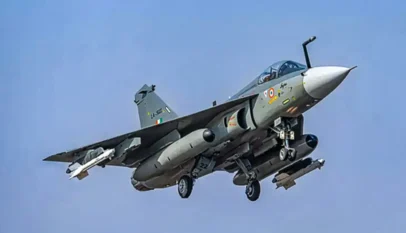
HAL Set to Increase TEJAS MK-1A Production to 30 Jets Annually as GE Commits Higher Engine Deliveries
New Delhi, July 2026 : Hindustan Aeronautics Limited (HAL) is preparing to significantly ramp …