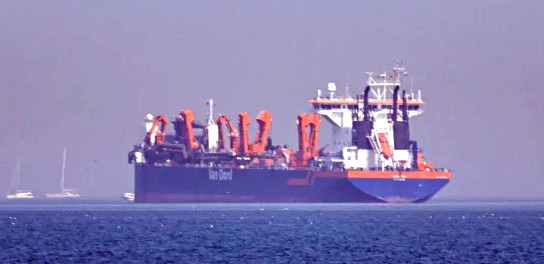
In An Aberration, The IRGC Finally Confirms The Closure Of The Strait Of Hormuz.

Tehran; March 2026: As we have reported earlier denouncing the closure of the Strait Of Hormuz since the beginning of the Iran attack; a few while ago the IRGC has officially announced the closure of the vital waterway of the Strait of Hormuz, through which a fifth of the world’s oil consumption passes.
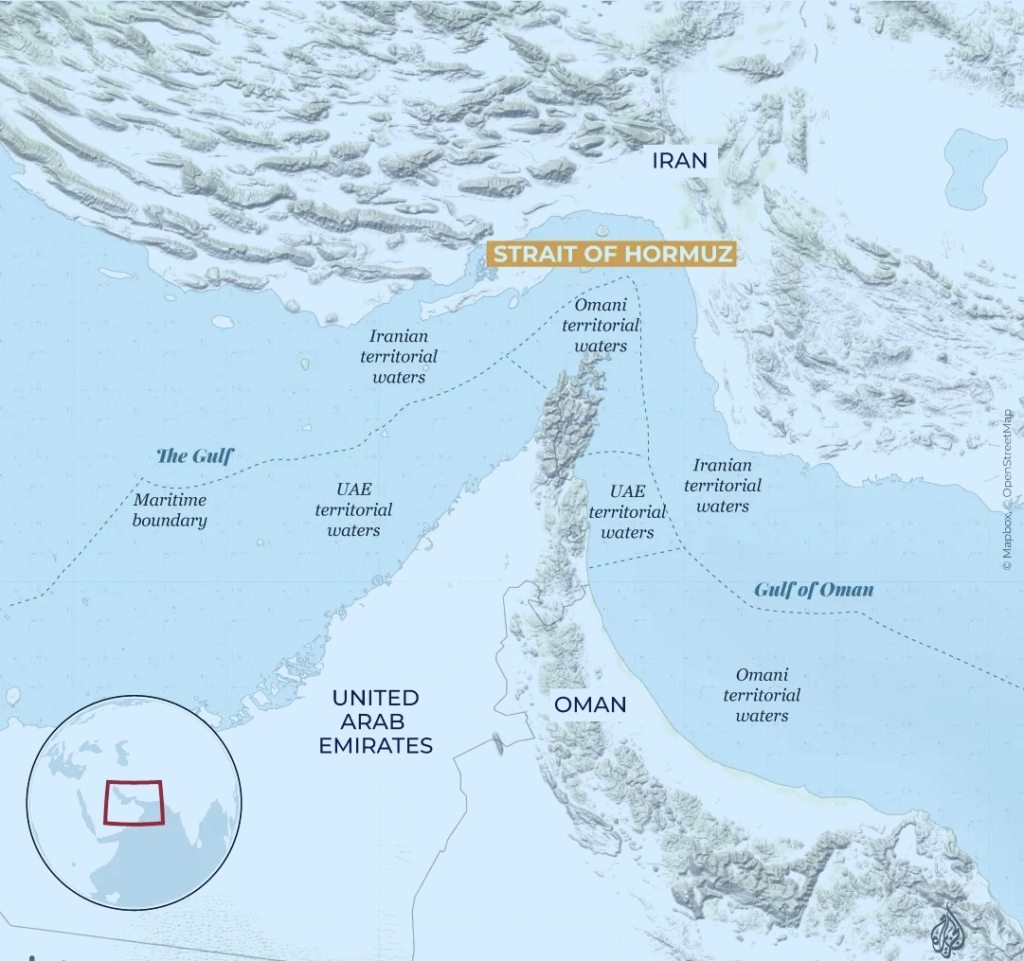
We now have the full comments from Brigadier General Ebrahim Jabari, the adviser to the commander of the IRGC. “The price of oil has reached $81 and the world is certainly waiting for it to reach at least $200. The Strait of Hormuz is closed. Our heroes in the Islamic Revolutionary Guard Corps Navy and the Army will set fire to any ships that wish to pass through this strait”, he said on state television.
“We’ll also target their oil pipelines in the region, and we will not allow oil exports from this region until we put pressure on the enemy. The Americans have debts of hundreds of thousands of billions of dollars, and they are thirsty for the region’s oil. They will not get a single drop”.
Shipping through the strait, which carries one-fifth of the oil consumed globally as well as large volume of gas, has ground to a near halt amid Iranian attacks on oil tankers in the region. At least 05 tankers have been damaged, two personnel killed and about 150 ships stranded around the strait, which separates Iran and Oman.
Oil prices rose above $79.40 per barrel on Monday, after hitting $73 per barrel on Friday amid rising tensions in the lead-up to Saturday’s joint US and Israeli attacks on Iran.
“Traffic is down at least 80%”, Michelle Bockmann, a senior maritime intelligence analyst at Windward, told Al Jazeera, adding that the shipping industry had already been grappling with a “huge spike” in freight costs for routes out of the Middle East and the Gulf.
Cormack McGarry, the director of maritime intelligence and security services at Control Risks, said that mariners received a message from Iran via the international distress frequency on Saturday that the strait was closed. “Every ship in the area would have heard that, and it was enough for most ships to pause”. Vessel tracking service Kpler showed that limited traffic continued in the strait, primarily ships flying the flag of Iran and its major trading partner China on Sunday.
Bockmann said it was possible that some ships had passed through the strait after switching off their Automatic Identification System to avoid detection; while McGarry said that a total shutdown of the strait by Iran would mean it was “tightening the noose around its own neck. If they attack shipping, they are encouraging the Gulf states to join the war, and it’s a big step for Iran to go there”, McGarry said. “The idea they could affect a long-term sustained closure of the strait is completely unlikely. I’m more worried for regional supply chains”.
Still, most commercial operators, major oil companies, and insurers have effectively withdrawn from the corridor, according to Kpler. Insurance premiums had already reached a six-year high ahead of the war.
“There has definitely been an escalation overnight, with pressure on energy infrastructure in the Gulf and Qatar pre-emptively pausing LNG production”, Rachel Ziemba, a senior adjunct fellow at the Center for a New American Security, told media outlets. “With tankers unwilling to come into the Gulf, it sends a message of what is at stake”.
Iran had ramped up oil exports to multi-year highs in February in anticipation of the US-Israeli strikes, Kpler said. The Gulf states, too, had been front-loading their oil supplies, helping offset supply problems in the short term, said Ziemba. The majority of the crude oil shipped through the Strait of Hormuz goes to Asia, with China, India, Japan, and South Korea accounting for nearly 70 percent of shipments, according to the US Energy Information Administration.
Apart from oil, energy products facing supply pressures include jet fuel and liquefied natural gas. Some 30% of Europe’s supply of jet fuel originates from or transits via the strait, while one-fifth of the global supply of LNG passes through the waterway. Even though the US is no longer dependent on Middle Eastern oil, and it can take weeks for pump prices to be affected, it is not immune to disruptions.
As companies reroute their ships, including around the Cape of Good Hope, near the south of Africa, they are facing longer delivery times and additional costs. “With war risk insurance and additional emergency contingency insurance, it’s adding on thousands of dollars”, Warrick said, while adding further, “This is prime time for sourcing for raw materials and planning for holidays, and any disruption at this time is not really good for supply chains”.
There could also be winners from the disruption. Being a net producer of energy, a rise in prices will benefit US oil producers. Analysts have interpreted that while the consumer sectors lose, the producers benefit. The question is: How long will this last? It’s hard to remain at this intensity for great lengths of time, they have expressed their anguishment.
Team Maverick.







Shivakumar Says Congress United, Assures Women Will Get Cabinet Berth
Bengaluru, Aug 2026 : Karnataka Chief Minister D.K. Shivakumar on Monday sought to dismiss…

Shivakumar Says Congress United, Assures Women Will Get Cabinet Berth
Bengaluru, Aug 2026 : Karnataka Chief Minister D.K. Shivakumar on Monday sought to dismiss …