Operation Epic Fury: U.S. Launches Massive Air and Missile Campaign Against Iran, Striking Over 1,700 Targets

Washington, March 2026 : The United States has carried out one of its largest direct military operations in recent decades, striking more than 1,700 targets across Iran within the first 72 hours of an intense campaign dubbed Operation Epic Fury. The operation, involving strategic bombers, advanced fighter jets, missile systems and naval assets, marks a dramatic escalation in hostilities as Washington vows to decisively weaken Tehran’s military capabilities.
According to a Pentagon fact sheet titled Operation Epic Fury — First 72 Hours, the offensive began at 1:15 a.m. on February 28, 2026. The document stated that U.S. Central Command commenced the operation at the direction of the President, with the stated aim of dismantling Iran’s security and military infrastructure. The strikes, it said, are focused on targets assessed to pose imminent threats to regional and international security.
In a strongly worded statement, the White House outlined four core objectives of the campaign: destroying Iran’s missile capabilities, neutralising its naval forces, crippling armed proxy groups aligned with Tehran, and ensuring that Iran is permanently prevented from acquiring nuclear weapons. Declaring confidence in the mission, the administration asserted that the United States would prevail and that the Iranian regime would ultimately be defeated.
CENTCOM officials said Iranian forces had been using mobile missile launchers to fire indiscriminately across the region, escalating risks to civilian and military targets alike. U.S. forces, they added, were actively tracking and eliminating these mobile threats as part of the broader campaign, acting swiftly and decisively to degrade Iran’s strike capabilities.
The Pentagon fact sheet confirmed that the operation is being conducted entirely within CENTCOM’s area of responsibility and listed Iran as the sole target location so far. The sheer scale of the effort was reflected in the range of military assets deployed. Strategic bombers including B-1, B-2 and B-52 aircraft have been involved, alongside fighter jets such as the F-15, F-16, F-18, F-22 and F-35. Additional platforms include A-10 ground-attack aircraft, EA-18G electronic warfare jets and airborne early warning systems.
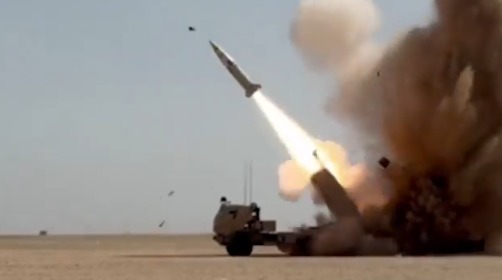
The campaign has also featured extensive use of missile and defence systems. Patriot interceptor batteries and THAAD anti-ballistic missile systems have been activated, while MQ-9 Reaper drones and M-142 High Mobility Artillery Rocket Systems have supported precision strikes. Naval power has played a central role as well, with nuclear-powered aircraft carriers and guided-missile destroyers operating in the region. The Pentagon hinted at the use of further classified capabilities, underscoring the complexity and intensity of the operation.
Targets struck during the initial phase include command and control centres, joint headquarters of Iran’s Revolutionary Guard Corps, aerospace force facilities, integrated air defence networks, ballistic missile sites, naval vessels and submarines, anti-ship missile installations and military communications infrastructure. U.S. officials said these strikes were designed to paralyse Iran’s ability to coordinate attacks and project power beyond its borders.
As the operation continues, political scrutiny has intensified in Washington. Senior Democratic lawmakers in the House of Representatives have demanded detailed explanations from the administration regarding the scope, legality and long-term strategy of the conflict. In a letter dated March 2, they described the decision to initiate or expand armed conflict as one of the gravest responsibilities of government, noting that American service members have already lost their lives.
The lawmakers called for a comprehensive classified briefing covering intelligence assessments, legal justification, strategic objectives and potential long-term consequences. They also sought clarity on whether regime change is an explicit goal, how nuclear facilities are being secured, the risks to maritime security—particularly in the Strait of Hormuz—and the financial and logistical costs of sustaining such a large-scale operation.
U.S.–Iran relations have remained deeply adversarial since the 1979 Iranian Revolution, with tensions repeatedly flaring over Tehran’s nuclear ambitions, missile development and regional influence. The Strait of Hormuz, through which a significant share of global oil supplies passes, remains a particular concern, as any prolonged disruption could send shockwaves through global energy markets.
With Operation Epic Fury still unfolding, the coming days are expected to test not only military capabilities but also diplomatic resolve, as the world watches the consequences of this high-stakes confrontation.
(The content of this article is sourced from a news agency and has not been edited by the Mavericknews30 team.)






Adani Group Invests ₹1.5 Lakh Crore in Record Year, Charts Infrastructure and AI-Led Growth Path
Ahmedabad, June 2026 : Adani Group Chairman Gautam Adani used the company’s Annual General…

Adani Group Invests ₹1.5 Lakh Crore in Record Year, Charts Infrastructure and AI-Led Growth Path
Ahmedabad, June 2026 : Adani Group Chairman Gautam Adani used the company’s Annual General …