Blood Moon Spectacle Dazzles the Skies as Rare Total Lunar Eclipse Unfolds

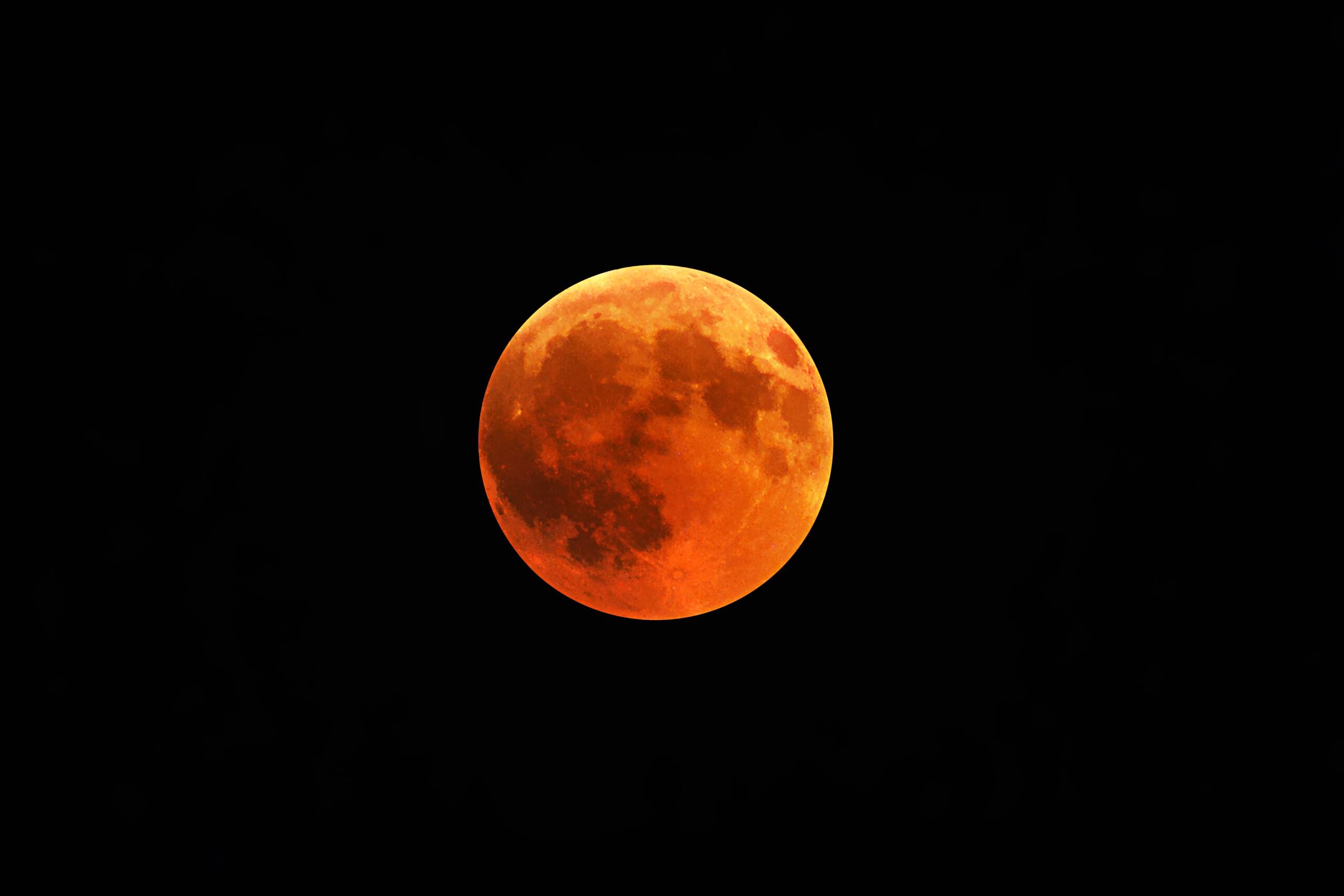
March 2026 : Skywatchers across continents were treated to a breathtaking celestial event as a rare total lunar eclipse—popularly known as a “Blood Moon”—lit up the night sky with a deep reddish glow. The phenomenon captivated astronomy enthusiasts and casual observers alike, blending scientific wonder with cultural tradition, particularly in India where the eclipse is known as Chandra Grahan.
A lunar eclipse occurs when the Earth aligns perfectly between the Sun and the Moon, casting its shadow on the lunar surface. During a total lunar eclipse, the Moon passes completely into the Earth’s umbral shadow. As sunlight filters through Earth’s atmosphere, shorter blue wavelengths are scattered while longer red wavelengths bend toward the Moon, giving it a dramatic coppery-red appearance. This striking visual effect is what gives rise to the term “Blood Moon.”
In India, anticipation around the eclipse was heightened as it marked the first lunar eclipse of the year and coincided with the festive period leading up to Holi. While the eclipse began in the afternoon hours—technically at around 3:20 p.m. with the subtle penumbral phase—the Moon was below the horizon for much of the early stages. As a result, Indian viewers were unable to witness the beginning of the event.
Visibility improved after moonrise, which occurred around 6:26 p.m. across much of the country. This timing allowed observers to catch the later stages of the eclipse, including the tail end of totality. The most visually striking moments were seen between approximately 6:33 p.m. and 6:40 p.m., when the Moon appeared low on the eastern horizon, bathed in rich red-orange hues against the twilight sky. The eclipse concluded shortly thereafter, around 6:47 p.m.
The total duration of the eclipse was about three hours and 27 minutes, while the phase of complete totality lasted roughly 58 minutes on a global scale. In central and western India, including regions around Bhopal, the Moon rose during or just after the peak phase, offering a particularly dramatic sight. Observers in northeastern India and island territories were able to view a slightly longer portion of the total phase.
One of the most appealing aspects of a lunar eclipse is that it requires no special equipment. The Blood Moon was clearly visible to the naked eye, though binoculars and telescopes allowed enthusiasts to observe finer details on the lunar surface, enhancing the experience.
Beyond its astronomical significance, the eclipse also held cultural importance. Many communities observed Sutak Kaal, a traditional inauspicious period in Hindu customs. During this time, which began earlier in the day and ended with the eclipse’s conclusion, people often refrained from auspicious activities, observed fasting, or followed dietary restrictions. In some places, temples limited public access until the eclipse ended.
Adding to its significance, this total lunar eclipse is the last of its kind expected until late 2028, making the event especially memorable. Across social media, stunning images of the Blood Moon rising were widely shared, capturing a moment where science, tradition and collective awe came together under the evening sky.





Shivakumar Says Congress United, Assures Women Will Get Cabinet Berth
Bengaluru, Aug 2026 : Karnataka Chief Minister D.K. Shivakumar on Monday sought to dismiss…

Shivakumar Says Congress United, Assures Women Will Get Cabinet Berth
Bengaluru, Aug 2026 : Karnataka Chief Minister D.K. Shivakumar on Monday sought to dismiss …