Centuries Old Systems Are Replaced In The United Kingdom.

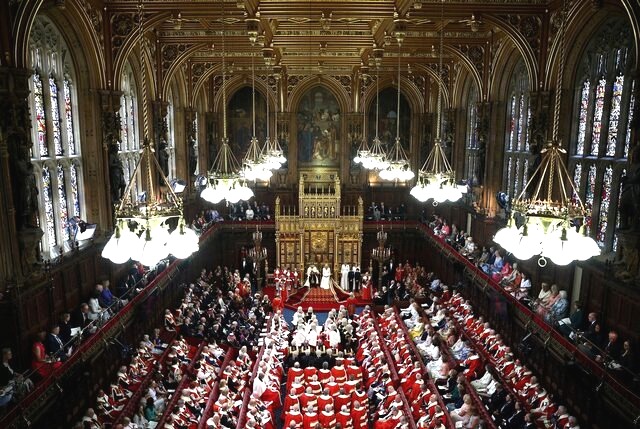
London; March 2026: Britain’s parliament has approved legislation to remove the remaining hereditary peers from the House of Lords, ending a centuries-old system of aristocratic seats in the upper chamber that the government says should not be secured by birth. The House of Lords have passed the Hereditary Peers Bill on 10th March late evening (local time – early Wednesday morning IST), fulfilling a reform launched more than 25 years ago and a key manifesto pledge from Prime Minister Keir Starmer’s Labour government to modernise the upper chamber.
Angela Smith, the leader of the upper chamber, said in a statement that the Lords played a “vital role within our bicameral parliament, but nobody should sit in the House by virtue of an inherited title. Getting this bill through is a major first step towards reform of the Lords, with further changes to follow, including on members’ retirement and participation requirements”, she added.
Before the reform, 92 hereditary peers could still sit and vote in the upper chamber, a number retained as an interim compromise after more than 600 were removed in 1999 under Tony Blair, the former Labour Prime Minister, who had labelled the hereditary system an “anachronism”. Under the system, around 15 Conservative hereditary peers would secure life peerages, and it will be up to the party to decide whom to nominate.
The ornate red and gold chamber in the Palace of Westminster currently has about 800 members in total, mostly appointed for life by the Prime Minister on the advice of political parties or an independent commission, alongside Church of England bishops and, until now, some by birthright.
Critics have long called for an overhaul of the appointments system, saying it had led to cronyism and created the largest upper chamber in the world, larger than the 650 elected members of parliament who sit in the lower house. The Lords can amend but not block legislation, and changes it makes to bills can be overruled by the elected lower chamber.
In the wave of changes patronised by Prime Minister Keir Starmer’s Labour Party – United Kingdom has decided to replace the images of humans with that of wild lives on next series of UK banknotes.
Images of animals will feature on the next series of banknotes from the Bank of England, as the central bank shifts away from historical figures such as William Shakespeare, Winston Churchill and Jane Austen over the coming years. “Nature is a great choice from a banknote authentication perspective and means we can showcase the UK’s rich and varied wildlife on the next series of banknotes”, Victoria Cleland, the BoE’s chief cashier, said.
Bank of England (BoE) banknotes have featured monarchs since Queen Elizabeth first appeared on one in 1960, while Shakespeare was the first historic figure to appear in 1970. However, King Charles portrait will continue to appear on the next series of notes as well, the BoE said.
The BoE held a consultation on a change to the design of banknotes in July 2025, inviting views from the public. The theme of nature was supported by 60% of the 44,000 responses, narrowly beating the category of “architecture and landmarks” on 56% and “notable historical figures” on 38%. Other categories included “arts, culture and sport”, “innovation” and “noteworthy milestones”.
The new notes will feature wildlife native to the United Kingdom and will not include household pets, the BoE said. It plans to run a second consultation in the coming months asking for the public’s views on specific animals to feature on the notes taken from a list created by British wildlife experts.
The BoE is not the only producer of banknotes in the United Kingdom. Notes are also produced by seven commercial banks in Scotland and Northern Ireland.
Team Maverick.




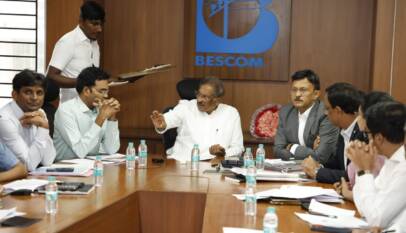
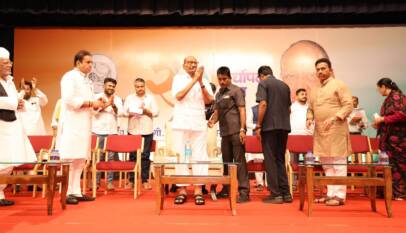
Shivakumar Meets Sonia, Rahul and Priyanka Gandhi Amid Karnataka Cabinet Discontent
New Delhi, June 2026 : Karnataka Chief Minister D.K. Shivakumar on Wednesday met senior Co…
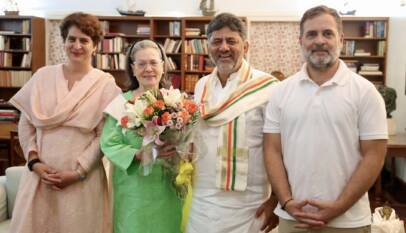
Shivakumar Meets Sonia, Rahul and Priyanka Gandhi Amid Karnataka Cabinet Discontent
New Delhi, June 2026 : Karnataka Chief Minister D.K. Shivakumar on Wednesday met senior …