Indonesia Is Steadfast Committed In Adhering To Maritime Law Amid Malacca Strait Levy Proposal.

Jakarta; April 2026: Indonesia’s Foreign Ministry has affirmed that any government policy pertinent to the Malacca Strait will remain aligned with international maritime law, following a proposal to introduce charges on vessels transiting the strategic waterway. Foreign Ministry spokesperson Yvonne Mewengkang said all measures related to international shipping lanes would adhere to the United Nations Convention on the Law of the Sea (UNCLOS), the primary legal framework governing maritime conduct.
“All policies adopted by the Government of Indonesia regarding international shipping lanes, including in the Malacca Strait, will always be in accordance with international law, particularly UNCLOS”, Yvonne told media reporters 23rd April 2026. She added that Indonesia’s priority remains the security and stability of the strait, while emphasising continued coordination with neighbouring countries bordering the route.
“The stability and security of global shipping lanes will remain Indonesia’s priority as a coastal state, given that the Malacca Strait is one of the most strategic maritime routes for global trade and supply chains”, she said. Indonesia, she noted, would pursue a measured approach grounded in international law while working with regional partners to ensure that shipping lanes remain secure, open and stable.
UNCLOS, often described as the “Constitution of the Oceans”, was signed on 10th December 1982 in Montego Bay, Jamaica. It establishes the legal framework for maritime sovereignty, navigation rights, resource utilisation and environmental protection.
The clarification follows remarks by Finance Minister Purbaya Yudhi Sadewa, who raised the possibility of introducing a levy on ships passing through the Malacca Strait. Speaking at the PT SMI 2026 Symposium in Jakarta on Wednesday (22 April), Purbaya outlined a hypothetical framework under which Indonesia could generate revenue from vessels transiting one of the world’s busiest maritime corridors. While vetting for his own proposals, the Finance Minister drew comparisons with the Strait of Hormuz, where Iran has implemented policies involving charges on passing ships.
“And as directed by the President, Indonesia is not a peripheral country; we are located along a strategic global trade and energy route”, Purbaya said. He suggested that any revenue mechanism could involve cooperation with Malaysia and Singapore, which also border the strait, with proceeds distributed among the three countries. “At present, vessels passing through the Malacca Strait are not charged. Iran now charges vessels transiting the Strait of Hormuz. If we were to divide it among Indonesia, Malaysia, and Singapore, it could be quite significant”, he said.
Purbaya has however acknowledged that the proposal remains conceptual and would face significant legal, diplomatic and operational challenges. “If it were possible, but it is not that simple”, he remarked, noting the complexities surrounding international shipping routes critical to global commerce.
The proposal has prompted cautious responses from neighbouring countries. Officials in Singapore and Malaysia have indicated that such a levy would be difficult to implement, citing international maritime law provisions that guarantee freedom of navigation without additional charges.
Singapore’s Foreign Minister Vivian Balakrishnan stressed that transit rights through the Malacca and Singapore straits are guaranteed under international law and should not be disrupted. “The right of transit passage is guaranteed for everyone”, he said at a public event, adding that Singapore would not support attempts to impose tolls on vessels in the region.
Malaysia has similarly emphasised that decisions concerning the Malacca Strait must be made collectively. Foreign Minister Mohamad Hasan stated that no country can act unilaterally on matters affecting the waterway, underscoring the importance of regional consensus. “Whatever is to be done in the Strait of Malacca must involve the cooperation of all four countries”, FM Hasan said, referring to Indonesia, Malaysia, Singapore and Thailand, which jointly oversee security arrangements in the strait.
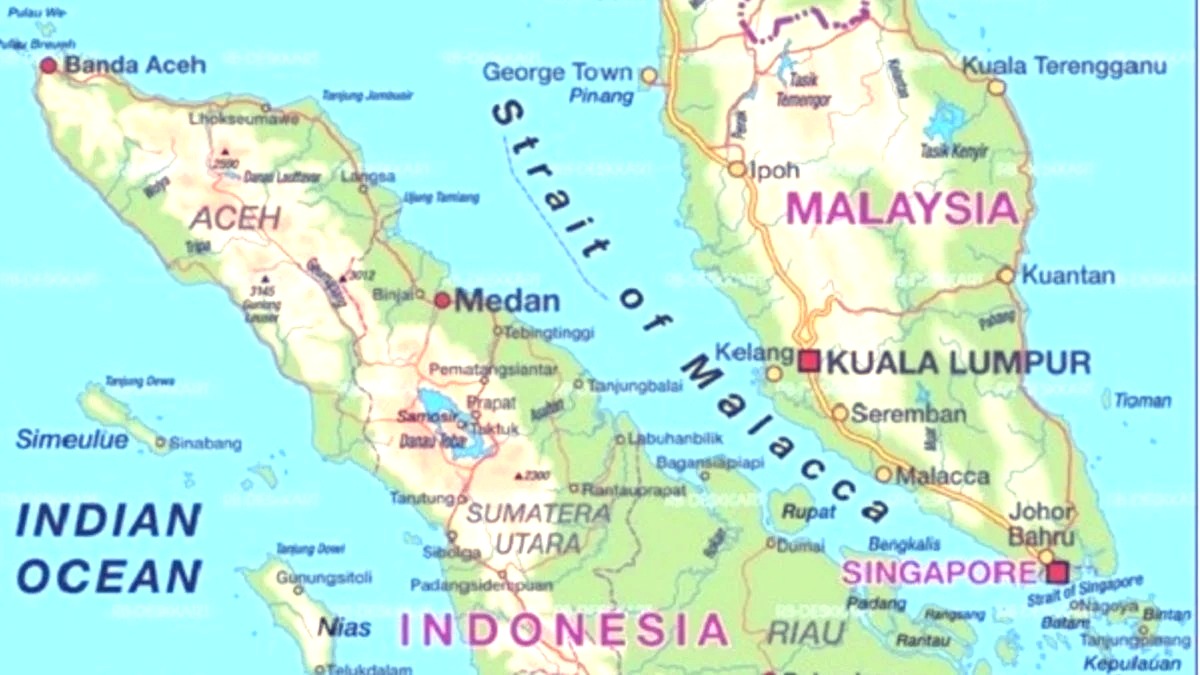
The Malacca Strait is one of the most critical global shipping routes, linking the Andaman Sea to the South China Sea. It facilitates more than a quarter of global trade and serves as a key artery for energy shipments to East Asia.
Indonesia’s President Prabowo Subianto has previously highlighted the country’s strategic position along major trade and energy routes, noting the broader geopolitical significance of narrow maritime passages. While no formal policy has been introduced, the proposal to levy vessels has added a new dimension to discussions on Indonesia’s maritime strategy, fiscal policy and regional cooperation.
Officials have indicated that any future decision would require extensive coordination with neighbouring states and careful consideration of international legal obligations.
Japan has said it is awaiting clarity from regional stakeholders regarding a proposed tariff on vessels transiting the Strait of Malacca, as Indonesia reiterated its commitment to international maritime law and freedom of navigation.
Speaking at a media discussion at the Japanese Embassy in Jakarta on 23rd April 2026, Japan’s interim business attaché to Indonesia, Myochin Mitsuru, stated that Tokyo had yet to receive clear positions from countries bordering the strait. “We are still waiting for the positions of the countries involved”, he said, adding that any decision concerning the waterway must involve not only Indonesia but also neighbouring coastal states such as Malaysia and Singapore. “A decision on the Malacca Strait cannot be made by Indonesia alone. We are still waiting for input from Malaysia and Singapore,” Myochin Mitsuru have said.
Myochin has also referred to discussions between Indonesia’s President Prabowo Subianto and Japan’s Prime Minister i Sanae Takaichi on 31st March 2026, which included cooperation under the Free and Open Indo-Pacific (FOIP) framework. First introduced by former Japanese Prime Minister Shinzo Abe, the FOIP vision promotes a rules-based international order, emphasising freedom of navigation, connectivity and economic cooperation across the Indo-Pacific region.
Myochin noted that the Malacca Strait remains a critical chokepoint within this framework, closely linked to broader geopolitical dynamics and other key maritime routes, including the Strait of Hormuz.
“The Indo-Pacific, including the Malacca Strait, is envisioned as open and free. FOIP is intended to strengthen connectivity and contribute to global development”, he said.
Team Maverick.






India Develops Indigenous Composite Armour to Protect Military Vehicles from Drone and Modern Battlefield Threats
New Delhi, July 2026 : As modern warfare undergoes a dramatic transformation driven by the…

India Develops Indigenous Composite Armour to Protect Military Vehicles from Drone and Modern Battlefield Threats
New Delhi, July 2026 : As modern warfare undergoes a dramatic transformation driven by …