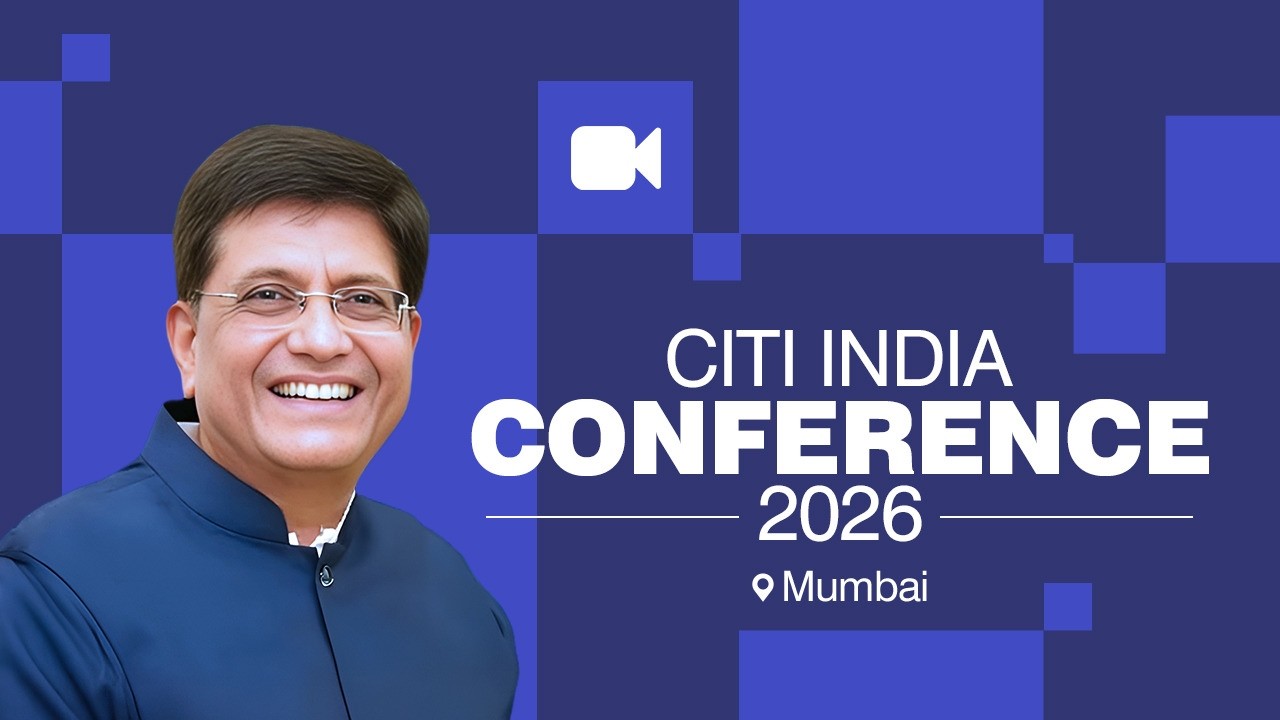
India Emerges as World’s Most Trusted Investment Destination: Union Minister of Commerce and Industry Piyush Goyal at Citi India Conference 2026

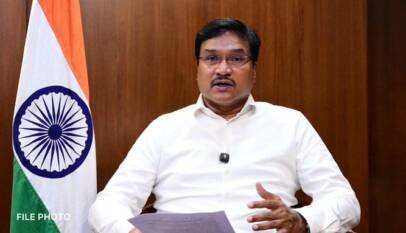
Union Minister of Commerce and Industry Shri Piyush Goyal virtually delivered the keynote address at the Citi India Conference 2026 in Mumbai, highlighting India’s emergence as the world’s most trusted investment destination and outlining the Government’s ongoing efforts to strengthen manufacturing, ease of doing business, infrastructure, technology adoption and global trade engagement.
Addressing global investors and business leaders, Shri Goyal said that India is recognized as the world’s fastest-growing economy and expressed confidence that the country will continue to maintain this position for over two decades into the future. He noted that India has consistently converted crises into opportunities by reorienting processes and business strategies to suit changing geopolitical and economic circumstances while continuing to remain an attractive destination for trade, business, manufacturing and investments.
The Minister said that his recent engagements with investors and business leaders in Canada and the United States demonstrated strong global confidence in India’s economic prospects. Referring to his visit to Canada with the largest business delegation ever to travel from India, he highlighted the positive response received for a proposed India-Canada Free Trade Agreement and the strong investor interest from pension funds, insurance companies and other institutional investors. He further stated that discussions with leading investment firms and around 50 companies in New York reinforced the perception of India as the only credible alternative manufacturing hub, a trusted partner and a safe investment destination backed by democracy, rule of law, decisive leadership, technological capabilities and a vast consumer market of 1.4 billion people.
Shri Goyal observed that long-term global capital is increasingly looking towards India. Referring to interactions with leading investors from New York and Toronto, he said that every discussion reinforced confidence in India’s future growth trajectory. He remarked that the question for investors is not whether to invest in India, but how quickly they recognize and participate in the India growth story.
Highlighting examples of successful long-term investments in India, the Minister referred to Hyundai’s entry into India in 1999 with an investment of approximately USD 200 million. He noted that despite infrastructure limitations at the time, the company built substantial value over the years through manufacturing operations in India and generated significant returns through dividends, royalties and capital appreciation. He also cited JCB’s experience in India, stating that the company entered the country when infrastructure development was still at an early stage and today exports products manufactured in India to nearly 130 countries while serving growing domestic demand. He said these examples demonstrate India’s ability to support manufacturing at scale for both domestic and global markets.
The Minister highlighted India’s expanding trade engagement with the world and stated that India has signed nine Free Trade Agreements in the last three to three-and-a-half years, covering 38 developed economies. He noted that these agreements complement India’s growth story by expanding market access, facilitating trade, enabling movement of talent and attracting investments, including the establishment of Global Capability Centres in India.
Inviting global investors to participate in India’s growth journey, Shri Goyal emphasized that India is not merely a large and growing market but also a base for innovation, design and advanced manufacturing. He urged investors to bring patient and long-term capital to support India’s transition towards newer technologies and future industries.
The Minister informed participants that the Oman Free Trade Agreement came into effect on 1 June and indicated that at least two to three additional substantive Free Trade Agreements are expected to come into effect within the next six months. He further stated that India is likely to execute another three to four significant trade agreements in the coming year and operationalize all nine recently concluded agreements over the next nine to ten months.
Highlighting recent reforms aimed at improving the ease of doing business, Shri Goyal referred to the passage of the second version of the Jan Vishwas Act in April. He stated that the legislation decriminalized nearly one thousand offences across multiple central laws where there was no intention to cheat and no threat to public safety or public health. The reform, he said, reflects the Government’s trust-based approach towards businesses while reducing compliance burdens and easing pressure on the judicial system.
The Minister also highlighted the recently announced Bhavya Scheme for the development of 100 industrial parks across the country with an outlay of nearly USD 3.5 billion. He said the scheme aims to create plug-and-play industrial infrastructure, including factory-ready facilities, worker housing, recreational amenities, environmental clearances, common effluent treatment facilities, utilities, water supply, electricity and digital infrastructure. The initiative, he noted, will support MSMEs, manufacturers and businesses by enabling the Government to act as a facilitator rather than a regulator.
Referring to labour reforms, Shri Goyal said that four labour codes have now been activated and several states have begun adopting and amending their rules. He noted that the consolidation of 29 labour laws into four labour codes has significantly simplified compliance and implementation.
Discussing India’s response to recent global challenges, the Minister said the country successfully navigated the international energy crisis despite concerns arising from developments in West Asia and disruptions affecting energy supplies from the Gulf region. He noted that India’s prior efforts to diversify energy sources ensured uninterrupted availability of petrol, diesel, aviation fuel, LNG and LPG while maintaining relatively moderate prices. He added that fertilizer prices for farmers have remained unchanged despite global price increases, with the burden being absorbed by the Central Government.
Shri Goyal stated that strong fiscal management over the past twelve years under the leadership of Prime Minister Shri Narendra Modi has enabled India to support farmers, MSMEs, businesses and vulnerable sections of society while maintaining economic stability.
Highlighting infrastructure development, the Minister said that India is investing nearly USD 130 billion in ports, highways, roads, rural connectivity and airports. He noted that the country’s port and airport capacities have doubled over the past decade. He also referred to major utility initiatives, including the Jal Jeevan Mission, the establishment of a national power grid with 500 GW installed capacity and more than 50 per cent renewable energy contribution.
The Minister stated that India plans to double renewable energy capacity from 250 GW to 500 GW over the next five years. He also highlighted the country’s focus on semiconductors and emerging technologies through large-scale reskilling and upskilling initiatives aimed at preparing the workforce for artificial intelligence and other advanced technologies.
Shri Goyal expressed satisfaction that Tata and ASML are setting up India’s first capital equipment manufacturing facility for the semiconductor industry. He said India is pursuing a sustained strategy to strengthen its position in technology, manufacturing and economic growth.
The Minister observed that while the world initially invested in Indian talent, it is now increasingly investing capital and technology in India. He emphasized that India is moving beyond assembly-based manufacturing towards innovation-led growth by promoting design, research and development, artificial intelligence applications and indigenous technological capabilities. He cited India’s indigenous 5G stack, rapid nationwide 5G rollout, low-cost data availability, resilient electricity infrastructure and secure environment for data centres as examples of this transformation.
Shri Goyal stated that India offers a safe and secure ecosystem where intellectual property is protected, technology remains secure and data privacy is maintained. He added that data centres serving global markets will enjoy income tax exemptions until 2047, the year by which India aims to become a developed nation with a USD 30 trillion economy under the vision of Viksit Bharat 2047.
Concluding his address, Shri Goyal said that India offers immense potential, possibility and profitability through high-quality products, goods and services designed and produced competitively in the country. He reiterated that India remains an inviting destination for global investors and expressed confidence that the Indian economy, supported by the efforts of 1.4 billion Indians and international partners, will emerge as the defining and most consequential growth story of the 21st century.



Shivakumar Says Congress United, Assures Women Will Get Cabinet Berth
Bengaluru, Aug 2026 : Karnataka Chief Minister D.K. Shivakumar on Monday sought to dismiss…
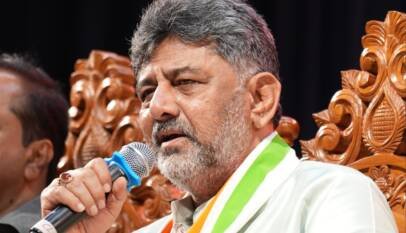
Shivakumar Says Congress United, Assures Women Will Get Cabinet Berth
Bengaluru, Aug 2026 : Karnataka Chief Minister D.K. Shivakumar on Monday sought to dismiss …