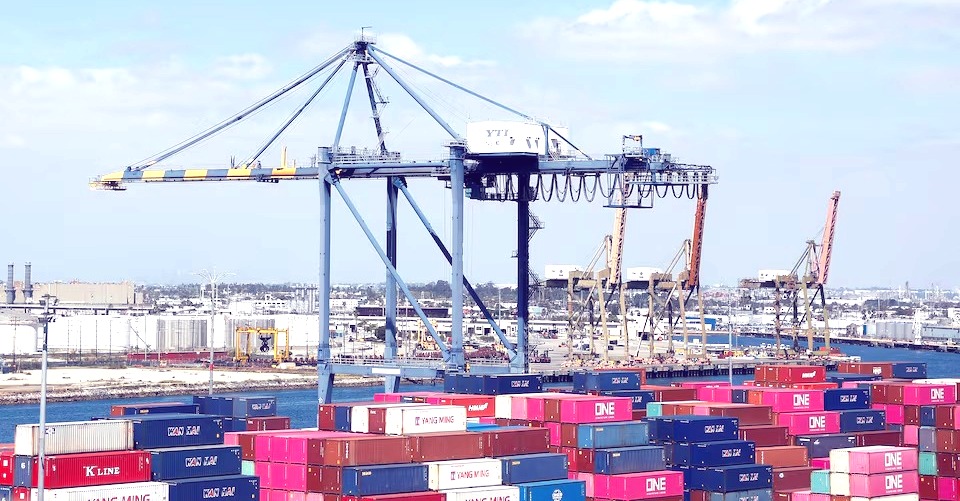
United States Opens New Unfair Trade Probes To Rebuild Tariff Pressure.

Washington DC; March 2026: U.S. President Donald Trump’s administration on the 11th Of March 2026 (Wednesday) said that it was launching two new trade investigations into excess industrial capacity in 16 major trading partners and into forced labour, to rebuild tariff pressure after the U.S. Supreme Court tore down much of Trump’s tariff program last month.
The administration alleges the 16 all employ policies that disadvantage U.S. goods producers, resulting in all but one of them running substantial goods trade surpluses with the US. Here are the 16 subject to the investigation:

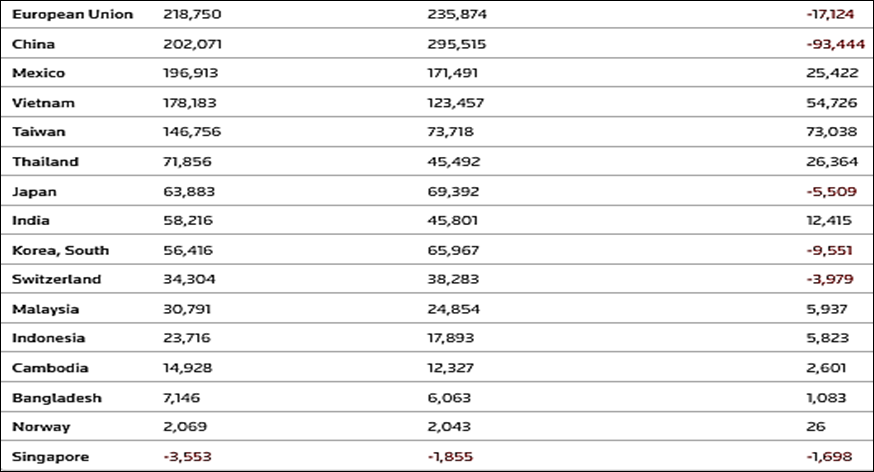
U.S. Trade Representative Jamieson Greer said that the “Section 301” unfair trade practices investigation could lead to new tariffs imposed against China, the European Union, India, Japan, South Korea and Mexico by this summer.
Other trading partners subject to the excess capacity probe include Taiwan, Vietnam, Thailand, Malaysia, Cambodia, Singapore, Indonesia, Bangladesh, Switzerland and Norway. Canada, the second-largest U.S. trading partner, was not mentioned as a target of the probe.
“So, these investigations will focus on economies that we have evidence appear to exhibit structural excess capacity and production in various manufacturing sectors, such as through larger persistent trade surpluses or underutilised or unused capacity”, Greer told reporters on a conference call.
USTR’s official notice, for the excess capacity probe cited the automotive sector in China and in Japan, and said a growing number of companies were unprofitable or unable to meet interest payments from operations.
OFFICE OF THE UNITED STATES TRADE REPRESENTATIVE
Docket No. USTR-2026-0067 and USTR-2026-0068
Initiation of Section 301 Investigations: Acts, Policies, and Practices of Certain Economies Relating to Structural Excess Capacity and Production in Manufacturing Sectors
AGENCY: Office of the United States Trade Representative (USTR).
ACTION: Notice of initiation of investigations and hearings, and a request for comments.
SUMMARY:
The United States Trade Representative (Trade Representative) has initiated investigations under Section 301 of the Trade Act of 1974 regarding the acts, policies, and practices of certain economies relating to structural excess capacity and production in certain manufacturing sectors. Key trading partners have developed production capacity untethered from the incentives of domestic and global demand. This excess capacity leads to, among others, overproduction and large or persistent trade surpluses, as well as underutilised and unused capacity, in manufacturing sectors.
These investigations will focus on economies that appear to exhibit structural excess capacity and production in various manufacturing sectors, such as through large or persistent trade surpluses or underutilised or unused capacity: China, the European Union (EU), Singapore, Switzerland, Norway, Indonesia, Malaysia, Cambodia, Thailand, Korea, Vietnam, Taiwan, Bangladesh, Mexico, Japan, and India.
The inter-agency Section 301 Committee is holding public hearings and seeking public comments in connection with these investigations. USTR will open dockets for submission of written comments and requests to appear at the hearings.
DATES:
- March 11, 2026: The Trade Representative initiated the investigations.
- March 17, 2026: USTR will open dockets for submission of written comments and requests to appear at the hearings.
- April 15, 2026, at 11:59 p.m. EST: To be assured of consideration, submit written comments and any requests to appear at the hearings, along with a summary of the testimony, by this date.
- May 5, 2026: The Section 301 Committee will convene public hearings in the main hearing room of the U.S. International Trade Commission, 500 E Street SW, Washington, DC 20436, beginning at 10:00 a.m., continuing, as necessary, until May 08.
- Seven (07) calendar days after the last day of the public hearing: Due date for submission of
post-hearing rebuttal comments.
ADDRESSES:
Submit documents in response to this notice, including written comments, hearing appearance requests, summaries of testimony, and post-hearing rebuttal comments through the online USTR portal: https://comments.ustr.gov/s/.
FOR FURTHER INFORMATION CONTACT:
- For procedural questions concerning comments or participating in the public hearing, contact the USTR Section support line at (202) 395-5725.
- Direct all other questions regarding this notice to Philip Butler, Chair of the Section 301 Committee, or Nanda Srikantaiah, Assistant General Counsel, at (202)395-5725.
It said that despite China’s electric vehicle capacity outstripping national demand, the country’s top EV maker, BYD, was “aggressively expanding” its overseas manufacturing footprint, with factories in Uzbekistan, Thailand, Brazil, Hungary and Turkey and was expected to expand capacity in Europe, where existing automotive plants are operating at only 55% of capacity.
USTR cited large U.S. trade surpluses in Germany and Ireland as evidence of EU excess capacity. Singapore had excess global capacity in semiconductors despite a trade deficit with the U.S. and Norway had excess capacity by evidence of large fuels and seafood exports, it added.
FORCED LABOUR PROBE:
Greer also said that on 12th March 2026 (Thursday) he would initiate another probe under Section 301 of the Trade Act of 1974 to ban U.S. imports of goods produced with forced labour. That investigation covers more than 60 countries.
The U.S. has already cracked down on solar panel imports and other goods from China’s Xinjiang region under the Uyghur Forced Labour Protection Act signed into law by former President Joe Biden, and the probe could expand such actions to other countries. Greer said he wanted other countries to enforce bans on goods produced with forced labour similar to those enshrined in a nearly century-old trade law.
The U.S. alleges that Chinese authorities have established labour camps for ethnic Uyghur and other Muslim groups in the western region, though Beijing denies allegations of abuse.
Greer said that he hoped to conclude the Section 301 investigations, including proposed remedies, before new temporary tariffs imposed by Trump in late February expire in July. After the Supreme Court struck down Trump’s global tariffs as illegal under a national emergencies law on February 20, he imposed a 10% tariff for 150 days under Section 122 of the Trade Act of 1974. He laid out a swift timeline for the excess capacity probe, with public comments accepted through April 15 and a public hearing slated for about May 5.
The probes offer the Trump administration an avenue to rebuild a credible tariff threat against trading partners to keep them negotiating and implement trade deals that were cut to reduce his higher tariff rates under the International Emergency Economic Powers Act.
Greer said the new probes, long telegraphed by administration officials, should come as no surprise to trading partners, and they should stick to their deals, although he stopped short of saying that this would make them immune to all new Section 301 tariffs. He said that Trump was determined to pursue tariffs and “will find a way to deal with unfair trading practices. He’ll find a way to get our trade deficit down. He’ll find a way to protect U.S. manufacturing. We have a lot of tools to do it”, Greer said.
The probes come as Trump officials led by U.S. Treasury Secretary Scott Bessent prepare this week to meet with Chinese counterparts in Paris to set the stage for Trump to meet Chinese President Xi Jinping in Beijing at the end of March.
Trump’s tariffs on Chinese goods were effectively cut by 10 percentage points by the Supreme Court decision and subsequent temporary tariffs, reducing U.S. leverage on China trade and export controls.
Trump during his first term used a Section 301 probe to back his tariffs on many Chinese imports of about 25% and the law is widely viewed as legally robust, having withstood prior court challenges.
The excess capacity probe targets an area of concern raised with China by successive administrations from Trump’s first term through the Biden administration, growing state-supported manufacturing output that is flooding the world with cheap goods.
Greer said this includes production “untethered” to market demand and that the problem has spread to other countries. He said the probe will focus on evidence including large global current account surpluses, government subsidies, suppressed domestic wages, noncommercial activities of state-owned enterprises, inadequate environmental and labour standards, subsidized lending and currency practices.
Suvro Sanyal – Team Maverick.

End of an Era: Cristiano Ronaldo Bids Farewell to the FIFA World Cup After a Record-Breaking International Career
Dallas, July 2026 : One of football’s greatest chapters came to a close on Tuesday a…

End of an Era: Cristiano Ronaldo Bids Farewell to the FIFA World Cup After a Record-Breaking International Career
Dallas, July 2026 : One of football’s greatest chapters came to a close on …