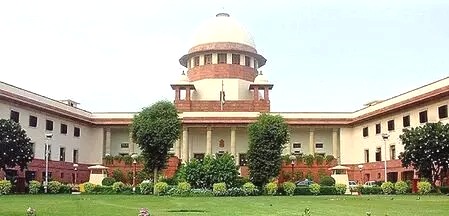
Supreme Court Issues Notice To Central And Every Local Governments On Transgender Law; Hearing In Six Weeks.

New Delhi; May 2026: The Supreme Court, today (04th May 2026) has issued notice to the Centre, all states and Union territories on a batch of petitions challenging the constitutional validity of the Transgender Persons (Protection of Rights) Amendment Act, 2026. The petitions challenge revised definition of transgender person, shifting from self-identification to socio-cultural & medically verifiable categories.
A bench comprising Chief Justice of India Surya Kant and Justice Joymalya Bagchi agreed to hear the pleas and directed that the matter be placed before a three-judge bench to be constituted by the CJI.
The court declined to grant any interim relief and scheduled the next hearing after six weeks. At the outset, Senior Advocate Abhishek Manu Singhvi raised concerns over the amendment’s impact on the right to self-identification of gender.
During the hearing, the bench also flagged concerns about potential misuse of self-identification provisions. The CJI observed that there could be instances where individuals may falsely claim transgender identity to access reservations or benefits intended for the community.
Petitioners have argued that the revised law undermines the principle of self-identification by altering the definition of a “transgender person” under Section 2(k) of the 2019 Act. Unlike the earlier framework, which emphasised an individual’s subjective gender identity, the amended provision introduces a classification based on socio-cultural identities and medically verifiable biological conditions.
Another key challenge relates to the requirement that a District Magistrate issue a certificate of identity only after considering the recommendation of a medical board. Petitioners contend that this effectively reintroduces medical certification, which the Supreme Court had earlier rejected as violative of the rights to privacy, dignity and personal autonomy. The amendment also mandates that individuals who undergo gender-affirming surgery must apply for a revised gender certificate. Petitioners argue that making such a provision compulsory interferes with personal autonomy.
Further concerns have been raised over newly introduced penal provisions. The petitions contend that certain clauses risk stigmatising transgender identity and reflect an imbalance in the severity of punishments, with relatively lower penalties for offences such as sexual abuse compared to trafficking-related offences. Parallel petitions challenging the amendment have also been filed before several high courts, including those in Kerala, Delhi, Karnataka and Bombay. The matter is expected to be taken up by a three-judge bench in the coming weeks. The amendment, passed by Parliament on March 25 and receiving presidential assent on March 30, introduces several changes to the existing legal framework governing transgender rights.
Team Maverick.







Preserve Maharashtra’s Saint Heritage, Develop Pilgrimage Centres: CM Devendra Fadnavis
Revised Development Plans for Gangakhed, Amravati and Katol Approved; ₹115 Crore Projects …

Preserve Maharashtra’s Saint Heritage, Develop Pilgrimage Centres: CM Devendra Fadnavis
Revised Development Plans for Gangakhed, Amravati and Katol Approved; ₹115 Crore Projects Get Green …