Supreme Court Refuses to Dilute Stray Dog Directions, Orders Strict Enforcement of ABC Rules Nationwide

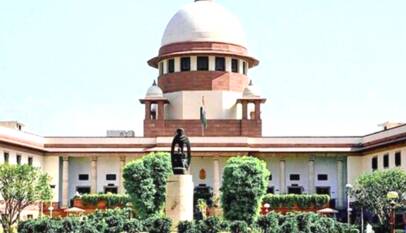
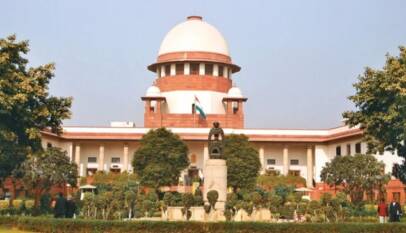
New Delhi, May 2026 : The Supreme Court on Tuesday refused to recall or dilute its earlier directions on the management of stray dogs in public places and instead issued a series of fresh measures aimed at ensuring stricter and more effective implementation of the Animal Birth Control (ABC) framework across the country.
A Bench comprising Justices Vikram Nath, Sandeep Mehta and N.V. Anjaria dismissed a batch of applications filed by animal rights activists and dog welfare groups seeking modifications to the apex court’s November 2025 directions concerning stray dog management in sensitive public spaces.
The earlier order had directed that stray dogs picked up from areas such as schools, hospitals, bus stands, railway stations and other high-footfall public locations should not be released back into the same areas after sterilisation and vaccination.
Delivering the judgment, the Justice Vikram Nath-led Bench underlined that the constitutional “right to life with dignity” also includes the right of citizens to move freely in public spaces without fear of dog attacks. The court observed that repeated incidents of stray dog bites and attacks across the country had reached alarming proportions and reflected major failures in the implementation of existing laws and court directions.
The apex court noted that despite repeated judicial interventions and the existence of statutory rules under the ABC framework, authorities in many states and urban local bodies had failed to effectively control the stray dog population or ensure public safety.
Referring to reports of increasing dog bite incidents, the Bench remarked that the issue had assumed “staggering dimensions” and required urgent and coordinated action from all concerned authorities.
The court also issued a stern warning to officials responsible for implementing the directions, stating that failure to comply with the orders could invite contempt proceedings as well as disciplinary action.
As part of its fresh directives, the Supreme Court ordered all states and Union Territories to establish at least one fully functional Animal Birth Control centre in every district within a time-bound manner. These centres must be equipped with adequate surgical facilities, trained veterinary personnel, recovery shelters and proper logistical support for sterilisation and vaccination programmes.
The court further directed authorities to expand the number of ABC centres depending on local population density and geographical requirements. It also called for capacity-building initiatives, including the training of veterinary staff, strengthening of animal shelters and coordinated anti-rabies vaccination drives.
Recognising the growing public health concerns linked to dog bites, the apex court ordered all government hospitals and medical facilities to maintain adequate stocks of anti-rabies vaccines and immunoglobulin. States and UTs were also directed to create robust emergency response systems for handling dog bite cases.
In a significant observation, the Bench clarified that authorities could adopt legally permissible measures, including euthanasia, in cases involving rabid, incurably ill or demonstrably aggressive dogs that pose a serious threat to human life and public safety.
The court also addressed the issue of stray animals on highways and expressways. It directed the National Highways Authority of India (NHAI), in coordination with state governments and UT administrations, to formulate a comprehensive mechanism for managing stray animals on national highways and expressways.
The proposed mechanism would include deployment of specialised transport vehicles, creation of holding and rehabilitation facilities, and collaboration with recognised animal welfare organisations.
The apex court further said that authorities should consider extending similar measures to other crowded public places after assessing local ground realities and potential risks to public safety.
Providing legal protection to officials carrying out the court’s directions, the Bench observed that no FIR or coercive action should ordinarily be initiated against officers acting in good faith while implementing judicial orders.
The judgment comes months after the Supreme Court reserved its verdict in January following extensive hearings involving the Centre, various state governments, the Animal Welfare Board of India, civic authorities and civil society organisations.
The court’s November 2025 order directing the removal and relocation of stray dogs from sensitive public spaces had triggered widespread debate and multiple petitions seeking relaxation of the guidelines. However, with Tuesday’s ruling, the Supreme Court has firmly upheld its earlier stand while reinforcing the need for stricter enforcement and accountability.
Team Maverick.
(The content of this article is sourced from a news agency and has not been edited by the Mavericknews30 team.)


Preserve Maharashtra’s Saint Heritage, Develop Pilgrimage Centres: CM Devendra Fadnavis
Revised Development Plans for Gangakhed, Amravati and Katol Approved; ₹115 Crore Projects …
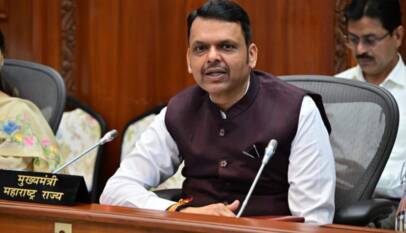
Preserve Maharashtra’s Saint Heritage, Develop Pilgrimage Centres: CM Devendra Fadnavis
Revised Development Plans for Gangakhed, Amravati and Katol Approved; ₹115 Crore Projects Get Green …