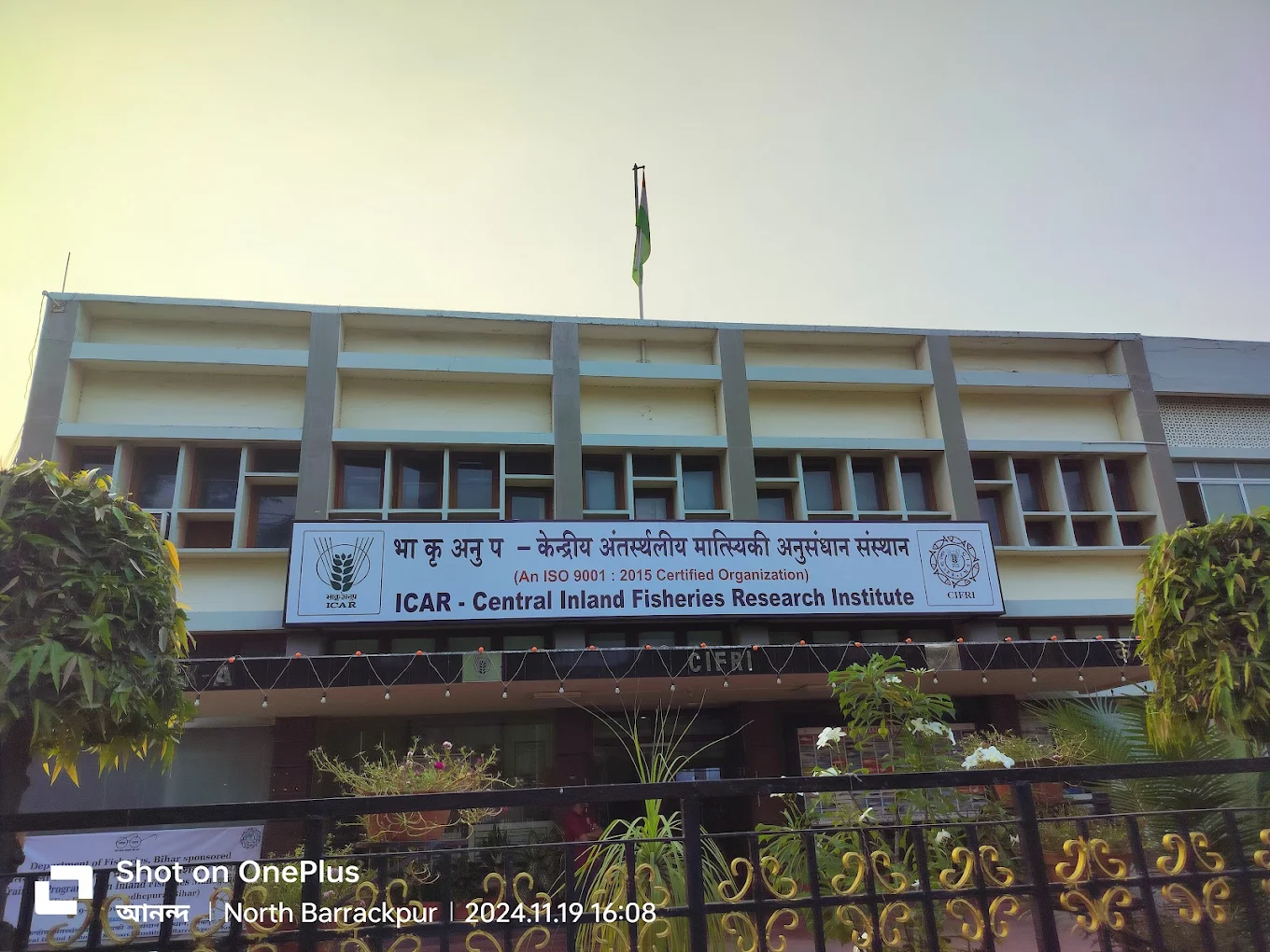
Eight Decades of Excellence: ICAR–CIFRI Strengthens India’s Inland Fisheries Research

March 2026 : The ICAR–Central Inland Fisheries Research Institute (ICAR-CIFRI), Barrackpore, has played a pioneering role in advancing inland fisheries research and management in India since its inception in March 1947 as the Central Inland Fisheries Research Station. Over the decades, the institute has carved a distinct niche in the development of scientific technologies and management practices that have significantly contributed to the growth of the country’s inland fisheries sector.
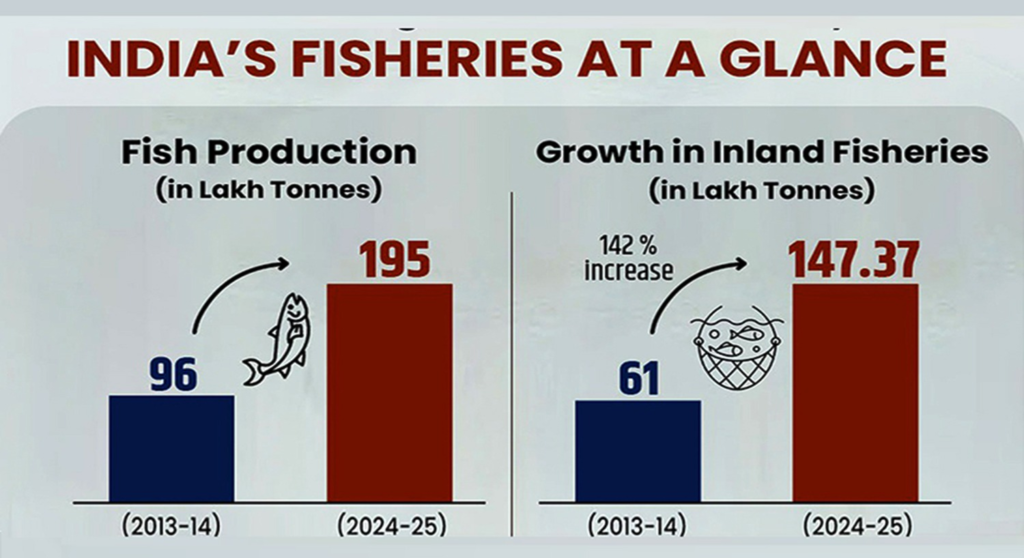
Scientific breakthroughs achieved during the 1960s—such as induced fish breeding, composite fish culture and other improved fish production technologies—laid the foundation for the Blue Revolution in India. The institute also developed and disseminated management strategies for reservoirs and wetlands, leading to enhanced fish production from these vital aquatic resources.
With the changing priorities of fisheries research, the institute gradually expanded its focus from fish production alone to broader ecosystem health and ecological benefits. Emphasis has been placed on sustainability, livelihood improvement and nutritional security while promoting responsible management of inland open water systems.
CIFRI’s research activities include habitat characterization, restoration of fisheries in rivers and estuaries, conservation of fish stocks, and studies on environmental flows. The institute has also been actively engaged in ecosystem-based fisheries management in reservoirs and wetlands, along with domestication, breeding and ranching programmes aimed at the conservation of hilsa fisheries. Research in fish health management, anti-microbial resistance in open waters, nutrient profiling of food fishes, ecosystem service valuation, climate change impacts and environmental assessment has further strengthened the institute’s scientific contributions. Innovative tools such as mobile applications for fish catch data collection, IoT-based monitoring systems and drone technologies are also being developed to support modern fisheries management.
Technologies developed by CIFRI have significantly enhanced fish productivity in reservoirs. Culture-based fisheries management has increased the average production of reservoirs from about 20 kg per hectare per year to nearly 110 kg per hectare annually. In addition, the institute has been actively engaged in conservation initiatives through fish stock enhancement programmes, including the release of huge no. of Indian Major Carp fingerlings into the River Ganga.
CIFRI has also achieved breakthroughs in hilsa research, including the development of artificial breeding techniques using cryopreserved milt. Cage-based aquaculture technologies developed by the institute have demonstrated the potential to produce nearly three tonnes of fish per 96 cubic metre cage, offering new opportunities for increasing fish production in reservoirs.
The institute has recently introduced several nutritionally balanced fish feeds such as CIFRI CAGEGROW, BSF Floating Fish Feed and RESHMEEN. Health management products including CIFRI Fish Tanavhari and CIFRI ARGCURE have also been developed to reduce disease-related losses and improve fish farmers’ returns. Other technologies commercialised by the institute include CIFRI GI Cage, CIFRI Circular Cage, CIFRI FRP Coracle and CIFRI FRP Ornamental Fish Tank.
In recognition of its research achievements, the institute has secured patents for technologies such as “Vertical Gel Electrophoresis” and a “Portable Split Beam Transducer Assembly on Water Craft for Measuring Exact Transducer Position Below the Water.”
The institute has also placed strong emphasis on capacity building and livelihood development of fishers and fish farmers. Numerous training programmes have been conducted for fishers, farmers, students and fisheries officials, benefiting thousands of participants across several states. Special initiatives have been implemented to support socially disadvantaged groups, including Scheduled Castes and Scheduled Tribes, through the distribution of, contributing to multiple Sustainable Development Goals.
Over the years, the institute has also produced several distinguished scientists who have brought national recognition to the fisheries sector. Among its alumni, Dr. V. G. Jhingran, Dr. S. Ayyappan and Dr. M. V. Gupta have been honoured with the prestigious Padma Shri award for their outstanding contributions to fisheries science in India.
Team Maverick




Donald Trump Advances His Foothold In CUBA.
Washington DC: May 2026: The United States Supreme Court yesterday (Thursday – 21st May 20…

Donald Trump Advances His Foothold In CUBA.
Washington DC: May 2026: The United States Supreme Court yesterday (Thursday – 21st May …