200 km Metro Network to be Built in Pune – Chief Minister Devendra Fadnavis

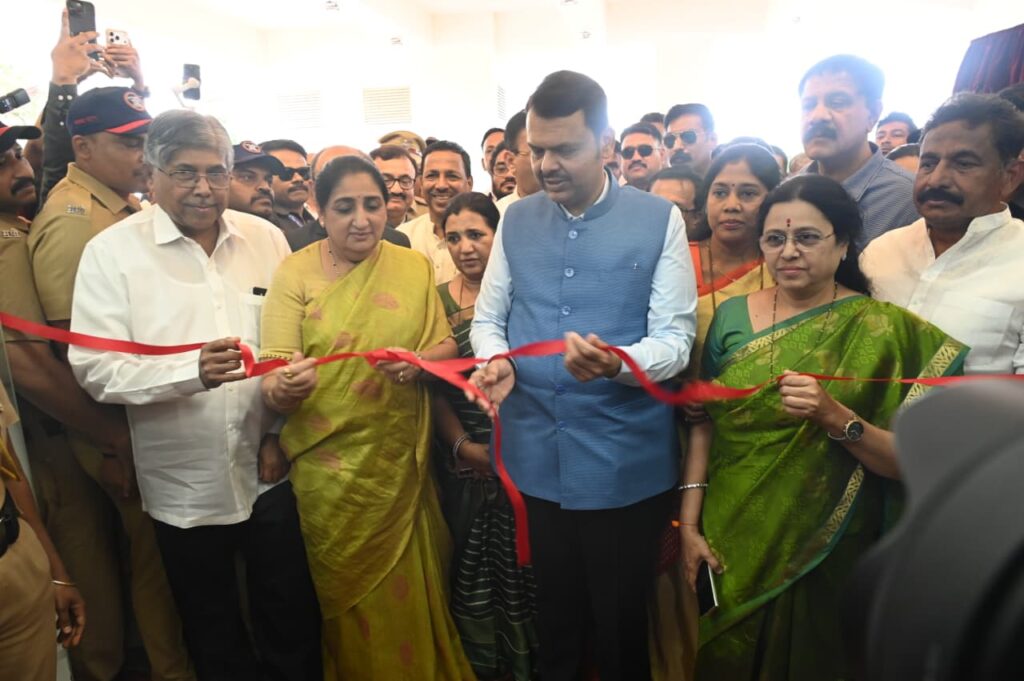
‘Metro Bhavan’ in Pune Inaugurated by the Chief Minister
Pune, March 2026 : The Pune Metro project has given a major boost to the city’s public transport system and the citizens of Pune have given an enthusiastic response to the metro service. At present, around 2.5 lakh passengers use the metro every day. In the future, a nearly 200-kilometre metro network including the areas of the Pune Municipal Corporation, Pimpri-Chinchwad Municipal Corporation, and Pune Metropolitan Region Development Authority is planned to be built, Chief Minister Devendra Fadnavis said. Considering the rapidly developing urban growth, he directed MahaMetro and the Urban Development Department to immediately prepare a detailed plan for the entire network. He also assured that the necessary funds would be made available for the project.
The administrative headquarters of the Pune Metro project, Metro Bhavan, which strengthens the public transport system of Pune city, was inaugurated by Chief Minister Devendra Fadnavis. He was speaking on the occasion.
On this occasion, Deputy Chief Minister and Guardian Minister of Pune Sunetra Ajit Pawar, Higher and Technical Education Minister Chandrakant Patil, Minister of State for Urban Development Madhuri Misal, Pune Mayor Manjusha Nagpure, MP Medha Kulkarni, MLAs Yogesh Tilekar, Bhimrao Tapkir, Sunil Kamble, Hemant Rasane, Bapu Pathare, Principal Secretary of the Urban Development Department Asim Gupta, Pune Divisional Commissioner Dr. Chandrakant Pulkundwar and Managing Director of MahaMetro Shravan Hardikar were present.
Chief Minister Fadnavis said that although the work of the Pune Metro project started late due to some initial difficulties, once the pace was gained the project was completed very quickly. Pune Metro is counted among the fastest completed metro projects in the country. Modern design of metro stations, multimodal connectivity, passenger facilities and advanced technical systems have all been excellently planned.
At present, about 33 kilometres of metro line has become operational in Pune city. With the cooperation of the Tata Group, work on a 23-kilometre metro project under the country’s first Public-Private Partnership (PPP) model is also in the final stage. Out of this, a 12-kilometre stretch is planned to be inaugurated in May, while the remaining 11-kilometre stretch is planned to start in July. With these two projects, the total metro network in Pune will reach around 56 kilometres. In addition, another 55 kilometres of work is underway and about 80 kilometres of expansion has been proposed. In the future, a nearly 200-kilometre metro network including the Pune Municipal Corporation, Pimpri-Chinchwad Municipal Corporation and PMRDA areas is planned to be developed, he said.
Considering the rapid urban development of Pune, the Chief Minister instructed the MahaMetro administration to urgently complete detailed planning for the entire 200-kilometre network, prepare DPRs for all routes together, and develop the metro network by considering future growth centres, the new airport, industrial areas and expanding suburbs. He added that the government is trying to develop transportation through surface, elevated and underground routes so that Pune city can become a traffic-congestion-free and sustainable city.
Metro Bhavan Equipped with Modern Facilities – Deputy Chief Minister Sunetra Ajit Pawar
Deputy Chief Minister Sunetra Ajit Pawar said that Metro Bhavan is not only an administrative headquarters but also a symbol of the progress of modern Pune. This building, which is an excellent example of modern engineering and proper planning, will add an important dimension to Pune’s administrative pride. She also remembered the work done for the Pune Metro by the late Deputy Chief Minister Ajit Pawar.
The building constructed on the banks of the Mula-Mutha River has been developed in an environmentally compatible manner. Since Pune and Pimpri-Chinchwad are important centres of the state’s development, increasing population had created heavy pressure on the transport system. In that background, the Mahayuti government has taken concrete steps to reduce traffic congestion by implementing major projects such as ring roads, wider roads, service roads, underground routes, bridges and metro projects, Pawar said.
Important metro corridors such as Swargate–Katraj, Pimpri-Chinchwad–Bhakti Shakti Chowk, Vanaz–Chandani Chowk, Ramwadi–Wagholi, Khadakwasla–Kharadi, Warje–Nal Stop, Hadapsar–Saswad and Hadapsar–Loni Kalbhor have been accelerated. In the future, plans are also being considered to connect Pune Airport and Chakan MIDC through the metro.
At the beginning of the programme, Managing Director of MahaMetro Shravan Hardikar presented an introduction and provided information about the Pune Metro project and the various facilities available in Metro Bhavan.
Metro Bhavan, Pune – Key Features
- Total area: approximately 8,150 sq. metres
- Grand reception hall and art installation showcasing Pune’s cultural heritage
- Experience centre displaying the Pune Metro network and project models
- Auditorium with 312 seating capacity along with backup operations control centre, signalling and telecommunication facilities
- Glass façade allowing natural light, making the building energy-efficient and environmentally friendly.


Shivakumar Says Congress United, Assures Women Will Get Cabinet Berth
Bengaluru, Aug 2026 : Karnataka Chief Minister D.K. Shivakumar on Monday sought to dismiss…
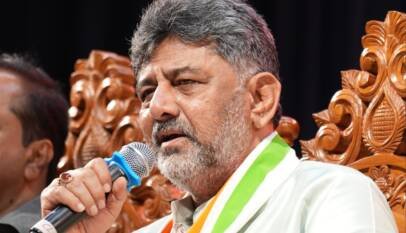
Shivakumar Says Congress United, Assures Women Will Get Cabinet Berth
Bengaluru, Aug 2026 : Karnataka Chief Minister D.K. Shivakumar on Monday sought to dismiss …