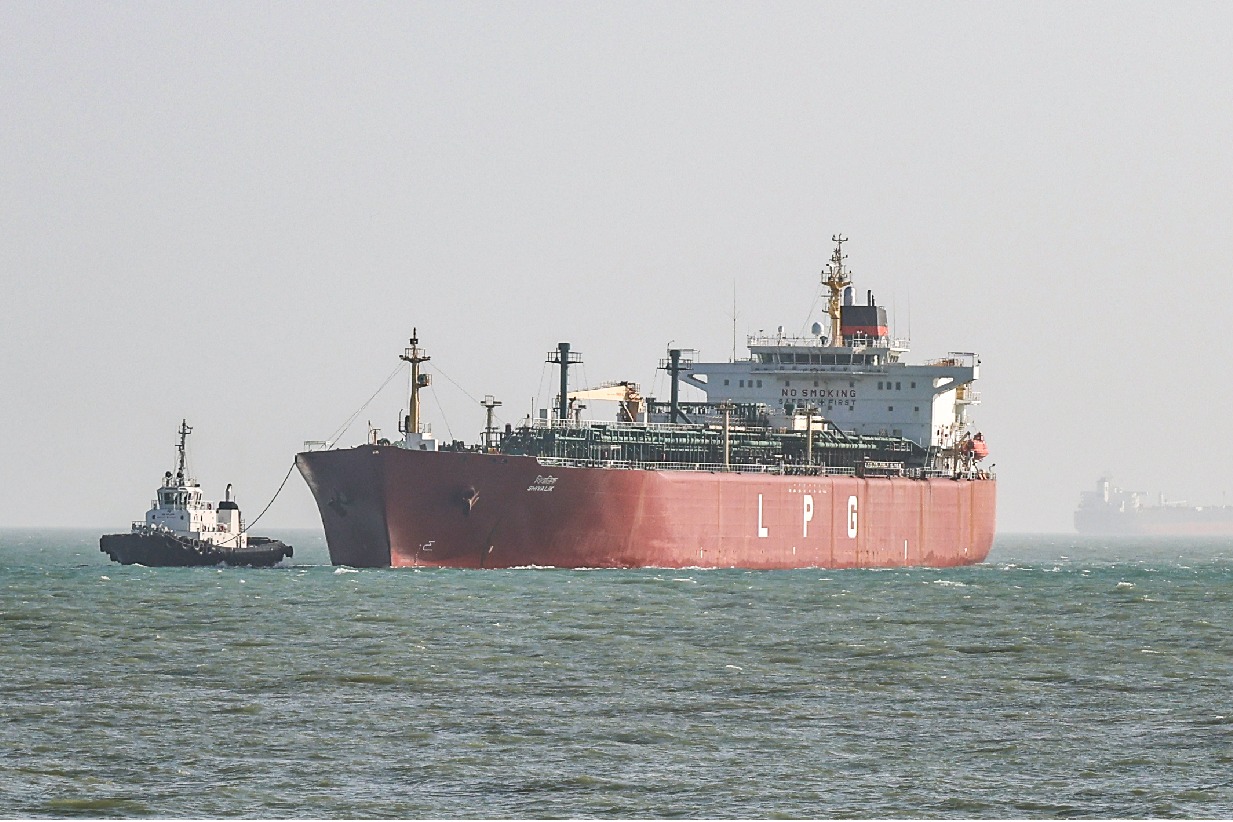
LPG Cargo from US Reaches Mangalore as India Ramps Up Energy Imports Amid Global Crisis

New Delhi, March 2026 : Amid ongoing disruptions in global supply chains and heightened geopolitical tensions, India has received a significant boost to its energy supplies with the arrival of a liquefied petroleum gas (LPG) cargo ship from the United States at Mangalore Port.
The vessel, Pyxis Pioneer, carrying LPG from the US state of Texas, successfully docked at the port, marking an important development in India’s efforts to secure alternative fuel sources. The arrival comes at a time when energy markets are facing volatility due to the ongoing conflict in the Middle East.
Prior to this shipment, another vessel named Aqua Titan had also reached Indian shores. In addition, a separate ship carrying Russian crude oil arrived near Mangalore, further strengthening the country’s energy reserves. This vessel was stationed around 18 nautical miles off the coast, where a single-point mooring system is being used to transfer the crude oil into pipelines connected to Mangalore Refinery and Petrochemicals Limited.
The delivery of Russian crude follows a temporary general license issued by the United States, allowing the sale of Russian oil that had been stranded at sea as of March 12. This move is part of broader international efforts to stabilise fuel prices amid ongoing geopolitical instability.
India has significantly increased its imports of Russian oil in recent weeks, a step taken to manage supply concerns arising from disruptions in traditional oil routes, particularly those linked to the Middle East. The decision comes in the backdrop of ongoing tensions involving Iran, the United States, and Israel, which have impacted energy transportation and availability.
Earlier this week, Indian-flagged LPG carriers also played a crucial role in maintaining supply lines. The tanker Nanda Devi reached Vadinar Port in Gujarat, while another vessel, Shivalik, docked at Mundra Port. Both ships carried essential LPG supplies after navigating the strategically critical Strait of Hormuz, where maritime movement has been affected due to the conflict.
The situation remains closely monitored, with 22 Indian-flagged vessels and 611 Indian seafarers currently operating in the western Persian Gulf region. Authorities, including the Directorate General of Shipping, are coordinating with ship owners, recruitment agencies, and Indian missions abroad to ensure the safety of personnel and vessels.
As global energy dynamics continue to shift, India’s proactive approach in diversifying supply sources and strengthening logistics highlights its efforts to safeguard energy security during a period of uncertainty.







Piyush Goyal Begins Spain Visit with High-Level Engagements to Deepen India–Spain Economic Partnership
Union Minister of Commerce and Industry, Shri Piyush Goyal, commenced the Spain leg of his…

Piyush Goyal Begins Spain Visit with High-Level Engagements to Deepen India–Spain Economic Partnership
Union Minister of Commerce and Industry, Shri Piyush Goyal, commenced the Spain leg of …