PWD Digital Transformation Drives Major Administrative Change

Digital transformation brings radical change in functioning of Public Works Department
Congratulated by Skill, Employment, Entrepreneurship and Innovation Minister Mangal Prabhat Lodha
March 2026 : The Maharashtra Public Works Department (PWD) has brought about a fundamental change in the functioning of administration under the 150-day e-governance reform programme, creating a new benchmark of digital transformation. Due to various initiatives implemented under the e-governance reform programme, transparency, speed and accountability in the department’s functioning have increased, and the way has been opened for citizens to receive direct and fast services. Notably, during this period, the department succeeded in successfully resolving 99 percent of complaints, which is considered an indicator of administrative efficiency.
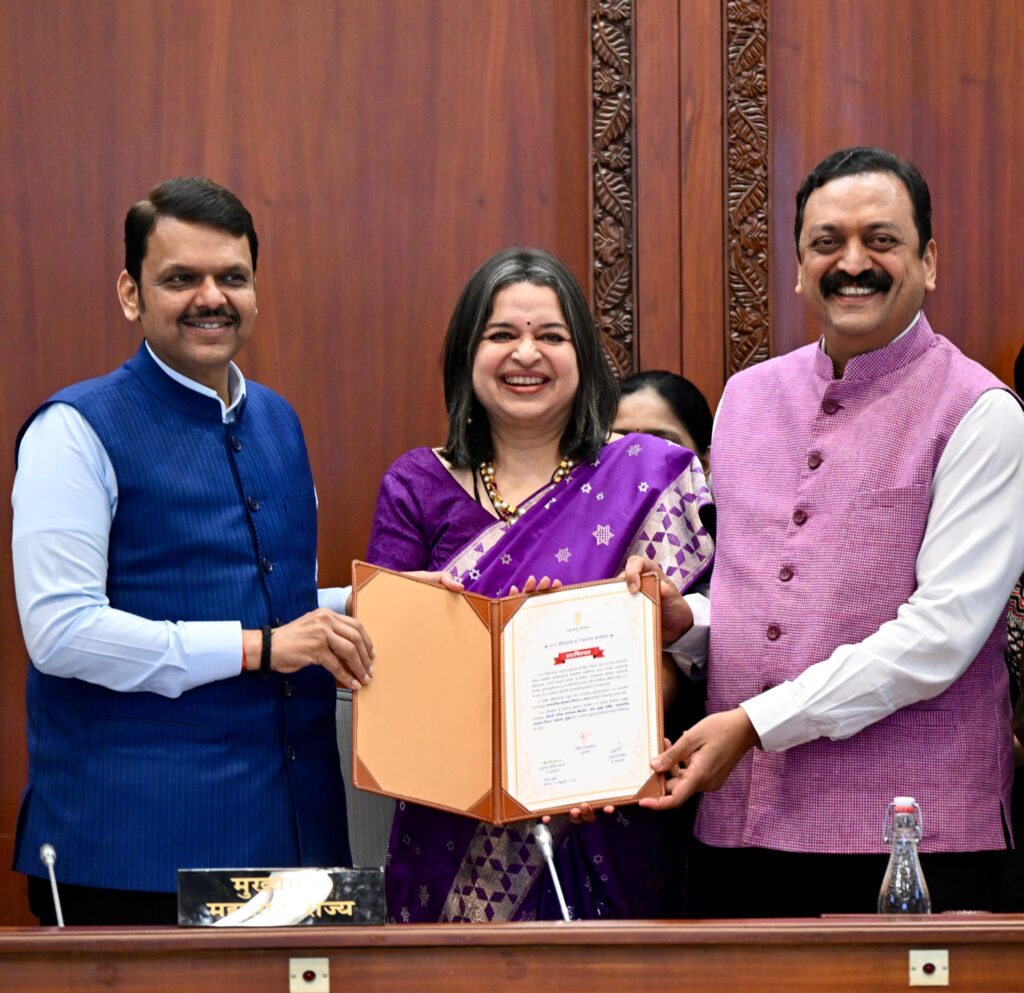
In the state government’s 150-day e-governance reform programme, the Public Works Department performed remarkably, scoring 186.75 marks and securing first position in the state among the best ministerial departments. For this success, the then Additional Chief Secretary of the Public Works Department Manisha Mhaiskar and the present Additional Chief Secretary Milind Mhaiskar were honoured with certificates by Chief Minister Devendra Fadnavis.
The central element of this comprehensive transformation of the department is its updated and citizen-centric website. The website, which started in 1995, has now been completely redeveloped with the help of modern technology. Based on the S3WAAS (Secure, Scalable and Sugamya Website as a Service) system, this website is more secure, user-friendly and inclusive. WCAG 2.2 IAAP-certified accessibility tools have been made available on the website. These include features such as changing font size, high contrast mode, text-to-speech facility, voice-based search and multilingual translation. Due to this, persons with disabilities, senior citizens and citizens from rural areas are now able to easily access information.
The increase in the use of the website is evidence of this change. Since the launch of the website, lakhs of citizens have used it, and more than 10 lakh active users were recorded in the first 30 days itself. Users are spending more than an average of six minutes on the website, which reflects the usefulness and ease of access of information. Also, the low bounce rate shows that users remain on the website for a longer time.
Integration with the ‘Aaple Sarkar’ portal has become another important stage in the department’s functioning. All eight services notified under the Right to Public Services Act have been made completely online, and citizens no longer need to visit offices for applications, approvals and certificates. Due to this process, the service delivery time has reduced significantly. The process which earlier took an average of 32 days is now being completed in just 20 days. Along with this, service-level compliance has also improved greatly, increasing from 90 percent to 138 percent.
The improvement in the grievance redressal system is the biggest success story of this campaign. Due to daily monitoring, structured reviews and timely resolution of complaints, the grievance redressal rate has increased from 80 percent to 99 percent. The escalation rate has reduced from 12 percent to just 0.09 percent, which is particularly noteworthy. The department analysed 1,248 complaints and identified that about 39.5 percent were related to road maintenance and quality. Based on this analysis, necessary measures have been implemented, especially focusing on issues arising during the monsoon season.
Digital systems have also been widely adopted in the internal functioning of the department. Through the e-office system, all officers are working digitally, and real-time monitoring of file movement has become possible. This has accelerated the decision-making process and significantly reduced delays. Through Government Process Re-engineering (GPR), 643 processes have been analysed and simplified. The number of stages in file processing has been reduced, making work more effective.
With the help of dashboard and data analytics systems, effective control over the department’s functioning has become possible. All services under the Right to Public Services Act have been made available on a single dashboard, through which real-time tracking and future forecasting of service delivery is possible. Integration with the Chief Minister’s dashboard has strengthened monitoring at the senior level, increasing transparency and accountability in administration.
WhatsApp and chatbot have been effectively used for direct communication with citizens. Through the PWD chatbot, citizens get guidance regarding services, application processes and grievance redressal. Also, through WhatsApp broadcasting, thousands of citizens have been informed about services. Through this medium, citizen participation has increased and administration has become more citizen-centric.
The department has also effectively adopted artificial intelligence. Through the AI-based system ‘Pothole Guard’, potholes on roads are identified and repaired promptly. With the help of GPS technology, the exact location of potholes is recorded and verified after repair. This has improved road quality and reduced the chances of accidents.
In addition, the department has innovated in policy-making and analysis by using the GenAI platform. Studies have been conducted with the help of AI on topics such as drone policy, road planning and funding for infrastructure projects. This has increased accuracy and speed in decision-making.
Through GIS and the ‘PM Gati Shakti’ portal, project planning is being done in a more scientific manner. In the Nagpur-Chandrapur expressway project, accurate analysis of forest areas, wildlife corridors and mineral zones was carried out using multi-layered data. As a result, about 27 hectares of forest were saved, which is significant from the point of view of environmental conservation.
Technology has also been effectively used in plantation initiatives. Through the ‘Tree App’, more than 8 lakh trees have been recorded and monitored. With the help of GPS and photographs, the condition of trees is checked and their growth is monitored. This has promoted environment-friendly development.
Due to all these initiatives, the Public Works Department has not only increased administrative efficiency but also improved the quality of services provided to citizens. This digital transformation has strengthened citizens’ trust in governance and laid the foundation for transparent and accountable administration.
Overall, the initiatives implemented under the 150-day e-governance reform programme have set an example for other departments in the state. It is expected that such effective use of technology will continue in the future for development.
“Due to the e-governance reform initiatives implemented by the Public Works Department in the last 150 days, a fundamental change has been brought in administration. Providing fast, transparent and quality services to citizens is our main objective, and for this, modern technology is being effectively used. With 99 percent success in grievance redressal, improved speed in service delivery and extensive use of digital systems, citizens’ trust in governance has become stronger. In the future also, we will continue to work on the principle of ‘citizen first’ to make the department more capable and citizen-centric.” – Shivendrasinh Raje Bhosale, Minister, Public Works Department, Government of Maharashtra
“In this 150-day e-governance initiative, we have not only made technical changes but also brought fundamental improvements in the functioning. By coordinating e-office, Aaple Sarkar portal, AI-based systems and data analytics, service delivery has been made more efficient. Daily monitoring, structured reviews and simplification of processes have accelerated decision-making. These initiatives have made administration more transparent, accountable and effective, and citizens are directly benefiting from it. Under the guidance of Chief Minister Devendra Fadnavis, Deputy Chief Minister Eknath Shinde and Sunetra Ajit Pawar, as well as Public Works Minister Shivendrasinh Raje Bhosale, the Public Works Department has effectively implemented digital transformation through the 150-day e-governance initiative.” – Manisha Mhaiskar, then Additional Chief Secretary, Public Works Department







Super-Sub Merino Delivers Again as Spain March into World Cup Semi-finals
Los Angeles, July 2026 : Mikel Merino has emerged as Spain’s ultimate impact player …

Super-Sub Merino Delivers Again as Spain March into World Cup Semi-finals
Los Angeles, July 2026 : Mikel Merino has emerged as Spain’s ultimate impact player …