Ukraine’s Operational And Strategic Ability Inflicting Mounting Costs On Russia.

Kyiv; March 2026: Russian pro-war information space voices are beginning to acknowledge Ukraine’s frontline successes, mid-range BAI campaign, and drone adaptations. A prominent Russian ultranationalist milblogger has complained on March 26th that Russian forces will be unable to reverse an unfavourable battlefield situation in the coming months and that “rather successful” Ukrainian counterattacks have disrupted Russia’s ability to pursue offensive efforts in 2026.
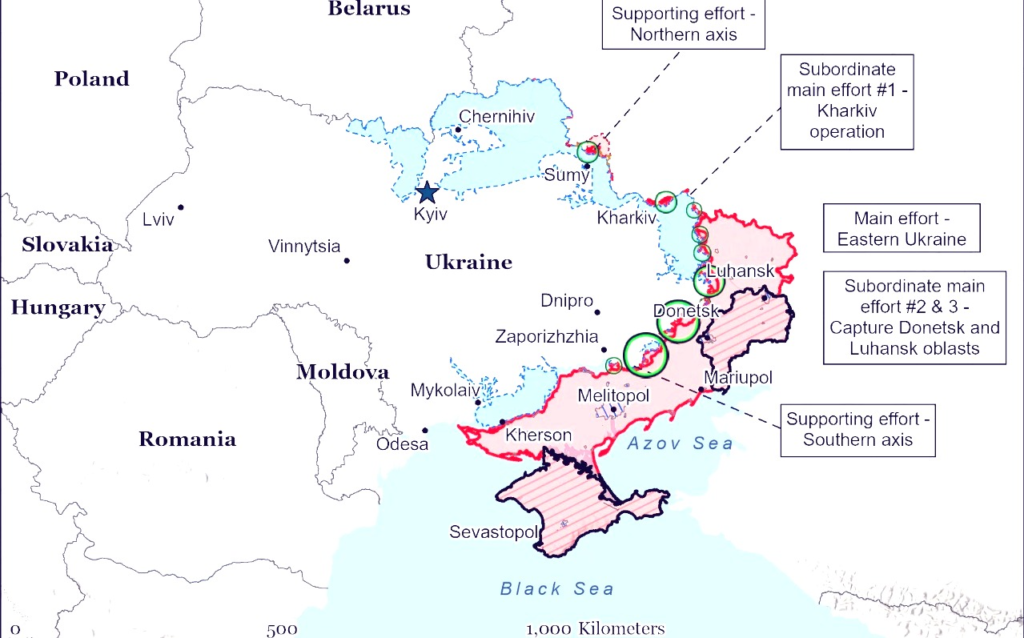
Russian information space voices are also increasingly questioning Russia’s ability to pursue offensive operations in 2026; Russian State Duma Defence Committee Deputy Chairperson Alexei Zhuravlyov, for example, stated on March 29 that the fight for Kostyantynivka itself is an important milestone but not ”decisive” and indicated Russia should focus on seizing Slovyansk and Kramatorsk to achieve victory.
The Russian ultranationalist milblogger also highlighted the success of Ukraine’s successful mid-range BAI campaign in disrupting Russian logistics ”dozens of kilometres” behind the frontline and noted that Russian forces suffer from significant communications problems due to the February 01st Starlink blocking and from a shortage of electronic warfare (EW) systems.
The milblogger noted that Ukrainian forces are ”surpassing” Russian forces in their ability to adapt technologically, praised the quality of Ukrainian interceptor drones, and criticised the Russian military leadership for its sluggish response to Ukrainian drone adaptations. The milblogger stated that Russian forces will be unable to achieve a frontline breakthrough or hold the frontline solely by relying on personnel. The milbloggers criticisms are set against the backdrop of recent prominent milblogger complaints about Russian battlefield problems and Russia’s intensified efforts to crack down against the information space.
A prominent Russian ultranationalist military and political commentator claimed that Western economic potential is “orders of magnitude” larger than Russia’s and is becoming militarily evident as “Western-backed” Ukrainian drone strikes against Russia have increasingly involved hundreds of drones. The commentator claimed that the size of such strikes will only increase, and that Russia cannot produce enough interceptor missiles to compete with Western economic potential and is thus “doomed to defeat” and forced to immediately “solve the problem of ending the war”.
The commentator claimed that Russia must either agree to a “shameful peace” or decisively defeat Ukraine through a strategic offensive, but that the Russian leadership is not politically ready to conduct such an offensive, and is therefore already working toward a “shameful peace”. The commentator’s statements come on the backdrop of recent successful Ukrainian strikes against Russian Baltic Sea oil infrastructure, which are generating tangible impacts on the Russian economy. The Ukrainian Ministry of Defence (MoD) reported on March 30 that Ukrainian strikes against Russian Baltic Sea ports that began on March 24 have halted a significant portion of Russian oil exports, including from Russia’s largest crude oil exporting port on the Baltic Sea at Primorsk.
Meanwhile, Ukrainian President Volodymyr Zelensky stated on March 30 that Ukraine is ready to accept a temporary ceasefire for the “Easter holiday” (likely Orthodox Easter on April 12), whether it takes the form of a full ceasefire or a moratorium on energy infrastructure strikes.
Russian Federation Council Foreign Affairs Committee Chairperson Grigory Karasin responded to Zelensky’s statement on March 30, claiming that Zelensky’s statements should not be taken seriously.
Russian President Vladimir Putin previously declared a unilateral ceasefire (which Ukraine did not sign onto) in honour of Easter in mid-April 2025 and for Russian Victory Day in early-May 2025, but Russian and Ukrainian sources repeatedly accused each other of violating the ceasefire throughout the battle zone in Ukraine. Kremlin has previously offered short-term ceasefires as part of a cognitive warfare effort to portray the Kremlin as acting in good faith while rejecting Ukrainian and US calls for a longer or permanent ceasefire or moratorium on long-range strikes against civilian infrastructure. Russian forces have also used shorter-term ceasefires and strikes moratoriums to stockpile missiles to maximize damage in subsequent strike packages shortly after ceasefires expire.
Zelensky continues to make concessions and demonstrate Ukraine’s willingness to engage in diplomatic dialogue and commit to an unconditional ceasefire, while Russia continues to demonstrate that it is uninterested in a ceasefire or in good faith negotiations to end the war.
At the same time, Ukraine’s European allies continue to provide military aid to Ukraine, including through bolstering Ukraine’s indigenous defence production. The European Commission announced on March 29 that it approved a 1.5-billion-euro (roughly $1.7 billion) package to enhance and modernise Europe’s defence industry, reinforce cooperation with Ukraine, and boost industrial production capabilities.
The European Commission reported that 260 million euros (roughly $298 million) will fund efforts to rebuild and modernise Ukraine’s defence technological and industrial base through investment in collaborative projects to increase production capabilities in both Ukraine and Europe. The European Commission noted that it will allocate 35.3 million euros (roughly $40.5 million) to the BraveTech EU initiative that will support both Ukrainian and EU defence industries and boost innovation to tackle urgent military challenges.
Ukrainian President Volodymyr Zelensky and Bulgarian Acting Prime Minister Andrey Gyurov signed a bilateral security agreement on March 30 that provides for Bulgaria joining the Prioritized Ukraine Requirements List (PURL) initiative and joint Ukrainian-Bulgarian drone production through the Security Action for Europe (SAFE) program.
Latvian Foreign Minister Baiba Braze announced on March 30, that Latvia will provide Ukraine with 6.8 million euros (roughly $7.8 million) to strengthen Ukraine’s energy grid, shelters, infrastructure, and drone capabilities.
It is widely believed that Ukraine’s partners stand to benefit from continuing to aid the Ukrainian defence industrial base (DIB) with joint production, as Ukraine’s experience in an accelerated offense-defence technological cycle will allow its partners to bolster their own defences and domestic DIBs.
Team Maverick.



Turkey Plans To Sell Russian S 400 Air Defence System To Gulf Nations To Revive US F-35 Programme.
Ankara; July 2026: Turkey could be moving to remove one of the biggest obstacles to restor…
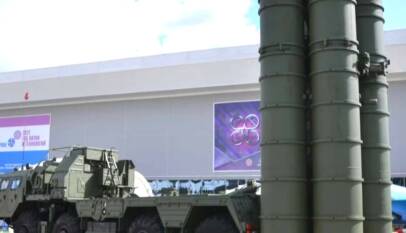
Turkey Plans To Sell Russian S 400 Air Defence System To Gulf Nations To Revive US F-35 Programme.
Ankara; July 2026: Turkey could be moving to remove one of the biggest obstacles …