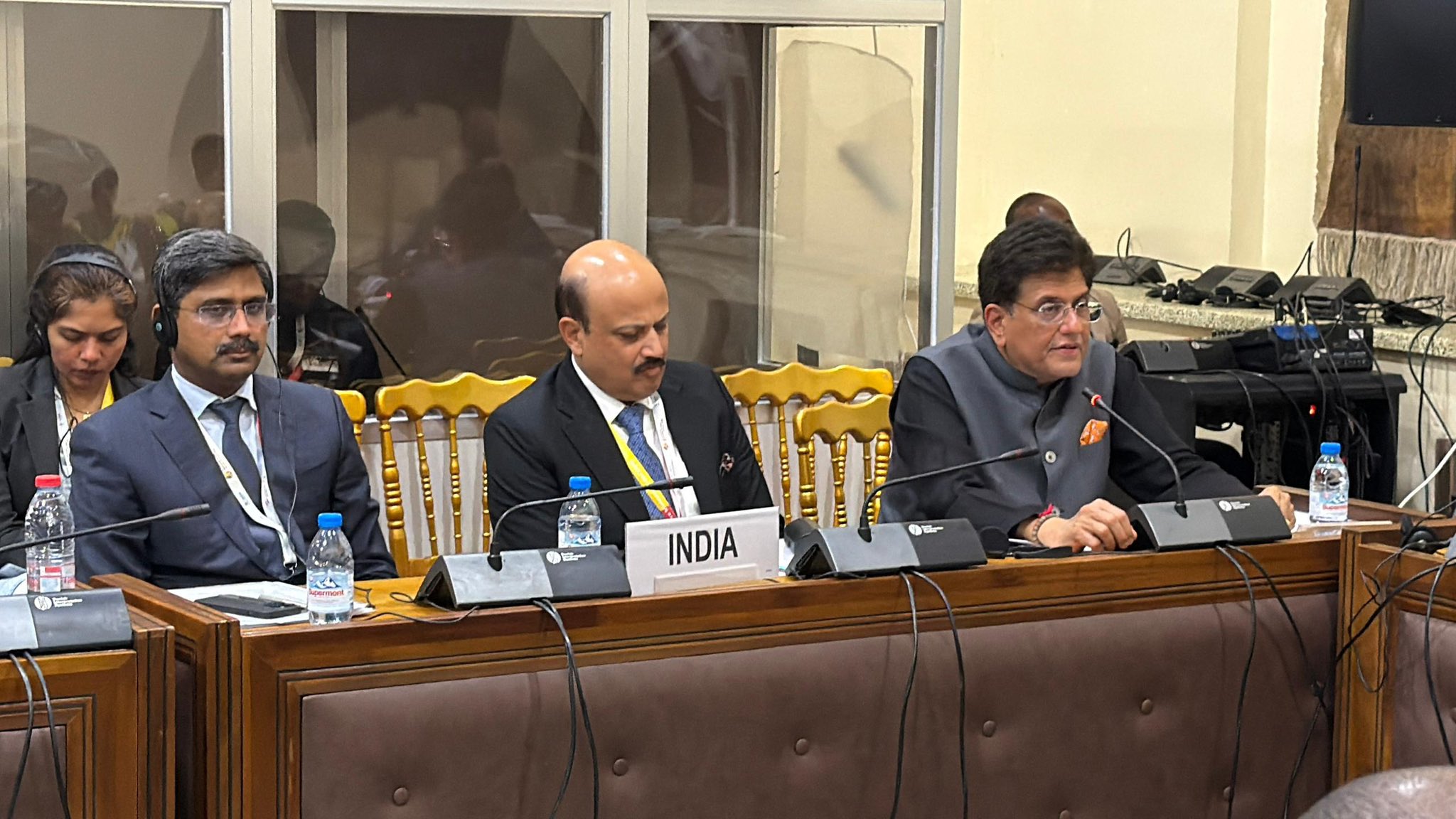
The 14th Ministerial Conference of the WTO concluded on March 30, 2026 in Yaounde, Cameroon.

Discussions related to WTO reforms, Electronic Commerce, TRIPS Non-Violation and Situation Complaints, and the LDC package, will continue in Geneva
Consensus-based decision-making is the bedrock of the WTO’s legitimacy: Union Minister of Commerce and Industry Shri Piyush Goyal
Shri Goyal emphasised India’s proactive and historical conservation efforts, including the 61-day annual fishing ban, and underlined India’s long-standing commitment to sustainability well before it became a global priority
Highlights that incorporation of Investment Facilitation for Development Agreement risks eroding the functional limits of the WTO and undermining its foundational principles
In MC-14, India engaged positively on the issue of moratorium on customs duties on electronic transmission but convergence could not be reached amongst the members
India calls for a cautious approach to be taken on agriculture negotiations to ensure that the focus of negotiations is not diverted and remains consistent with delivering priority outcomes on long-pending issues on PSH, SSM and Cotton as per past ministerial mandates
India extends support for the proposal for extension of the moratorium on non-violation and situation complaints (NVSC) in the TRIPS agreement
The 14th Ministerial Conference of the WTO held in Yaounde, Cameroon, concluded on March 30, 2026. The event witnessed participation of Trade Ministers/Senior representatives from across the WTO membership. The key MC-14 agenda issues were: WTO Reform, Fisheries Subsidies; Incorporation of the Investment Facilitation for Development Agreement; E-commerce Work Programme and Moratorium; Agriculture; and Development including LDC issues. Shri Piyush Goyal, Union Minister of Commerce and Industry, led the Indian delegation to MC14.
In Yaounde, Ministers agreed to continue to engage in negotiations on fisheries subsidies, with the aim of making recommendations to the MC-15, to achieve the comprehensive disciplines on fisheries subsidies referred to in Article 12 of the Agreement on Fisheries Subsidies. Ministers also adopted two MC14 decisions that were endorsed earlier by members in Geneva: on improving the integration of small economies into the multilateral trading system; and on enhancing the precise, effective and operational implementation of special and differential treatment provisions in the Agreements on Sanitary and Phytosanitary Measures (SPS) and Technical Barriers to Trade (TBT). On agenda items related to WTO reform, Electronic Commerce; TRIPS Non-Violation and Situation Complaints; and the least developed country (LDC) package, discussions will now continue in Geneva.
On the WTO Reform agenda, Shri Goyal emphasised that consensus-based decision-making is the bedrock of the WTO’s legitimacy, and it is important for the WTO not to ignore the sovereign right of each member to not bind itself to rules which they do not agree to. While extending India’s support for a time-bound restart of reform efforts with milestones, Shri Goyal stressed the importance of the WTO to undertake a transparent, inclusive and Member-driven stock-take of the current impasse and its underlying causes. India also highlighted that an integrated multilateral trading system cannot thrive alongside fragmentation within its own institutional framework and called for the consensus process to be premised on the principles of openness, transparency, inclusivity, participative and member-driven. Shri. Goyal focused on the need for WTO to address long-pending issues like food security, PSH, SSM on Cotton to be prioritised while taking up new issues to address the structural asymmetries. The continued dysfunction of the dispute settlement system was an issue that India highlighted. India also cautioned against weaponising transparency to justify trade retaliation or challenge legitimate domestic policies and emphasised on the importance of all Members to have a fair opportunity to build productive capacity, create employment, and participate meaningfully in global trade.
On Fisheries Subsidies, Shri Goyal presented India’s balanced and people-centric approach to fisheries governance. He emphasised that fisheries in India are a vital source of livelihood and food security, supporting more than 9 million fishermen, largely comprising small, traditional, and artisanal fishermen practising sustainable methods. Emphasising on India’s proactive and historical conservation efforts, including the 61-day annual fishing ban, Shri. Goyal underlined India’s long-standing commitment to sustainability well before it became a global priority. India also underscored that the challenge of overcapacity and overfishing arises from heavily subsidised industrial fleets, and not from small-scale fishermen in India and other developing countries. Therefore, the need to ensure that emerging decisions remain fair and do not disproportionately impact vulnerable communities was emphasised. Shri Goyal also extended India’s support for the adoption of the Draft Ministerial Decision on Fisheries Subsidies, while emphasising that further decisions must deliver an equitable and development-oriented outcome that protects both marine resources and livelihoods.
India highlighted that IFD’s incorporation risks eroding the foundational principles and functional limits of the WTO. India indicated that as part of WTO reform discussions, Members are seeking guardrails and legal safeguards for plurilaterals before integration of any specific plurilateral outcome. Hence, India did not agree to incorporation of the Investment Facilitation for Development Agreement (IFD) into the WTO framework as an Annex 4 agreement. In view of the systemic issue at hand, India showed openness to first have good faith comprehensive discussions and constructive engagement under the WTO Reform Agenda.
On E-Commerce, India extended its support for robust work at the WTO with a focus on the critical issues such as digital divide, digital infrastructure and skills and regulatory frameworks to ensure developing countries and LDCs have the tools to build their own digital futures. India engaged constructively towards members’ efforts at reaching a convergence on the issue of extension of the moratorium on customs duty on electronic transmissions. Despite rigorous engagement, no consensus could be reached amongst the membership. The issue of moratorium and the Work Program on E-Commerce will now be taken up for decision at the next meeting of the General Council in Geneva.
On Agriculture, India stressed on the importance for a hunger-free future for the global population, which largely resides in the developing countries and LDCs. India also emphasised that the current impasse in agricultural negotiations stems from a trust deficit, which can only be addressed by delivering on commitments agreed in past Ministerial Conferences. In this context, India called on constructive engagement from members India’s submission on Possible New Approaches for taking the agriculture negotiation forward. The need for a cautious approach to be taken to ensure that the focus of negotiations is not diverted and remains consistent with delivering priority outcomes on long-pending issues on PSH, SSM and Cotton as per past ministerial mandates was emphasised. India also urged Members to adopt a development-oriented approach towards delivering a permanent solution on PSH while demonstrating the WTO’s commitment to the needs of developing countries.
On Development including LDC issues, India extended support for the proposal for extension of the moratorium on non-violation and situation complaints (NVSC) in the TRIPS agreement. Calling for Member’s constructive engagement on India’s proposal on the transfer of relevant and advanced technologies for trade, India highlighted that transfer of technology supports the greater global economic good, by increasing efficiency and productivity, and would particularly help developing and LDC Members enhance their participation in international trade. On discussing emerging agricultural trade issues under the rubric of development, India was firmly of the view that these discussions should remain anchored with relevant WTO committees and pursuing parallel tracks risks diluting focus and could further delay outcomes central to the development priorities of developing Members. On S&DT, India emphasised that S&DT must not be amended, diluted, or reconceived in the guise of reform and called for strengthening the implementation of S&DT by making it more precise, effective and operational.
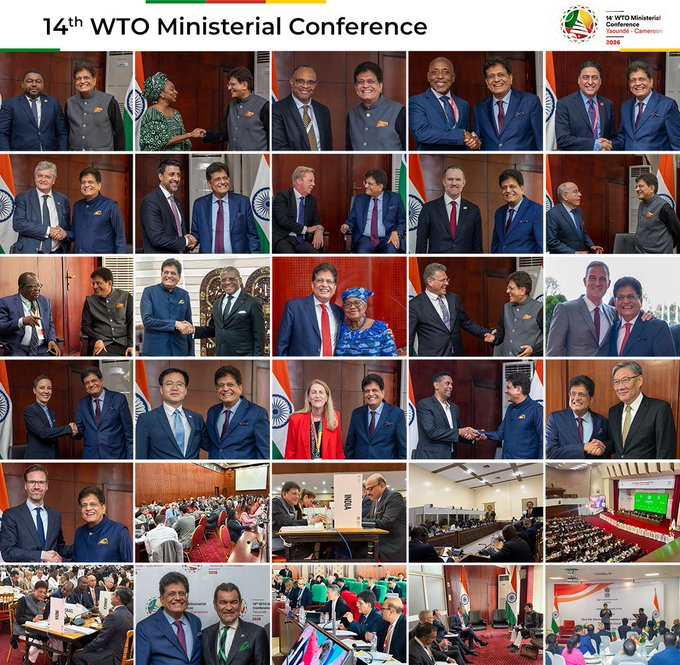
On the sidelines of MC-14, HCIM had extensive bilateral meetings with key partner countries, trading blocs and key African countries. These meetings focused on MC-14 agenda and avenues to enhance bilateral trade.

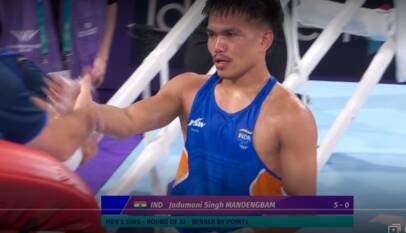
Jadumani Singh Cruises Into Round of 16 with Dominant Win at Commonwealth Games
Glasgow, July 2026 : Indian boxer Jadumani Singh Mandengbam began his Commonwealth Games 2…
Jadumani Singh Cruises Into Round of 16 with Dominant Win at Commonwealth Games
Glasgow, July 2026 : Indian boxer Jadumani Singh Mandengbam began his Commonwealth Games 2026 …