Iran Leadership Urges Tree-Planting as Symbol of Hope Amid Ongoing Conflict

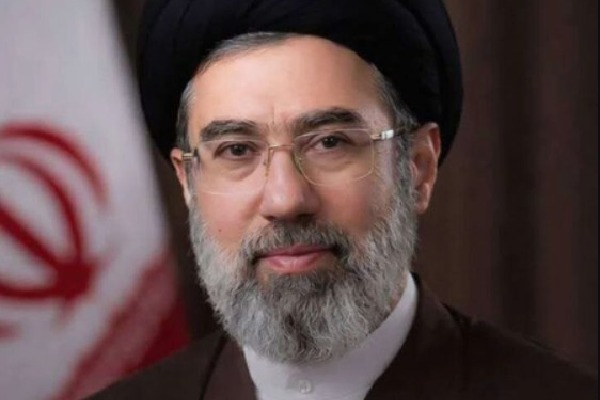
Tehran, April 2026 : Iran’s Supreme Leader Mojtaba Khamenei has called on citizens across the country to plant saplings in memory of those killed in recent US-Israeli strikes, describing the act as a symbol of resilience, renewal, and a collective national response to external aggression.
In a message marking the 47th anniversary of the establishment of the Islamic Republic, and ahead of the traditional festival of Sizdah Bedar—also known as Nature Day—Khamenei urged people to turn to environmental action as a gesture of unity and hope. The day, observed at the end of the Nowruz holidays, falls on April 2 this year.
Khamenei praised the Iranian people for what he described as their steadfastness and courage in the face of attacks, stating that the country’s adversaries had shown “no limits” in their actions, including damage to Iran’s natural environment. He encouraged communities in cities and villages alike to take part in tree-planting efforts in coordination with relevant state institutions. The initiative, he said, should continue beyond Nature Day and extend through the spring season until June 21.
The appeal comes against the backdrop of escalating tensions in the region. On February 28, joint strikes by the United States and Israel targeted Tehran and several other Iranian cities, resulting in significant casualties, including senior leadership figures, military commanders, and civilians. The attacks triggered a swift response from Iran, which launched multiple waves of missile and drone strikes against Israeli targets and US military bases in the Middle East.
While the conflict has intensified militarily, Iran’s President Masoud Pezeshkian has sought to draw a distinction between governments and ordinary citizens. In a letter addressed to the American people, he stressed that Iranians do not view the people of the United States—or those of Europe and neighbouring countries—as enemies.
“The Iranian people harbour no enmity toward other nations,” he said, adding that throughout history, Iran has consistently differentiated between governments and the populations they represent. He also asserted that Iran has not pursued aggression or expansionism in modern times, despite facing repeated foreign interventions and external pressures.
Pezeshkian criticised narratives portraying Iran as a global threat, claiming they are designed to shift attention away from other geopolitical issues. He pointed to the extensive US military presence in the region as a source of instability, arguing that recent actions have demonstrated the risks associated with such deployments.
Addressing recent warnings from US President Donald Trump about potential large-scale strikes on Iranian energy infrastructure, Pezeshkian cautioned that such actions would directly harm civilians and critical national systems. He described any targeting of essential infrastructure as a serious escalation with far-reaching consequences.
The Iranian president also accused the United States of acting in alignment with Israeli interests in the ongoing conflict. He questioned whether current policies align with broader American priorities, suggesting that the situation raises fundamental questions about the direction of global engagement.
As tensions continue, Iran’s leadership has framed the situation as a pivotal moment not just for the region, but for the international community. According to Pezeshkian, the world now faces a critical choice between continued confrontation and a shift toward dialogue and engagement.
Amid this uncertainty, Khamenei’s call for tree planting stands out as a symbolic effort to channel national grief into a message of endurance and renewal—an attempt to reinforce unity at a time of deepening crisis.






Adani group visits Hon’ble Deputy Chief Minister and Energy Department, Govt. of Odisha
Bhubaneswar, July, 2026 : Kharavel Bhawan, representatives from the Adani Group delivered …

Adani group visits Hon’ble Deputy Chief Minister and Energy Department, Govt. of Odisha
Bhubaneswar, July, 2026 : Kharavel Bhawan, representatives from the Adani Group delivered a comprehensive …