UN Security Council Reaffirms Security Fears Rise In Eastern DR Congo.

New York; April 2026: Zenon Ngay Mukongo – Ambassador of the Democratic Republic of the Congo (DRC) have emphasised the “complementary nature” of the Oversight and Verification Mechanism, the Doha Framework Agreement, the Washington Accords and the enhanced coordination of African-led peace efforts. Their common ground is the full implementation of resolutions 2773 (2025) and 2808 (2025), he said, voicing concern over the sincerity of Rwanda’s commitment and that of its auxiliaries.
He pointed to an interview with Jeune Afrique in early April and remarks made at the national dialogue in February, when Rwandan authorities assumed responsibility for the presence of Rwandan troops in the DRC, which they called “indispensable defence measures”. They have denied the looting of natural resources in the Democratic Republic of the Congo, he said, and refused to yield to the threat of international sanctions.
For this reason, all peace initiatives remain “dead letter”. The same holds true with the Luanda and Nairobi processes, he said, whose implementation Rwanda blocked in order to “gain time” and create a zone of influence in the Democratic Republic of the Congo. Rwanda aimed to transform this area into “a colony for exploitation and settlement”, from which it would have access to and control over Congolese institutions. “These operations by Rwanda undermine regional peace and are prohibited under the Addis Ababa Framework Agreement”, Mukongo has stressed.
Meanwhile, the Rwandan Ambassador Karoli Martin Ngoga said today’s meeting takes place one week after the General Assembly commemorated the genocide against the Tutsi. The perpetrators who committed this crime “forayed into DRC and remain active until today”, he explained. “Their continued presence was among the central reasons for the peace, security and cooperation framework to address that matter, among others”.
Since 2013, Rwanda has “fully upheld its framework commitments”, he said, a principled approach aligned with the framework’s core objective to address root causes on the path to sustainable peace in the region. More than 13 years later, “the fundamental drivers of instability remain unchanged”, he said. Rwanda’s security concerns, and an existential threat are the presence and deterrence of FDLR in the Democratic Republic of the Congo.
“This group (PDLR) poses a direct threat to Rwanda and to regional stability”, he insisted. “There can be no credible path to peace without its effective and irreversible neutralisation” – a matter that had been consistently raised “in all forums that are mediating for peace”. He has further cited escalating hate speech, ethnic targeting and violence against Rwandan communities, particularly the Banyamulenge people, stressing: The continued portrayal of these communities as “foreigners” remains a matter of concern in the realisation of the framework’s aspirations. Such deep rooted challenges must be addressed directly. “Sustainable peace cannot be built on avoidance”, the Ambassador reiterated.
Ambassador Francisco José da Cruz of Angola underscored the importance of the full and verifiable implementation of commitments undertaken in the Doha Framework Agreement, the Washington, D.C., agreement and relevant Council resolutions. “These commitments are essential to restoring trust and ensuring the credibility of the peace process, which must also be inclusive and nationally owned”, he affirmed.
The President of Angola engaged with Congolese stakeholders to create conditions for an inclusive dialogue aimed at reconciliation, he said, efforts that resulted in the drafting of the terms of reference for a structured and transparent dialogue. He stressed the importance of enhanced coordination and coherence among all mediation initiatives, guided by the principle of “African solutions to African problems”.
For its part, he pushed the Council to ensure the full engagement of all parties in the implementation of agreements reached, underscoring the need for the meaningful participation of women and youth as “key actors” in peacebuilding efforts.
Ambassador Anna M. Evstigneeva of the Russian Federation said the escalation resulting from M23’s capture of Ohvira in South Kivu, near Burundi, placed the Great Lakes region “on the verge of an inter-State conflict”. This have occurred hours after the “pompous” announcement of an agreement being reached between the Democratic Republic of the Congo and Rwanda in Washington, D.C.
Such events make clear that “international diplomatic efforts are failing to generate the sought-after results”, she stressed. Nor are they helping to improve the situation on the ground, she said, expressing regret that the truce and ceasefire remain “dead letter”. She further asserted, “Real progress will only be possible when parties fulfil the obligations they assumed in good faith”.
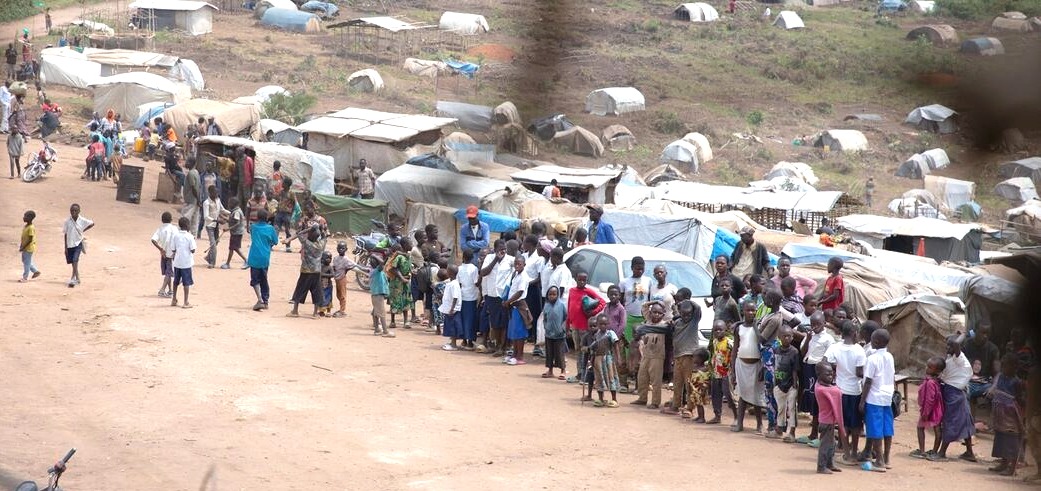
The United Kingdom’s delegate voiced concern that millions of civilians are internally displaced in the Democratic Republic of the Congo, while the Sudan conflict is driving displacement into South Sudan and Uganda. She has called on all parties to facilitate full, safe and rapid humanitarian access, noting that London provided over $130 million in humanitarian and peacebuilding funding to eastern Democratic Republic of the Congo and the region last year.
“It is critical that the protection of civilians is prioritised”, she said, with women and girls disproportionately impacted by conflict. In addition, she has pointed to growing restrictions on civic and political space, including arbitrary arrests, and in some States, the detention of opposition members, stressing: “Inclusive governance, accountability and the safeguarding of rights are essential for long-term stability in the region”.
On the other side, Ambassador Sun Lei of China has reiterated that, “Prompt efforts are needed to de-escalate, and implement the ceasefire on the ground”. He described the eastern Democratic Republic of the Congo as “the epicentre” of regional instability. Given the absence of a “genuine and long-overdue” ceasefire there, he pressed all conflict parties to implement Council resolution 2773 (2025) and avoid escalatory actions.
Further, the security concerns of all countries also must be properly addressed to uphold common security, he said. The close communal ties and “long history of interaction” among regional countries “should be an asset” for communication rather than “a liability that gives rise to suspicion and hatred”, he argued. Finally, he has called for security and development to work “in tandem” to address root causes of conflict, pointing to intertwined illegal mining and armed activities.
Despite the volatility, the UN peacekeeping mission, MONUSCO – has been in the DRC since July 2010, taking over from an earlier UN peacekeeping operation in a conflict stemming from the 1994 genocide against the Tutsi in neighbouring Rwanda. MONUSCO’s mandate includes protecting civilians and helping the DRC to stabilise and consolidate peace.
Team Maverick.






Shivakumar Says Congress United, Assures Women Will Get Cabinet Berth
Bengaluru, Aug 2026 : Karnataka Chief Minister D.K. Shivakumar on Monday sought to dismiss…
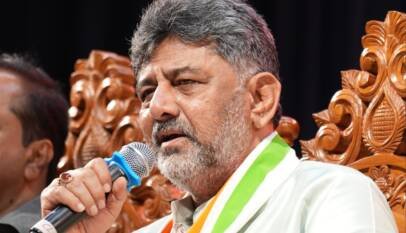
Shivakumar Says Congress United, Assures Women Will Get Cabinet Berth
Bengaluru, Aug 2026 : Karnataka Chief Minister D.K. Shivakumar on Monday sought to dismiss …