United States Imposing Sanctions On Nicaraguan Gold Smuggler’s.

Washington DC; April 2026: On 17th April 2026 (IST) The United States have intimated that it is imposing sanctions on 02 of Ortega and Murillo’s sons, 05 other individuals, and seven companies that have enabled the dictatorship’s corrupt control over Nicaragua’s gold sector, seizure of property owned by U.S. citizens, and proliferation of its dynastic rule. Since 2020, the dictatorship has restructured the gold sector into a complex network of front companies and intermediaries designed to generate foreign currency, launder sanctioned assets, and reinforce political control for their own benefit. The dictatorship also has continually consolidated its illegitimate power into the first family’s hands, anointing their children as dictatorship officials to carry out their dynastic objectives.
The Trump Administration will continue to use all diplomatic and economic tools to defend U.S. interests and amplify the Nicaraguan people’s demands for freedom, unalienable rights, and economic security. We call on the dictatorship to respect private property, unconditionally release all unjustly detained prisoners, and restore sound governance.
Today’s action is being taken pursuant to the authorities under Executive Order (E.O.) 13851, as amended by E.O 14088.
Earlier, on 25th October 2025, Office Of The United States Trade Representative (USTR) had filed a report wherein they had levelled serious allegations against the Nicaraguan Vice President Daniel Ortega (declared victory on November 7, 2021), and his wife Rosario Murillo is engaged in unreasonable acts, policies, and practices that burden and restrict commercial opportunities for U.S. companies in Nicaragua, while being engaged in increasingly pervasive abuses of labour rights, restrictions on the right to property and religious freedom, and the elimination of rule of law protections against manifestly arbitrary government conduct. These acts, policies, and practices run contrary to basic norms of fairness, human rights, and public order, as well as contrary to Nicaragua’s own laws and
constitution, and various regional and international instruments to which Nicaragua is a party. Through these acts, policies, and practices, Nicaragua has exploited its own workers resulting in unfair conditions of competition, confiscated the property interests of domestic and foreign religious institutions and U.S. persons or businesses, and created a high-risk environment for U.S. companies investing and conducting business in the country.
Pursuant to the USTR report dated 25th October 2025, the United States government on 26th February this year (2026) had sanctioned 05 Nicaraguan government officials who lead the principal financial, communications, and military agencies that enable Nicaragua’s Murillo-Ortega dictatorship to repress its people. The individuals sanctioned include the Director and Deputy Director of Nicaragua’s Financial Analysis Unit, the Minister of Labour, the Deputy Director General of the Nicaraguan Institute of Telecommunications and Postal Services, and the head of the Nicaraguan Army’s Directorate of Military Intelligence and Counterintelligence.
“The Murillo-Ortega dictatorship has continued its domestic and international campaign of repression and tyranny to intimidate, stifle, and undermine peaceful political opponents and dissenters”, said Secretary of the Treasury Scott Bessent. “We will continue to hold the dictatorship to account and to amplify the Nicaraguan people’s aspirations for freedom and justice”. Since 2018, the Murillo-Ortega dictatorship has violently repressed protests, unjustly detained and killed political opponents, carried out extraterritorial killings, silenced independent media and forced journalists into exile, and consolidated its illegitimate grip on power in Nicaragua.
In January 2025, Nicaragua’s National Assembly, co-opted by the Murillo-Ortega regime, had approved a constitutional rewrite intended to cement the dynastic future of Murillo and Ortega’s continued rule. These measures elevated Murillo from Vice President to Co-President and subordinated all branches of government to the executive, effectively eliminating the separation of powers. The new constitution stripped civil and political protections, consolidated governmental control over the media, and legalized the regime’s use of paramilitary forces to enforce repression.
The Murillo-Ortega dictatorship has instrumentalized laws related to anti-money laundering and the financing of terrorism (AML/CFT) to increase its capacity for political repression against opponents. The functional autonomy of Nicaragua’s Financial Analysis Unit (UAF), the main entity of the AML/CFT system in Nicaragua, is chaired by two active officers of the Nicaraguan Army and the National Police who are loyal to Co-President Ortega. This allows the Nicaraguan regime to control and use the institutions in charge of preventing and prosecuting money laundering to persecute political opponents and to benefit its allies and interests.
The UAF’s lack of autonomy undermines the independence and integrity of the system and contributes to impunity in cases of corruption and money laundering. The UAF maintains a constant monitoring of the inflows of money from abroad, with the aim of blocking any type of financing to the activities of peaceful opposition organizations and independent civil society. The UAF has been responsible for liquidating the assets of political dissidents, political prisoners, and nongovernmental organizations without any legal basis.
Retired Major General Denis Membreno Rivas (Membreno) and former Police Chief Commissioner Aldo Martin Saenz Ulloa (Saenz) have served as the Director and Deputy Director, respectively, of the UAF since its creation in 2012. Today, OFAC designated Membreno and Saenz pursuant to Executive Order (E.O.) 13851, as amended by E.O. 14088, for being officials of the Government of Nicaragua or having served as officials of the Government of Nicaragua at any time on or after January 10, 2007.
As detailed in the October 25, 2025, Office of the United States Trade Representative (USTR) report on Nicaragua’s Acts, Policies, and Practices Related to Labour Rights, Human Rights and Fundamental Freedoms, and the Rule of Law, Nicaragua, through its acts, policies, and practices, has exploited its own workers. This exploitation at the hands of the Ministry of Labour has resulted in unfair conditions of competition, confiscated the property interests of domestic and foreign religious institutions and U.S. persons or businesses, and created a high-risk environment for U.S. companies investing and conducting business in Nicaragua.
Johana Vanessa Flores Jimenez (Flores) was appointed the Nicaraguan Minister of Labour in August 2025. Today, OFAC designated Flores pursuant to E.O. 13851, as amended, for being an official of the Government of Nicaragua or having served as an official of the Government of Nicaragua at any time on or after January 10, 2007.
The Nicaraguan Institute of Telecommunications and Postal Services (TELCOR) is the regulatory body for telecommunications and postal services. TELCOR functions under the direction of the Murillo-Ortega dictatorship as a central component of a broad surveillance and intelligence apparatus used to monitor and control social media, the press, and other forms of expression. In 2024, the enactment of the General Law on Convergent Telecommunications granted TELCOR extensive authority to collect private data, intercept communications, and geolocate individuals within Nicaragua. This legislation further strengthened TELCOR’s oversight and control of social networks and media.
Additionally, TELCOR’s director general, Nahima Janett Diaz Flores (Diaz), reportedly oversaw so-called “troll farms” that engaged in harassment, defamation, and cyberattacks against political opponents. On January 9, 2022, OFAC designated Diaz pursuant to E.O. 13851, as amended, for being an official of the Government of Nicaragua or having served as an official of the Government of Nicaragua at any time on or after January 10, 2007. Celia Margarita Reyes Ochoa (Reyes) has been the deputy director general of TELCOR since 2023.
The Nicaraguan Army’s Directorate of Military Intelligence and Counterintelligence (DICIM) is considered to be one of the most opaque and powerful structures of the Nicaraguan Army. DICIM is responsible for the Nicaraguan Army’s internal and external surveillance as well as coordinating with police and state security agencies to ensure at all costs that there is no opposition to the regime. The DICIM is central to monitoring protesters, journalists, human rights defenders, and retired military members considered disloyal. Major General of the Nicaraguan Army Leonel Jose Gutierrez Lopez (Gutierrez) headed the DICIM for more than a decade. Today, OFAC designated Reyes and Gutierrez pursuant to E.O. 13851, as amended, for being officials of the Government of Nicaragua or having served as officials of the Government of Nicaragua at any time on or after January 10, 2007.
As a result of today’s action, all property and interests in property of the designated or blocked individuals described above that are in the United States or in the possession or control of U.S. persons are blocked and must be reported to OFAC. In addition, any entities that are owned, directly or indirectly, individually or in the aggregate, 50% or more by one or more blocked persons are also blocked. Unless authorized by a general or specific license issued by OFAC, or exempt, OFAC’s regulations generally prohibit all transactions by U.S. persons or within (or transiting) the United States that involve any property or interests in property of designated or blocked persons.
Violations of U.S. sanctions may result in the imposition of civil or criminal penalties on U.S. and foreign persons. OFAC may impose civil penalties for sanctions violations on a strict liability basis. OFAC’s Economic Sanctions Enforcement Guidelines provide more information regarding OFAC’s enforcement of U.S. economic sanctions. In addition, financial institutions and other persons may risk exposure to sanctions for engaging in certain transactions or activities involving designated or otherwise blocked persons. The prohibitions include the making of any contribution or provision of funds, goods, or services by, to, or for the benefit of any designated or blocked person, or the receipt of any contribution or provision of funds, goods, or services from any such person. Individuals located in the U.S. or abroad who provide information about sanctions violations to Treasury’s Financial Crimes Enforcement Network (FinCEN) whistleblower incentive program may be eligible for awards if the information they provide leads to a successful enforcement action that results in monetary penalties exceeding $1,000,000. FinCEN is currently accepting whistleblower tips.
Furthermore, engaging in certain transactions involving the persons designated today may risk the imposition of secondary sanctions on participating foreign financial institutions. OFAC can prohibit or impose strict conditions on opening or maintaining, in the United States, a correspondent account or a payable-through account of a foreign financial institution that knowingly conducts or facilitates any significant transaction on behalf of a person who is designated pursuant to the relevant authority.
The power and integrity of OFAC sanctions derive not only from OFAC’s ability to designate and add persons to the Specially Designated Nationals and Blocked Persons List (SDN List), but also from its willingness to remove persons from the SDN List consistent with the law. The ultimate goal of sanctions is not to punish, but to bring about a positive change in behaviour.
Team Maverick.

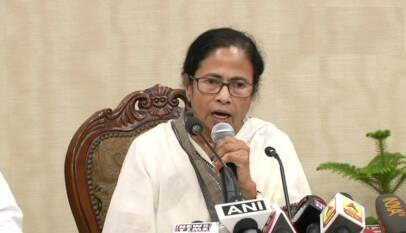
Jana Sena Picks Lingamaneni Ramesh for Rajya Sabha, Strengthening NDA’s Parliamentary Presence in Andhra Pradesh
Amaravati, June 2026 : The Jana Sena Party has officially nominated senior leader Lingaman…
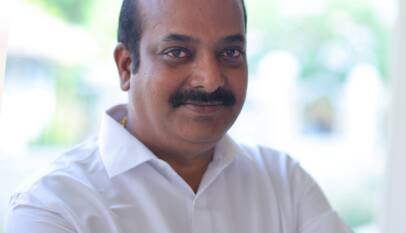
Jana Sena Picks Lingamaneni Ramesh for Rajya Sabha, Strengthening NDA’s Parliamentary Presence in Andhra Pradesh
Amaravati, June 2026 : The Jana Sena Party has officially nominated senior leader Lingamaneni …