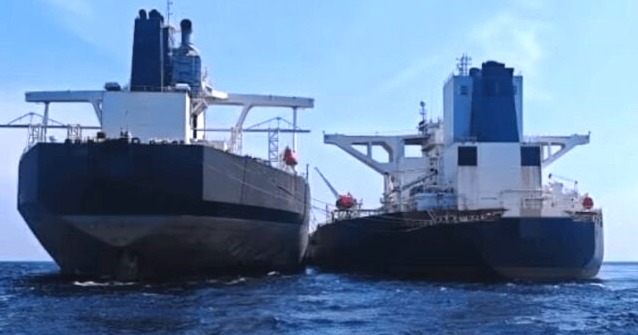
Strait Of Hormuz Is Choked By Gun Fire And Grid Lock.

Tehran; April 2026: In the latest escalation, a Liberia-flagged containership has been left with heavy damage to the bridge after being subjected to gunfire from an Iranian Revolutionary Guard Corps (IRGC) boat. The attack occurred 15 nautical miles northeast of Oman. Despite the vessel reportedly having permission to transit the Strait of Hormuz and making no prior VHF contact with the attackers, the IRGC opened fire at close range, likely in revenge for US forces firing on and taking control of an Iranian box ship earlier in the week.
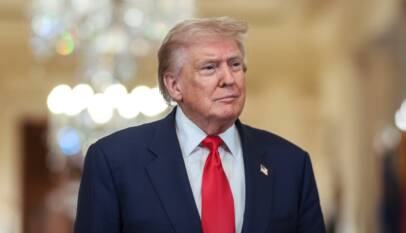
The geopolitical gridlock shows no signs of easing. President Donald Trump confirmed yesterday he will extend the current ceasefire with Iran while maintaining the US maritime blockade, citing a request from Pakistan to allow for unified negotiations. However, the ceasefire on land is not reflected at sea. The shadow of the 1970s oil embargo has returned to haunt the global economy, but with a modern, more violent twist.
US forces have significantly expanded their crackdown, moving beyond the Gulf to hunt Iranian tonnage far and wide-a strategy reminiscent of the naval pressure applied to Venezuela earlier this year. On Tuesday, US forces boarded the sanctioned tanker Tifani in the southern Bay of Bengal. The vessel, described by the Pentagon as “stateless” and accused of falsely flying the flag of Botswana, was interdicted while suspected of smuggling oil loaded at Iran’s Kharg Island.
The crisis has effectively paralysed the region. Since the Iran war effectively closed the Strait of Hormuz on February 28th, daily traffic has collapsed by 97%. More than 800 ships remain stranded west of the strait, with thousands of seafarers caught in a high-stakes limbo.
The humanitarian cost is drawing comparisons to the darkest chapters of maritime history. Earlier this month, the United Nations labelled the Hormuz crisis the worst crisis for seafarers since World War II.
According to maritime AI firm Windward, the first quarter of 2026 has been defined by geopolitical shock. In an assessment of the current landscape, Windward noted that “the machinery of global shipping was tested as it has not been in a generation”. The firm highlighted a global record in vessel interdictions, with boarding and detentions up 160% over the previous quarter.
“Fifty years after the global economy reeled from a Middle East oil embargo, this quarter has opened a new inflection point”, Windward reported in its Q1 roundup. As the shadow fleet expands to over 2,100 vessels, nearly 66% of which are now sanctioned the firm warned that 2026 is shaping up to be the most “turbulent” year for shipping in half a century.
Windward has further asserted that Nicaragua and Equatorial Guinea have been as new registers to have recently emerged, taking on shadow tonnage. “False flagging remains one of shipping’s most pressing regulatory concerns”, Windward stated in a recent report.
The International Maritime Organization (IMO) database listed 550 falsely flagged ships at the end of Q1, up from 470 in the prior quarter, including 367 tankers. Last week, the IMO approved new guidelines aimed at improving transparency in ship registration and cracking down on the growing misuse of flags.
“We will continue to chase problems that are structurally baked into the system” – adopted by the IMO’s Legal Committee during its 113th session in London, the measures are designed to strengthen due diligence, enhance oversight of registries and ensure the accuracy of vessel ownership records. The move comes in response to a sharp rise in fraudulent registrations and so-called false flag operations. The new framework focuses on tightening controls over who can carry out registrations, improving quality assurance procedures, and strengthening checks on vessel identity and eligibility.
David Heindel, president of the Seafarers International Union of North America, described the IMO’s move as a “reasonable” step. However, in comments sent to Splash, he wrote about what he described as the “uncomfortable truth. Most flag states today are operating as businesses for profit, and not as true sovereign regulators with a genuine link to the vessel”, Heindel warned, arguing: “Until the international community is willing to confront the commercialization of flag registries and reestablish the principle of a genuine link between vessel and flag, we will continue to chase problems that are structurally baked into the system”.
Team Maverick.



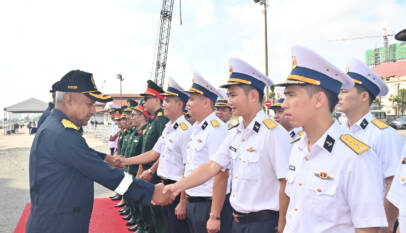
Indian Navy’s Eastern Fleet Ships Udaygiri And Kavaratti Depart Ho Chi Minh City, Vietnam
Indian Naval Ships Udaygiri and Kavaratti, under the command of RAdm Alok Ananda, Flag Off…
Indian Navy’s Eastern Fleet Ships Udaygiri And Kavaratti Depart Ho Chi Minh City, Vietnam
Indian Naval Ships Udaygiri and Kavaratti, under the command of RAdm Alok Ananda, Flag …