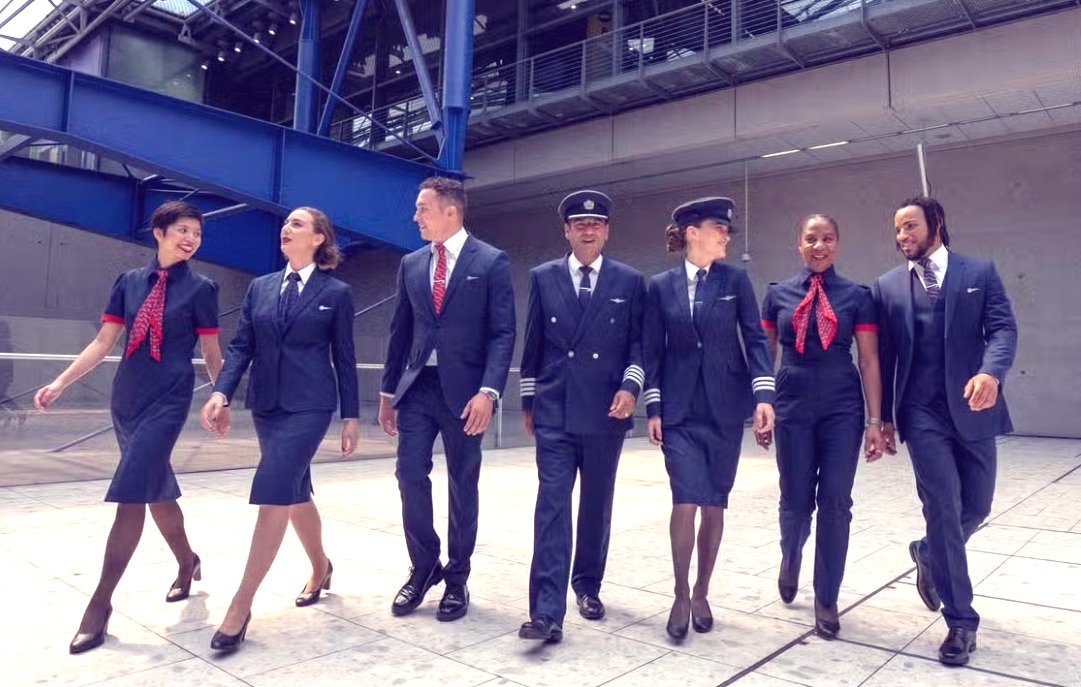
British Airways Bans Passengers Filming Cabin Crew Onboard Flights.

London; April 2026: United Kingdom-based flag carrier British Airways has elected to tighten its onboard conduct rules by explicitly banning passengers from photographing, filming, or livestreaming cabin crew and other airline colleagues without their explicit consent. The change appears in the airline’s General Conditions of Carriage, where unauthorized recording has now officially been identified as completely unacceptable behaviour.
Airline passengers who choose to ignore the rule could be subject to being stopped by crew, removed after landing, losing onward flight sectors, or being directly reported to airport safety authorities. The policy reflects a wider airline concern. Specifically, carriers fear that smartphones, wearable cameras, livestreaming, and viral social media clips have made cabin crew increasingly vulnerable to harassment, privacy breaches, and out-of-context online scrutiny.
While British Airways has not publicly or directly identified a single incident that triggered the change, reporting has instead pointed toward a broader pattern. Passengers are secretly filming cabin crew during service interactions, disputes, and routine duties, then posting clips online where they can spread without context. The timing is also incredibly notable because the carrier will be rolling out faster Starlink Wi-Fi, which could make real-time livestreaming of onboard confrontations quite a bit easier.
In a separate discussion, recent industry incidents show why airlines are very worried. In India, for example, an intoxicated IndiGo passenger was reportedly booked after taking inappropriate zoomed-in photographs of a female cabin crew member and causing an onboard disturbance as a result. These are just a couple of clear cases where concerns over privacy, harassment, and workplace safety have required more strict rules.
For passengers, this does not mean that every onboard photo is going to be banned. Travelers should still be able to photograph their meal, seat, window view, cabin features, or personal travel moments, provided that they are not going to be capturing crew members without their permission. The exact same argument applies to other passengers (not airline employees) if they are being filmed in any kind of inappropriate manner.
The key change here is consent. Anyone who wants a crew member in a photo or video is still permitted to film onboard, provided they have requested the appropriate permission first. They simply need to go up and ask a crew member or other passenger, and ask first and accept “no” without argument if that is the response. The rule also covers livestreaming and wearable cameras, including smart glasses and GoPro-style devices of all kinds.
From a practical perspective, it makes some sense for passengers to be especially careful when it comes to disputes, delays, service complaints, or other safety-related exchanges, because filming crew in those moments may now create consequences beyond just a warning. British Airways can stop the conduct, cancel remaining sectors, remove the passenger after landing, or directly involve the authorities.
When it comes to this specific kind of situation, British Airways is not moving in isolation. Reports have indicated that KLM made similar cabin announcements reminding passengers not to photograph or record crew without permission. Virgin Australia also recently made the rule much more explicit. More broadly, many airlines already restrict filming other passengers or employees without consent, especially when the recording directly interferes with crew duties or creates harassment concerns. The trend is being pushed by viral narratives on social media, passenger misconduct, and the growing use of discreet recording devices.
What makes British Airways’ move notable is how directly it writes the rule into its “formal Conditions of Carriage”, and links it to serious penalties, including the cancellation of all remaining flights. That turns what may once have been handled as a crew instruction into a contractual passenger obligation.
FORMAL CONDITIONS OF CARRAIGE –
Airlines are often at the receiving end of passenger complaints, but there are times when even airline employees have to tolerate badly behaved passengers. Every airline has its own policies regarding this, and Japan’s two largest carriers have now come up with their own guidelines to deal with passenger misconduct.
JAL and ANA issue guidelines – As skies get turbulent not just from inclement weather but also from unruly passenger behaviour, airlines are increasingly taking a stand against such incidents to protect their employees. Japan Airlines (JAL) and All Nippon Airways (ANA) have also outlined what constitutes bad passenger behaviour and how they will handle the situation.
ANA’s policies: The ANA Group says that customer harassment could be defined as behaviour that takes advantage of a superior position, acts that constitute illegal activities or may lead to such activities, and actions that harm the working environment of employees. The examples it lists include the following:
- Verbal abuse, yelling, insults, discriminatory remarks, defamation, etc.;
- Threatening or intimidating behaviour;
- Excessive demands;
- Physical violence, property damage, or other aggressive behaviour;
- Actions that disrupt business operations (prolonged detention, multiple complaints, etc.).
- Unauthorized access to workspaces;
- Deceptive behaviour towards employees;
- Actions that damage the company’s or employees’ credibility;
- Acts of voyeurism, stalking, indecent behaviour, obscene remarks, or sexual harassment.
ANA says that if a passenger’s behaviour is identified as harassment, the individual will be dealt with politely at first. However, if the situation is not controlled, the airline may refuse service to the passenger and even report the person to the authorities.
JAL’s policies: Japan Airline’s policies are also similar to those of ANA, and it considers harassment as any words or deeds that take advantage of a superior position, any actions that constitute or may lead to acts that impede flight safety, among others, and any actions that harm the working environment of employees.
It also lists some examples that include:
- Abusive language, aggressive tone, insults, discrimination, slander, etc;
- Any words or deeds that threaten the staff;
- Excessive or unreasonable demands;
- Assault;
- Deeds that disrupt our business operations like prolonged detention, excessive repetition of requests or complaints, etc.;
- Unpermitted entry to its workplace;
- Deeds that deceive employees;
- Slander against the company or employees on social media and the internet;
- Sexual harassment.
The Federal Aviation Administration (FAA) has zero tolerance for such incidents and has even come up with a toolkit that includes airport signage to warn against such actions as well as public service announcements such as social media posts and videos. The FAA states,
“Dangerous passengers put everyone at risk. Threatening or violent behaviour can distract and disrupt crewmembers from their primary responsibility – to ensure the safety of all passengers. If you disrupt a flight, you risk not only substantial fines from the FAA, but also federal criminal prosecution and jail time”.
Suvro Sanyal – Team Maverick.




Maharashtra Shuts Schools Across Several Districts as Heavy Rain Alert Triggers Safety Measures
Mumbai, July 2026: Authorities across several districts in Maharashtra have declared a hol…

Maharashtra Shuts Schools Across Several Districts as Heavy Rain Alert Triggers Safety Measures
Mumbai, July 2026: Authorities across several districts in Maharashtra have declared a holiday for …