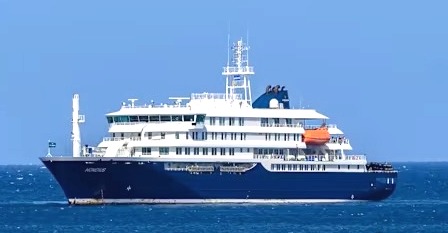
03 Die Onboard Atlantic Cruise Ship From Suspected Hantavirus Outbreak.

Praia, Cape Verde; May 2026: A suspected outbreak of the rare hantavirus infection on a cruise ship MV Hondius, travelling from Ushuaia in Argentina to Cape Verde in the Atlantic Ocean has killed 03 passengers and sickened at least 03 others, the World Health Organization (WHO) said on May 03rd late evening (AST).
“To date, 01 case of hantavirus infection has been confirmed post laboratory examinations, and there are 05 additional suspected cases”, WHO has briefed media outlets. “Of the 06 affected individuals, 03 have died, and 01 is currently in intensive care in South Africa”.
Hantavirus is spread by contact with the urine or faeces of infected rodents like rats and mice. It can lead to serious respiratory illness, the WHO said. The virus gained attention after the late American actor Gene Hackman’s wife, Betsy Arakawa, died from hantavirus infection in New Mexico last year.
The MV Hondius had left Argentina around three weeks ago for a cruise that included visits to Antarctica, the Falkland Islands and other stops on the way to Spain’s Canary Islands on the other side of the Atlantic. The first person to develop symptoms was a 70 years old passenger. He has eventually died on board the ship and his body are currently on the island of Saint Helena, a British territory in the South Atlantic. His 69 years old wife also fell ill on board and was evacuated to South Africa, where she died in a Johannesburg hospital, the press released asserted, adding that they were not yet able to confirm the victims’ nationalities.
The third case, a 69-year-old Briton, was also evacuated to Johannesburg, where he was being treated in intensive care. A source close to the case, speaking on condition of anonymity, had said a Dutch couple were among the dead. The third fatality was still on board the ship. Discussions were underway to decide whether two other sick passengers should be placed in isolation in hospital in Cape Verde, after which the ship would continue to Spain’s Canary Islands, the anonymous source said.
WHO said it was “facilitating coordination” between national authorities and the ship’s operators to organise the medical evacuation of two passengers with symptoms. While citing it as rare, the WHO said hantavirus infections can be spread between people. It can cause a severe and sometimes deadly lung infection called hantavirus pulmonary syndrome, according to the US Centers for Disease Control and Prevention.
There is no specific treatment or cure for hantavirus infections, but early medical attention can increase the chance of survival. “WHO is aware of and supporting a public health event involving a cruise vessel sailing in the Atlantic Ocean”, the organisation said. “Detailed investigations are ongoing, including further laboratory testing, and epidemiological investigations. Medical care and support are being provided to passengers and crew. Sequencing of the virus is also ongoing”.
The MV Hondius is listed as a polar cruise ship on the websites of several travel agencies. It is operated by a Dutch-based tour company, Oceanwide Expeditions. According to several online ship-tracking sites, the MV Hondius was just off the port of Praia, the capital of Cape Verde, yesterday. Around 150 tourists were onboard the ship at the time of the outbreak, South Africa’s health department said. The ship usually travels with around 70 crew members, according to several online tour operators.
What is hantavirus?
Hantavirus is a family of viruses that cause two illnesses, one that primarily affects the lungs and the other that attacks the kidneys. The former gets the most attention because it has a high fatality rate of about 40%.
While the virus is primarily spread by rodents, it can be transmitted between people in rare cases, according to WHO. People usually become infected when the virus in rodent droppings, saliva and urine becomes airborne, such as when areas where rats and mice have nested are swept out.
The illness typically begins with flu-like symptoms, such as fatigue and fever, one to eight weeks after exposure, according to the US Centers for Disease Control and Prevention (CDC). 04 to 10 days later, coughing, shortness of breath and fluid in the lungs appear.
According to the CDC, diagnosis in the first 72 hours of infection is difficult as the symptoms can easily be mistaken for the flu. There is no specific therapy for hantavirus infection, so treatment focuses on supportive care, including rest and fluids.
Patients may need breathing support such as a ventilator. Experts say exposure to the virus can be minimised by deterring and eliminating rodents from areas. People are also advised to avoid vacuuming or sweeping dried droppings, as this can aerosolise the virus.
Team Maverick.







Wimbledon Final Locked at One Set Each as Sinner Fights Back Against Zverev
London, July 2026 : World No. 1 Jannik Sinner displayed remarkable resilience to fight bac…

Wimbledon Final Locked at One Set Each as Sinner Fights Back Against Zverev
London, July 2026 : World No. 1 Jannik Sinner displayed remarkable resilience to fight …