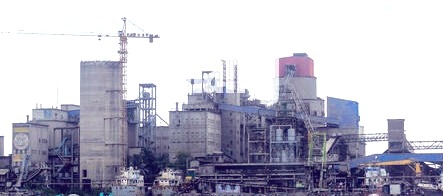
Middle East Crisis Is Causing Stir In Bangladesh’s Cement Industry.

Dhaka; May 2026: Bangladesh’s cement industry faces challenges due to its reliance on imports for about 90% of its raw materials, including clinker, limestone, granulated slag, fly ash, and gypsum, which are primarily sourced from the Middle East. The ongoing conflict involving the United States, Israel, and Iran has disrupted supply routes, increasing production costs and affecting manufacturers and consumers.
Domestic demand is weak, leaving producers struggling with rising costs that they cannot pass on to buyers. Production costs have surged by 30 per cent to 40 per cent, while output has dropped by 20% to 25%. A market survey indicated that retail prices rose by BDT 40 – BDT 50 per 50kg sack, with cement priced between BDT 470 and BDT 550 in city markets.
KM Zahid Uddin, deputy managing director (sales and marketing) at Safwan Bashundhara Global, told the media that the impact has resulted in higher production costs and a decline in output. Additionally, a diesel shortage from the energy crisis has hampered the transport of raw materials and finished goods.
Meanwhile, the Bangladesh Cement Manufacturers Association (BCMA) has called on the government for tax reforms. Proposals include lowering customs duty on clinker from 15% to BDT 500 and reducing advance income tax on key inputs from 02% – 05% to 0.5%. They also seek the removal of the 10% supplementary duty on limestone, arguing it raises costs and suppresses demand.
Looking ahead, BCMA President Mohammed Amirul Haque expressed concerns about the sector’s sustainability. The industry has an installed capacity of 100 Million tons/year, with effective capacity exceeding 82 Million tons/year, but production in 2025 has not exceeded 40 Million tons/year, operating well below the necessary 60% – 65% threshold. He emphasised that tax rationalisation could help absorb ongoing shocks, warning that without timely fiscal relief, the sector’s growth may falter.
Currently, 76 companies are registered in the sector, but only 42 are active, with 07 publicly listed. Their combined effective production capacity stands at 58 Million tons/year against an estimated demand of 31 Million tons/year. Leading brands include Crown Cement, LafargeHolcim, Bashundhara Cement, Shah Cement, Premier Cement, and others.
Earlier, on 17th March this year (2026) Cement producers have rejected claims by the US Trade Representative over alleged overcapacity in the sector, stating that production reflects domestic demand driven by infrastructure projects and economic growth. The comments come amid a US trade investigation into Bangladesh and more than a dozen other countries, reportedly examining whether their policies and production practices contribute to global overcapacity that could harm American manufacturing. In its complaint, the US cited unused capacity in Bangladesh as evidence of ‘unfair trade’.
Team Maverick.






Vijay Invited to Form Government in Tamil Nadu After Meeting Governor Arlekar
Chennai, May 2026 : C. Joseph Vijay moved significantly closer to becoming the next Chief …

Vijay Invited to Form Government in Tamil Nadu After Meeting Governor Arlekar
Chennai, May 2026 : C. Joseph Vijay moved significantly closer to becoming the next …