
Operation Sindoor Marked India’s Strategic Shift Against Terrorism, Say Experts

New Delhi, May 2026 : One year after Operation Sindoor, security experts and defence officials continue to describe the mission as a defining moment in India’s counter-terrorism and national security strategy. Conducted on the intervening night of May 6 and 7 last year, the operation was launched in response to the deadly terror attack in Pahalgam, where 26 innocent civilians lost their lives in one of the most brutal attacks in recent years.
The Indian armed forces carried out coordinated precision strikes targeting major terror infrastructure across Pakistan and Pakistan-occupied Kashmir (PoK). Officials said the mission was carefully calibrated to neutralise terror networks while avoiding unnecessary escalation.
Among the key targets destroyed during the operation were the headquarters of Jaish-e-Mohammed in Bahawalpur and the main training facility of Lashkar-e-Taiba in Muridke. These facilities had long been identified by Indian intelligence agencies as hubs for planning and training terrorists involved in attacks against India.
Defence analysts say the operation demonstrated not only India’s military capability but also its ability to simultaneously manage multiple threats during a high-intensity mission.
While the Indian armed forces were carrying out precision strikes on terror infrastructure, Pakistan reportedly attempted to disrupt the operation by launching waves of drones across the border. According to officials, several of these drones were intended to distract Indian defence systems, while others were believed to be carrying surveillance or offensive payloads.
Despite the scale of the drone activity, Indian defence systems successfully intercepted and neutralised every aerial threat. Experts say this highlighted the effectiveness of India’s growing air defence and counter-drone capabilities.
A major role in the operation was played by the Indian Air Force’s Integrated Air Command and Control System (IACCS), which provided real-time coordination and monitoring during the mission. Defence experts described the system as a “protective shield” that enabled Indian forces to track, identify and eliminate incoming drones without disrupting the primary operation.
Officials said Pakistan initially deployed smaller drones to create confusion and test Indian responses. Later, larger and more sophisticated drones were launched. However, the Indian defence network reportedly detected and destroyed all incoming threats.
Authorities also stated that several drone incursions appeared to be directed at civilian areas, but timely interception prevented any damage or casualties on the Indian side.
Alongside military action, India also had to confront what officials described as a coordinated propaganda campaign originating from Pakistan-based social media networks and affiliated groups. During the operation, false claims and fabricated videos were circulated online in an attempt to spread panic and undermine public confidence in the Indian armed forces.
Indian authorities responded swiftly by countering misinformation through official briefings, verified updates and coordinated digital monitoring. Officials said the objective behind the misinformation campaign was to demoralise the armed forces and create confusion during the critical hours of the operation.
Experts believe Operation Sindoor delivered a much larger strategic message beyond the destruction of terror camps. According to security officials, India effectively communicated a new doctrine — that every terror attack on Indian soil would now be treated as an act of war.
This marked a significant shift in India’s security approach and placed Pakistan under increased pressure internationally and strategically. Officials believe the operation forced Pakistan to reconsider the costs of supporting or facilitating cross-border terrorism.
One senior official noted that the increased push by Pakistan-based groups to create “homegrown modules” inside India reflects the growing difficulty of launching direct cross-border attacks after Operation Sindoor.
The operation also exposed the rapidly changing nature of modern warfare, especially the increasing use of drones and network-centric systems. Defence planners concluded that future conflicts would rely heavily on unmanned aerial systems, electronic warfare and integrated surveillance networks.
Following the operation, the Government of India approved several emergency defence procurements aimed at strengthening the country’s preparedness for future threats. These included replenishing stocks of S-400 Triumph missiles, acquiring advanced drones and counter-drone systems, precision-guided munitions, loitering munitions and anti-tank guided missiles.
The Indian Air Force also initiated upgrades to the IACCS network deployed across multiple sites. According to officials, the enhancements are intended to reduce vulnerabilities and eliminate any single point of failure within India’s air defence architecture.
Apart from military measures, India also adopted strong diplomatic and economic steps following the operation. The government suspended trade ties with Pakistan, downgraded diplomatic engagement and placed the Indus Waters Treaty in abeyance.
Experts say these actions collectively reinforced India’s zero-tolerance stance against terrorism and demonstrated a coordinated use of military, diplomatic and economic tools.
Operation Sindoor also became a major example of jointness among the Indian armed forces, with the Army, Navy and Air Force working in close coordination throughout the mission.
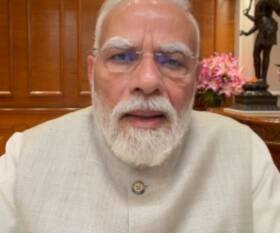
Prime Minister Narendra Modi had described the operation as a reflection of India’s determination to ensure justice and national security, asserting that terrorism and its supporters would face decisive consequences.
One year later, defence experts continue to view Operation Sindoor as more than just a military strike. They describe it as a strategic turning point that reshaped India’s response doctrine, strengthened military preparedness and sent a powerful message about the country’s resolve to combat terrorism.
(The content of this article is sourced from a news agency and has not been edited by the Mavericknews30 team.)





NCC Holds Cyclothon 2026 to Mark 79th Independence Anniversary
The National Cadet Corps (NCC) organised Cyclothon 2026 on August 02, 2026 in New Delhi to…

NCC Holds Cyclothon 2026 to Mark 79th Independence Anniversary
The National Cadet Corps (NCC) organised Cyclothon 2026 on August 02, 2026 in New …