Judiciary Must Function Round-the-Clock Like Hospitals: CJI Justice Shri Surya Kant

Chief Justice of India Justice Shri Surya Kant said that Maa Narmada, which originates from Amarkantak, attains its vast form through the confluence of several small rivers. Similarly, through streams of new technology, branches such as courts, police, prisons, forensic science and medico-legal services will merge into a unified digital platform, helping common citizens access justice more efficiently. He said that to ensure speedy justice for citizens, the judiciary must function ‘round-the-clock’ like hospitals.
Justice Shri Surya Kant praised the Madhya Pradesh High Court for developing digital services for citizens and making the justice delivery system faster and simpler. He said that the High Court’s digital platforms would enable several facilities, including the timely release of prisoners, urgent hearings and the digitisation of court orders. Justice Shri Suryakant, appreciating the Madhya Pradesh High Court initiative, said that such a system should be implemented in courts across the country.
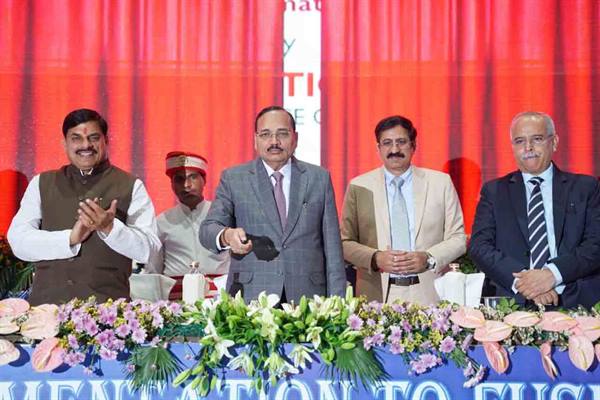
Chief Justice of India Justice Shri Suryakant was addressing the programme titled ‘Fragmentation of Fusion: Empowering Justice through Unified Digital Platform Integration’ held in Jabalpur on May 16. Justice Surya Kant inaugurated the programme by lighting the ceremonial lamp along with Chief Minister Dr. Mohan Yadav, Union Minister of State for Law and Justice Shri Arjun Ram Meghwal, and Chief Justice of the Madhya Pradesh High Court Justice Sanjeev Sachdeva. Supreme Court judges, Chief Secretary Shri Anurag Jain, legal experts, and members of the judiciary were also present on the occasion.
Ward-Level ‘Sanket Samadhan Mediation Centres’ Launched with Support of MP Police
The programme began with the rendition of Vande Mataram and the National Anthem in the presence of Chief Minister Dr. Yadav. Guests were welcomed with bouquets and mementoes. Several digital platforms of the High Court were launched during the occasion.
The Madhya Pradesh High Court launched its new CLASS (Courtroom Live Audio-Visual Streaming System) for live video streaming. Developed in an OTT-style format, the digital system will eliminate dependence on third-party systems and ensure that complete control of live streaming remains with the High Court authorities.
The new portal of the Madhya Pradesh High Court was also launched. Through the portal, judges, lawyers, and litigants will be able to access court orders, bail applications, and other important documents with ease. It is being regarded as an important step towards a future-ready judicial system.
The Madhya Pradesh High Court also launched the AI-enabled digital data management system ‘Pratham’. The system is an important initiative towards enhancing transparency and simplifying judicial processes.
As part of the High Court’s digital transformation, the Copying Automation and Judicial Information Dissemination System was also launched, enabling litigants, lawyers, and judges to obtain certified copies of court orders more easily. An online criminal justice system for prisoner release was also introduced.
The Annual Report 2025 of the Madhya Pradesh High Court was released. Ward-level ‘Sanket Samadhan Mediation Centres’, established with the support of Madhya Pradesh Police, were inaugurated. CJI Justice Shri Suryakant also launched the mobile application ‘Sanket Vani’ to assist speech and hearing-impaired citizens. Additionally, the ‘Jyoti Journal 2.0’ software developed by the Madhya Pradesh Judicial Academy was launched.
Digital Technology Will Help Deliver Speedy, Affordable and Non-Discriminatory Justice
CJI Justice Shri Surya Kant said that the committee constituted by the Supreme Court for the constructive use of Artificial Intelligence in judicial processes has done remarkable work, and its recommendations will soon be implemented across the country. He said that India has historically been at the forefront of adopting new technologies. During the COVID-19 pandemic, the Indian judicial system embraced technology and successfully discharged its constitutional responsibilities despite the challenging circumstances. Court functioning continued uninterrupted during the pandemic, earning appreciation from judicial systems around the world. The CJI stated that AI would play a crucial role in ensuring faster delivery of justice to common citizens in the future.
Integration of digital technology with the judicial system would save court time, accelerate judicial processes and make the justice delivery system more transparent. In line with the spirit of the Constitution, it would help ensure speedy, affordable, and non-discriminatory justice for all citizens.
Rural Citizens Must Be Trained to Use Online Judicial Facilities
CJI Justice Shri Surya Kant said that Madhya Pradesh is a state rich in cultural and geographical diversity. Rural residents and citizens must be trained to use online judicial facilities effectively. He emphasised the need to address language and internet accessibility while implementing such systems. The CJI suggested that para-legal volunteers should be engaged to spread awareness among people in simple local languages about the effective use of digital platforms.
Integration of Technology Will Make the Justice System More Reliable: CM Dr. Yadav
Chief Minister Dr. Yadav said that digital empowerment of the judicial system would make processes more transparent, directly resulting in speedy justice for common citizens. He stated that this integration of 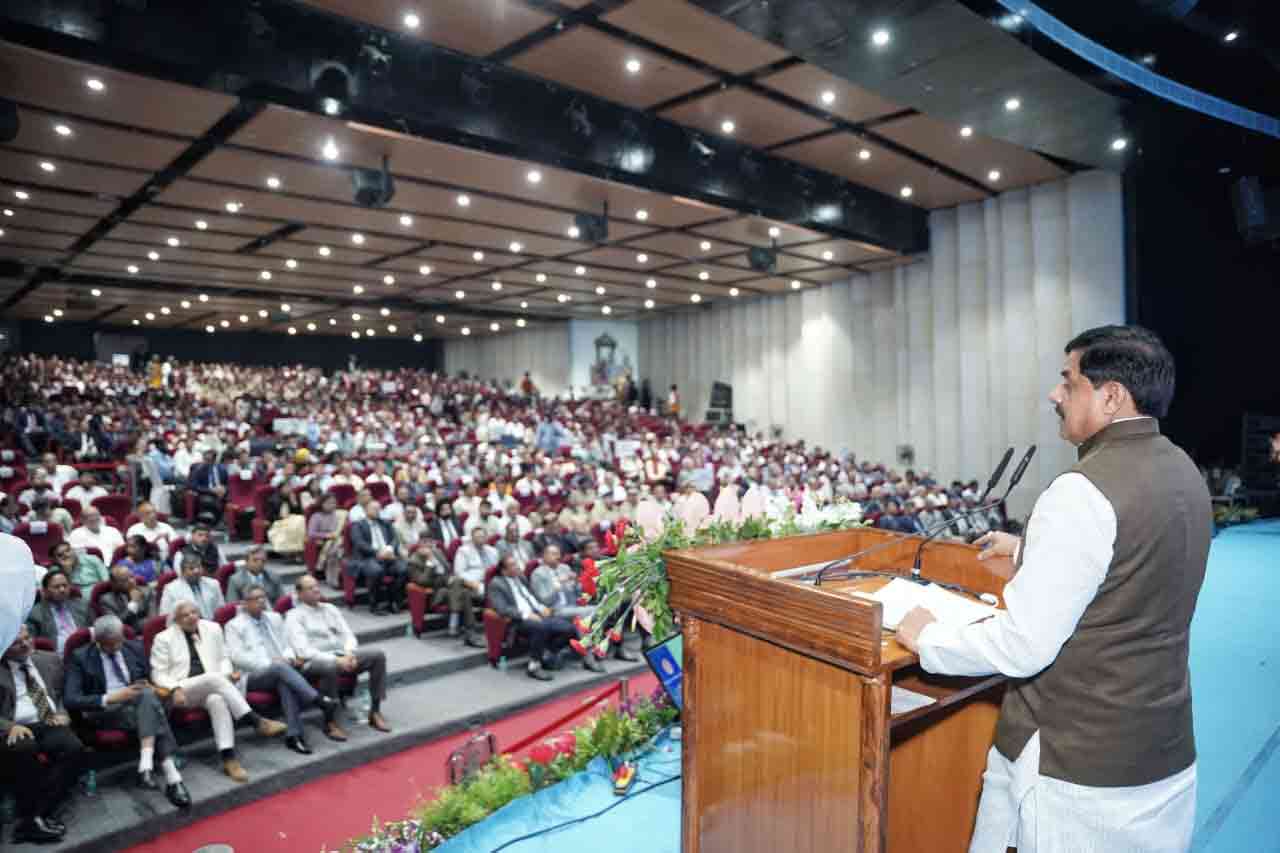 technology would make the justice system more reliable.
Chief Minister Dr. Yadav said that the present era belongs to technology and innovation, and science has played a major role in simplifying human life. As changes are taking place in every sphere of life, it is equally essential for the judicial system to become digitally enabled. He described the programme ‘Fragmentation of Fusion: Empowering Justice through Unified Digital Platform Integration’ as an important step towards equipping the justice system with modern technology, accelerating judicial procedures and making the entire system citizen-centric. Chief Minister Dr. Yadav said that the integrated digital platform would eliminate lengthy paper-based procedures and complexities, paving the way for faster disposal and better management of files.
Madhya Pradesh Rapidly Advancing Towards Good Governance
Chief Minister Dr. Yadav said that Madhya Pradesh is moving rapidly towards good governance. The state government has integrated technology with the core principles of good governance. Cyber tehsils have already been established in the state, and cabinet proceedings have been digitised as part of the transition towards paperless processes. He said that the CM Helpline is ensuring prompt resolution of citizens’ grievances, and the government is continuously working to simplify the lives of common citizens through digital platforms.
Chief Minister Dr. Yadav, referring to Lokmata Devi AhilyaBai, said that she established effective governance despite limited resources and undertook philanthropic activities at major religious sites across the country. Chief Minister Dr. Yadav said that the Madhya Pradesh High Court has simplified systems through innovative initiatives. He cited mobile applications for speech and hearing-impaired citizens, speedy disposal of files, and digital certification of court orders as examples of innovation and improved management in the state.
Values of Justice Rooted in Indian Tradition Are Embedded in Everyday Life
Chief Minister Dr. Yadav said that the country’s history of justice is linked to the legends of Samrat Vikramaditya and Betal. He said the good governance and transparent justice system of Samrat Vikramaditya continues to serve as an example even today. Referring to the legends of India’s knowledge tradition, he highlighted the rich judicial system of ancient India. He said that Samrat Vikramaditya always ensured just governance for citizens, and the values of justice inherited from Indian traditions remain deeply embedded in everyday life.
MP High Court Shows Way for Integration of Judicial Processes: Union MoS Shri Meghwal
Union Minister of State for Law and Justice Shri Arjun Ram Meghwal said that the day marks a historic moment for the country’s judicial system. Referring to Madhya Pradesh as the land of Singhasan Battisi, he said that even the buried throne of Samrat Vikramaditya symbolised justice. He said Madhya Pradesh is rapidly advancing towards Ease of Living and Ease of Justice and is an innovative state that pioneered initiatives such as CCTNS and applications for speech and hearing-impaired citizens. Machine learning, AI, and digital printing have now become integral parts of daily life. Under the leadership of Prime Minister Shri Narendra Modi, the country is rapidly moving towards transformation, reform, and performance. Union MoS Shri Meghwal stated that Madhya Pradesh is also emerging as a leader in defence equipment manufacturing from Jabalpur. Digitisation, he said, is not merely about scanning documents but about empowering systems through the integration of multiple processes. Madhya Pradesh has shown High Courts across the country the path towards strengthening judicial processes through integration. Technological integration will accelerate judicial procedures and enhance citizens’ trust in the justice system. He congratulated the Madhya Pradesh High Court for these innovations and said technology has now become not just a convenience, but a gateway to justice.
Digital Platform of High Court Will Simplify Citizens’ Lives
Chief Justice of the Madhya Pradesh High Court Justice Shri Sanjeev Sachdeva said that the High Court was launching a digital platform under the guidance of Chief Justice of India Justice Shri Surya Kant. Citizens would no longer have to wait for copies of court judgments.
He said that through ‘Fragmentation of Fusion’, the judicial system is moving towards a process where information flow would become faster and more transparent. The Madhya Pradesh Legal Authority has undertaken the responsibility of making justice accessible to all. It has now become easier to issue e-summons to police personnel and common citizens, and the disposal of bail applications has also become faster. Real-time sharing of information will now be possible, and e-copies of bail orders and case-related decisions will be available on the High Court’s digital platform.
Constitution Written with Fountain Pen Has Now Entered the Era of AI
Supreme Court Justice Shri N. Kotiswar Singh said that the Constitution, once written with a fountain pen, has now entered the era of Artificial Intelligence. He remarked that delays in communicating prisoner release orders are not merely technical issues, as they may force a released prisoner to spend an extra night in jail. Similarly, a missing forensic report can delay justice for litigants. Justice Singh said that citizens would no longer have to travel long distances to obtain certified copies of court orders. The innovative initiative of the Madhya Pradesh High Court is opening new avenues in the judicial process for prosecution agencies, police, and citizens. He added that digital technology is bringing transformational changes to India’s judicial system and making the judiciary more accountable towards citizens’ rights.
Supreme Court Justice Shri Alok Aradhe said that the Madhya Pradesh High Court has initiated a new chapter towards simplification of judicial processes. Delays in judicial procedures have long remained a constitutional concern, but the integration of courts, police, prisons, forensic, and medico-legal services would address this challenge. Justice Shri Aradhe praised the Madhya Pradesh High Court for demonstrating a new direction through innovative initiatives and said that the integrated digital ecosystem has enabled seamless exchange of data and information.
Administrative Judge of the Madhya Pradesh High Court Justice Vivek Rusia expressed gratitude to all guests present at the event. The programme was attended by Member of Parliament Shri Ashish Dubey, Jabalpur Mayor Shri Jagat Bahadur Annu, Advocate General Shri Prashant Singh, judges, trainees associated with judicial authorities, police officers, and a large number of lawyers.


From a Charity Photo to the World Cup Final: Messi and Yamal Set for Extraordinary Reunion
New York, July 2026 : Football has produced countless remarkable stories over the years, b…

From a Charity Photo to the World Cup Final: Messi and Yamal Set for Extraordinary Reunion
New York, July 2026 : Football has produced countless remarkable stories over the years, …