Supreme Court Of India Directs GOI That State Cannot Exploit Temporary Workers While Denying Benefits.

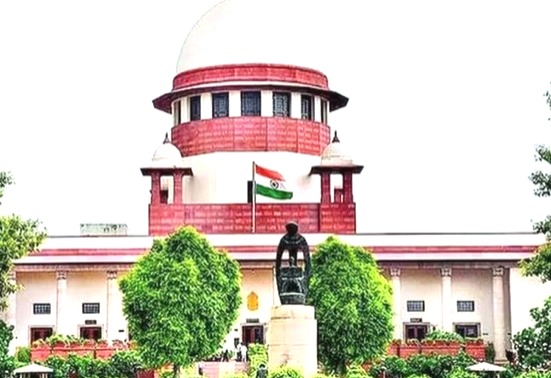
New Delhi; June 2026: In a sharp censure of the government’s treatment of long-serving temporary employees, the Supreme Court today (Monday – 01st June 2026) has said that the State, as a model employer, cannot continue to extract work identical to that performed by permanent staff while denying corresponding service and retirement benefits.
A bench of Justices Sanjay Karol and A.G. Masih set aside a Patna High Court order that had denied pensionary benefits to temporary workers who had served for decades in the Department of Posts. The court said any classification that deprives a category of employees of benefits despite them performing duties and responsibilities similar to regular staff would violate constitutional principles.
Underscoring its consistent judicial position, the bench said employees who have put in long years of service, whether casual or temporary, particularly those granted recognised status, cannot be denied social security and pensionary benefits. “The emphasis must be on ensuring that the State does not retain such employees in a precarious condition while extracting services identical to those performed by regular employees”, the court said.
The bench directed the Centre to calculate and release, within 03 months, pensionary and consequential retiral dues payable to a group of former employees, or their legal representatives, who had worked for years as casual labourers (night guards) under the Department of Posts. The learned Apex Court has further ordered that a delay in payment would attract interest at the rate of 06% per annum from the date of accrual until disbursement.
Taking note of what it termed administrative failure, the court said the workers had been granted temporary status and benefits comparable to Group ‘D’ employees but were never formally regularised largely because of inaction by the Department of Posts. “A statutory right cannot be rendered illusory on account of inaction of the employer, and such inaction cannot defeat or deny a constitutional right”, the bench said.
The court stressed that the Directive Principles of State Policy, particularly Articles 38, 39 and 43 of the Constitution, place a positive obligation on the State to ensure social and economic justice, fair working conditions and a decent standard of life for labourers. “Pension, in this context, is not a gratuitous benefit but a facet of social welfare and economic justice”, it observed.
Reiterating settled law, the apex court said pension was not a bounty but a vested and enforceable constitutional right. Referring to a 2013 judgment, it said pension is a hard-earned benefit accumulated through long and continuous service and constitutes “property” under Article 300A of the Constitution.
“Once pension is recognised as a constitutional right in the nature of property, it cannot be taken away except by authority of law”, the bench said.
The court examined the Department of Posts’ 1991 scheme governing casual labourers and said it was designed as a progressive framework aimed at integrating such workers into the structured service system and ultimately leading to their regularisation. Under the scheme, temporary-status casual labourers were entitled to wages linked to the minimum pay scale of regular Group ‘D’ employees, along with allowances including dearness allowance, house rent allowance and city compensatory allowance.
The bench said these provisions showed a clear intention to move workers away from a purely casual arrangement and gradually align their service conditions with those of regular employees.
Rejecting the interpretation adopted by the high court, the Supreme Court said the scheme could not be read in a manner that defeated its objective of assimilating casual labourers into the regular establishment.
“In view of the foregoing discussion and findings recorded hereinabove, we are of the considered opinion that the impugned judgments passed by the High Court proceeded on an erroneous interpretation of the Scheme and the circular dated November 30, 1992. The same are unsustainable in law and are, therefore, set aside”, the bench ruled.
Team Maverick.



Shivakumar Says Congress United, Assures Women Will Get Cabinet Berth
Bengaluru, Aug 2026 : Karnataka Chief Minister D.K. Shivakumar on Monday sought to dismiss…
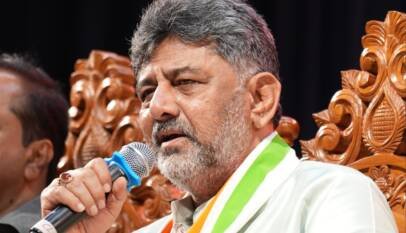
Shivakumar Says Congress United, Assures Women Will Get Cabinet Berth
Bengaluru, Aug 2026 : Karnataka Chief Minister D.K. Shivakumar on Monday sought to dismiss …