Iran Agrees to New Nuclear Talks After Military Pressure, Says US Secretary of State Marco Rubio

Washington, June 2026 : US Secretary of State Marco Rubio on Tuesday said that Iran has agreed to discuss parts of its nuclear programme that it had previously refused to negotiate, signalling the possibility of renewed diplomatic engagement following recent US military actions targeting Tehran’s strategic capabilities.
Testifying before the Senate Foreign Relations Committee, Rubio said the shifting position by Iran marked a notable development in long-standing nuclear negotiations. He suggested that Tehran’s willingness to return to the table had been influenced by the weakening of its military infrastructure following recent American operations.
“For the first time certainly in my memory, they have agreed to negotiate aspects of their nuclear programme that just a month ago, just a year ago, they were refusing to even mention, much less enter into discussions about,” Rubio told lawmakers.
The Secretary of State appeared before the committee primarily to defend President Donald Trump’s proposed State Department budget. However, much of the hearing was dominated by discussions on Iran, regional security in the Middle East, and broader US foreign policy priorities, including maritime security in the Strait of Hormuz.
Rubio strongly defended recent US military operations against Iran, stating that they had significantly degraded Tehran’s ability to protect its nuclear programme through conventional military deterrence. He argued that Iran had long relied on building a layered defence system to shield its nuclear ambitions.
“Iran’s desire to build a nuclear weapon was going to be effectuated behind a conventional shield,” Rubio said, adding that US actions were aimed at dismantling that protection.
He referred to a military campaign, described as “Operation Epic Fury,” claiming it had successfully targeted Iranian missile production facilities and damaged key elements of its military infrastructure.
“Operation Epic Fury was highly successful in achieving its military objectives,” he told the committee, asserting that the operation had reduced Iran’s capacity to project military power in the region.
Rubio further claimed that Iran had invested heavily in developing a large arsenal of missiles, drones, and naval assets intended to deter external intervention in its nuclear programme. According to him, the US strategy was designed to remove what he called Iran’s “point of immunity.”
“The president chose to act to deny them that point of immunity,” he said.
In one of the most striking remarks of the hearing, Rubio suggested that Iran’s naval capability had been effectively neutralised. “Today, there is no Iranian navy. There is no such thing. It lies at the bottom of the ocean,” he said, drawing attention from lawmakers on both sides of the aisle.
Committee Chairman Senator Jim Risch praised the administration’s approach and expressed support for Rubio’s handling of the Iran situation, particularly the military campaign and subsequent diplomatic positioning.
Rubio also said that a ceasefire had been reached following the US strikes, but accused Iran of failing to honour commitments to reopen the Strait of Hormuz, a critical global energy shipping route.
“They would reopen the straits. They did not,” he said, adding that the United States had responded with what he described as an effective blockade on Iranian shipping activities. He claimed this had resulted in significant financial losses for Tehran, estimating hundreds of millions of dollars in daily revenue losses.
“The cost to Iran every single day in lost revenue is in the hundreds of millions of dollars,” Rubio told lawmakers.
The hearing also saw pushback from Democratic senators, including Jeanne Shaheen, who criticised the administration for limited consultation with Congress on Iran-related military and diplomatic decisions. She questioned whether the current approach risked further escalation in an already volatile region.
Rubio acknowledged that diplomatic engagement with Tehran remained complex and often dependent on intermediaries. However, he maintained that ongoing talks, even if indirect, could help test Iran’s willingness to make meaningful concessions.
“That is not a guarantee that ultimately it will lead to a deal that’s acceptable to the Senate or acceptable to the American people,” Rubio said. “But we will be able to engage them in a process to truly test the proposition of how far they’re willing to go.”
(The content of this article is sourced from a news agency and has not been edited by the Mavericknews30 team.)






Shivakumar Says Congress United, Assures Women Will Get Cabinet Berth
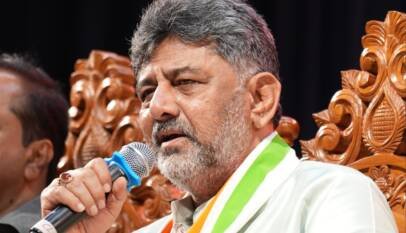
Bengaluru, Aug 2026 : Karnataka Chief Minister D.K. Shivakumar on Monday sought to dismiss…
Shivakumar Says Congress United, Assures Women Will Get Cabinet Berth
Bengaluru, Aug 2026 : Karnataka Chief Minister D.K. Shivakumar on Monday sought to dismiss …