Trump-Netanyahu Tensions Surface as Iran and Lebanon Conflicts Complicate Middle East Peace Push

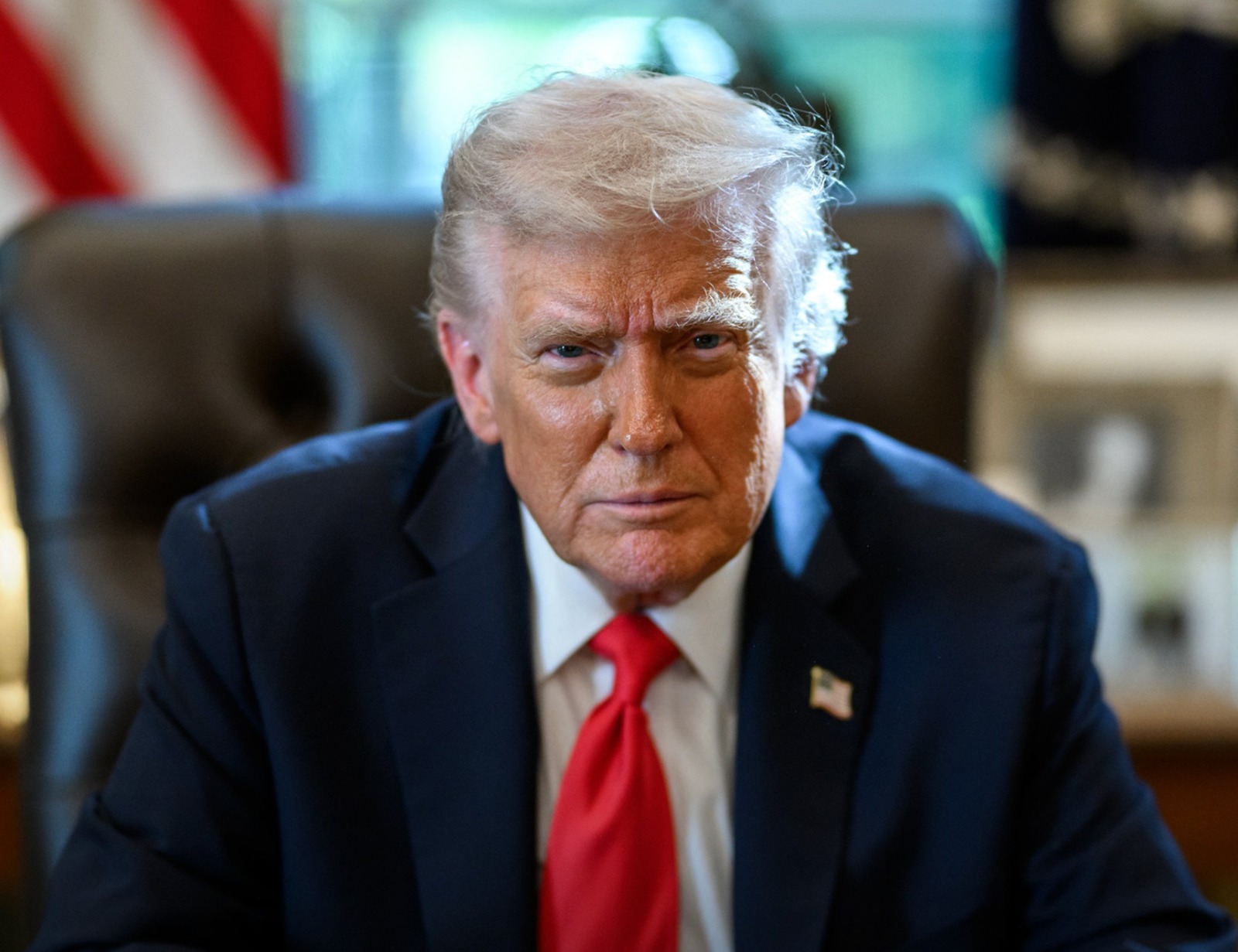
Beirut, June 2026: US President Donald Trump has publicly acknowledged a heated exchange with Israeli Prime Minister Benjamin Netanyahu over Israel’s military operations in Lebanon, revealing strains within one of the Middle East’s most consequential alliances even as both leaders insist their broader relationship remains strong.
The disclosure comes at a delicate moment for Washington’s efforts to bring stability to a region engulfed in overlapping conflicts involving Iran, Israel, and the Iran-backed Hezbollah movement in Lebanon. While Trump maintained that he and Netanyahu continue to work closely together, he admitted being frustrated that Israel’s ongoing military campaign against Hezbollah was complicating wider diplomatic efforts aimed at ending the Iran conflict and securing a more durable regional peace.
Speaking in an interview released on Wednesday, Trump said he had criticised Netanyahu during a recent telephone conversation and was “a little bit perturbed” by developments on the Lebanese front. Nevertheless, the US President dismissed suggestions of a major rift between the two leaders.
“We’ve worked very well together. I like Bibi a lot. And I work very well with him,” Trump said, referring to the Israeli Prime Minister by his widely used nickname. He added that their relationship is partly shaped by the fact that both have led their countries during periods of conflict and national security crises.
Netanyahu, responding to questions about the relationship during an interview with CNBC, acknowledged that disagreements sometimes emerge between the two governments but insisted that the overall partnership remains intact.
“We have tactical disagreements, but we share common goals and agree on the main issues,” Netanyahu said. “He respects me, and I respect him. We always find a way to resolve our differences.”
The public comments from both leaders come amid growing concern over the widening scope of instability across the Middle East. Diplomatic efforts aimed at extending a fragile ceasefire involving Iran have struggled to gain momentum, while continuing hostilities between Israel and Hezbollah have added another layer of complexity to negotiations.
For the Trump administration, resolving the Iran conflict has become increasingly important not only for regional security but also for domestic political reasons. Rising oil prices, disruptions to international trade routes, and uncertainty in global energy markets have created economic pressures that could influence the political landscape in the United States ahead of key elections.
Negotiators have spent weeks attempting to transform a temporary cessation of hostilities into a more lasting agreement. However, discussions have become increasingly difficult as the conflict in Lebanon continues. Iranian officials have repeatedly indicated that any broader understanding involving Tehran must also address military operations taking place in Lebanon, where Hezbollah remains one of Iran’s most significant regional allies.
Trump, however, declined to offer a clear timeline for when a breakthrough might occur. He was asked about the possibility that the strategically vital Strait of Hormuz could remain partially blocked through the US Labor Day holiday in September.
“I think it’s possible, but unlikely,” Trump said. “I believe this situation will resolve itself fairly quickly.”
The Strait of Hormuz remains one of the world’s most important maritime chokepoints, carrying a substantial portion of global oil and natural gas exports. Any prolonged disruption to shipping through the narrow waterway has the potential to trigger significant consequences for international energy markets and global economic growth.
Trump reiterated that the United States remains committed to ensuring that Iran does not acquire nuclear weapons capabilities and that international shipping routes remain open.
The President also suggested that Iran’s Supreme Leader, Mojtaba Khamenei, continues to play an influential role in ongoing discussions despite reported health challenges following injuries sustained in an airstrike earlier this year.
According to Trump, Khamenei remains involved in the decision-making process and continues to provide approval for key developments within Iran’s leadership structure.
Meanwhile, developments across the Gulf region underscored the continuing volatility of the situation. Kuwait temporarily suspended operations at its main international airport after an Iranian drone strike struck a passenger terminal building, killing one person and injuring dozens more.
The incident highlighted the growing risks faced by Gulf nations that had previously viewed themselves as relatively insulated from direct military confrontation. As the conflict enters its fourth month, countries across the region are increasingly finding themselves exposed to the consequences of escalating hostilities.
At the same time, hopes for a sustainable ceasefire between Israel and Hezbollah remain uncertain despite recent diplomatic initiatives.
On Wednesday, an Israeli strike targeted a vehicle travelling along a busy highway south of Beirut, only hours before the second round of talks between Lebanese and Israeli representatives was scheduled to take place in Washington.
The strike occurred in Khaldeh, a heavily travelled area near the Lebanese capital. Authorities did not immediately confirm whether the intended target had been killed.
The attack raised fresh questions about the durability of a US-mediated agreement announced earlier this week. Under that arrangement, Israel pledged not to target Beirut’s southern suburbs, while Hezbollah agreed to halt attacks against northern Israel.
The understanding was reached after Israel had threatened large-scale strikes against densely populated neighbourhoods near Beirut, prompting fears of a dramatic escalation in violence.
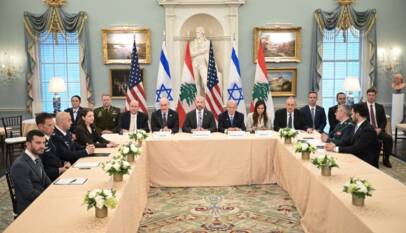
US officials said the first day of discussions between Israeli and Lebanese representatives produced some progress. However, significant differences remain.
Lebanon is seeking a comprehensive ceasefire covering the entire country, while Israel continues to insist that Hezbollah must first be disarmed before Israeli forces withdraw from villages and towns in southern Lebanon.
Shortly after the strike near Beirut, the Israeli military announced that it had intercepted what it described as a hostile aircraft approaching from southern Lebanon. Although Israeli officials did not immediately attribute the incident to Hezbollah, it further illustrated the fragile nature of the current situation.
Israeli military operations have continued across southern Lebanon, particularly around the heavily affected areas of Tyre and Nabatiyeh. Overnight strikes near the coastal city of Tyre reportedly killed six people, including four Syrian nationals and two Palestinians.
Israeli authorities subsequently issued warnings concerning Christian neighbourhoods in Tyre, claiming that Hezbollah operatives were present in the area. The warning created anxiety among residents, especially as many displaced Lebanese Shiite families had sought refuge in districts that had previously escaped heavy bombardment.
In response, the Lebanese Army deployed forces to parts of the city in an effort to demonstrate that armed Hezbollah units were not operating from those locations and to reduce the likelihood of further Israeli attacks.
The current round of fighting began after Hezbollah launched rockets toward northern Israel in support of Iran. Israel responded with military operations that gradually expanded into southern Lebanon. Over recent weeks, Israeli ground forces have pushed deeper into Lebanese territory while Hezbollah has continued to launch rockets and drones toward Israeli targets.
The humanitarian consequences of the conflict have been severe. According to available figures, more than 3,400 people have been killed in Lebanon since the latest escalation began, while approximately 1.2 million residents have been displaced from their homes.
Israeli authorities have reported the deaths of at least 27 soldiers and a defence contractor in or near southern Lebanon. Two civilians have also been killed in northern Israel.
Beyond the geopolitical calculations and military operations, the war continues to exact a devastating human cost.
One of the latest tragedies occurred in the village of Marwanieyh in southern Lebanon. Members of the Al-Abdallah family had recently returned to their home after leaving the area because of security concerns. Believing the situation had improved, they decided it was safe to come back.
Just one day later, two rockets struck their three-storey home, collapsing the building and killing six members of the family.
Only 13-year-old Ahmed Al-Abdallah survived. According to relatives, the force of the explosion threw him clear of the building. He suffered broken legs and multiple shrapnel wounds but remains alive.
His uncle, Eissa Al-Abdallah, described the family’s grief in the aftermath of the attack.
“What good is talking now?” he said. “They are gone, and nothing will bring them back. This land costs blood.”
As diplomatic negotiations continue and military operations persist, such stories serve as a stark reminder of the human suffering behind the political and strategic calculations shaping one of the most volatile crises in the Middle East today. With ceasefire efforts still fragile and regional tensions running high, the prospects for lasting peace remain uncertain, even as international leaders push for a negotiated resolution.






Israel, Lebanon Agree on Ceasefire Framework Amid Continued Cross-Border Hostilities
Washington/Beirut, June 2026 : Israel and Lebanon on Wednesday agreed to move forward with…
Israel, Lebanon Agree on Ceasefire Framework Amid Continued Cross-Border Hostilities
Washington/Beirut, June 2026 : Israel and Lebanon on Wednesday agreed to move forward with …