K. Annamalai Rebrands as “Common Citizen” After Exit from BJP, Signals New Political Movement in Tamil Nadu

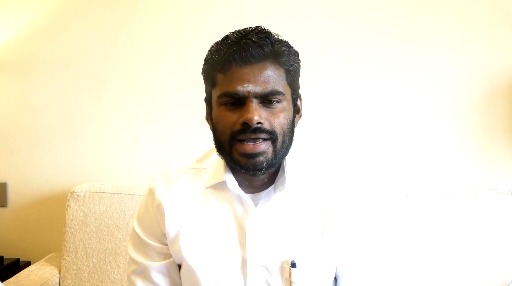
Chennai, June 2026 : Moments after formally announcing his exit from the Bharatiya Janata Party (BJP), K. Annamalai sought to reposition himself as a “common citizen” and signalled the beginning of a new political journey aimed at reshaping Tamil Nadu’s long-standing Dravidian political landscape.
Annamalai, who emerged as one of the most prominent BJP faces in Tamil Nadu ahead of recent electoral cycles, updated his social media profile on X, describing himself as “A common man in search of good politics!” The shift marks a clear attempt to distance himself from established party politics and project a more grassroots identity.
The former police officer-turned-politician, often referred to during his career as “Singham” for his tough policing style, has indicated that he intends to build a people-driven movement rather than operate within the framework of conventional party politics. His stated aim is to challenge entrenched caste-based political structures and the dominance of Dravidian ideology that has shaped Tamil Nadu politics for more than five decades.
Even during his six-year association with the BJP, Annamalai was known for his aggressive outreach campaigns and efforts to expand the party’s presence in a state where Dravidian parties have traditionally held strong influence. His political style consistently reflected a reformist and confrontational approach, which he now appears ready to take beyond party lines.
In his resignation letter to the BJP leadership, Annamalai highlighted what he described as the divide between ordinary citizens and political elites. He expressed his desire to break that perception and open political participation to common people.
“I wanted to change the notion that politics is a path only for the elite and a select few, not for the common man. I’m extremely thankful to the BJP leadership for trusting a very young and raw me with great responsibility and leadership positions,” he stated in his letter.
He further observed that people in Tamil Nadu have grown increasingly disillusioned with traditional political discourse and have long been seeking meaningful change. While acknowledging that some improvements had taken place over the past decade, he argued that such efforts had failed to sustain momentum.
“Some positive change happened in the past decade, but they couldn’t hold their ground,” he noted.
Following his formal departure from the BJP, Annamalai is now expected to chart an independent political course, focusing on what he describes as a movement driven by public participation. His approach is aimed at introducing what he calls “major disruption” in the state’s entrenched political system.
Political observers note that his “common man” narrative could resonate with sections of the electorate seeking alternatives to established parties. However, they also point out that building a sustainable political force outside a structured party organisation will be a significant challenge, particularly in a state with deeply rooted political institutions and strong regional party machinery.
As Annamalai embarks on this new phase, attention will remain focused on whether his personal appeal and reformist messaging can translate into a viable political platform in Tamil Nadu’s highly competitive landscape.



Shivakumar Says Congress United, Assures Women Will Get Cabinet Berth
Bengaluru, Aug 2026 : Karnataka Chief Minister D.K. Shivakumar on Monday sought to dismiss…
Shivakumar Says Congress United, Assures Women Will Get Cabinet Berth
Bengaluru, Aug 2026 : Karnataka Chief Minister D.K. Shivakumar on Monday sought to dismiss …